Showing posts with label The New York Times. Show all posts

Wednesday, August 20, 2025

Marathon and extreme runners much more likely to have pre-cancerous colon polyps, study says

A new study conducted by a Virginia doctor shows that comparatively young marathon and ultra-marathon runners are more apt to have pre-cancerous colon growths.

Dr. Timothy Cannon
The study by oncologist Timothy Cannon, who tested colonoscopies at the Inova Schar Cancer Institute in Fairfax, Va., on 100 volunteers aged 35 to 50, was showcased yesterday in a story by Roni Caryn Rabin in The New York Times.

"The results," the article says, "were staggering. Almost half the participants had polyps, and 15 percent had advanced adenomas likely to become cancerous."

The new study, the piece continued, "comes amid heightened concerns about a rise in colon and rectal cancer rates among adults under 50, a population that  historically has had a low risk of cancer."

Cannon, who ran the New York City marathon in 2010, is quoted believing that "after what I've seen from my patients and what we've found here, that extreme exercise may increase the risk."

As for continuing to run, he added that "you never want to give people an excuse not to exercise, because by and large we have bigger problems from people not exercising enough.

More information on what can cause the disease can be found in Rollercoaster: How a man can survive his partner's breast cancer, a VitalityPress book that I, Woody Weingarten aimed at male caregivers. My other books are MysteryDates — How to keep the sizzle in your relationship; The Roving I, a compilation of 70 of my newspaper columns; and Grampy and His Fairyzona Playmates, a whimsical fantasy intended for 6- to 10-year-olds that I co-authored with my then 8-year-old granddaughter. Check out my website at https://woodyweingarten.com for details.

Saturday, January 20, 2024

Researchers identify possible new risk for breast cancer for aging women with dense tissue

"While breast density declines with age, a slower rate of decline in one breast often precedes a cancer diagnosis in that breast."

That conclusion is reported in a story published a while back by Roni Caryn Rabin in The New York Times that I just unearthed.

Rabin writes that a study published in JAMA Oncology says, "Scientists has long known that dense breast tissue is linked to an increased risk of breast cancer in women" but these new findings apparently indicate another risk.

Sue (Joy) Jiang, PhD
Shu (Joy) Jiang, the study's lead author, a PhD and an associate professor of public health sciences at Washington University in St. Louis, says that "right now, everybody only looks at density at one point in time" but, since women have mammograms at regular intervals and the density of each breast is measured each time, "this information is actually already available but [is] not being utilized."

Jiang hopes the findings can be put "into clinical use as soon as possible — it will make a huge difference."

Scientists at Washington University in St. Louis, over a 10-year period, analyzed breast density changes in 10,000 women.

Dense breast cancer tissue, it's long been established, makes tumors harder to detect in imaging scans.

More information about density issues can be found in Rollercoaster: How a man can survive his partner's breast cancer, a VitalityPress book that I, Woody Weingarten, aimed at male caregivers.

Tuesday, October 18, 2022

National study finds frequent use of hair straighteners may pose risk for uterine cancer

Can frequent use of hair straighteners pose a small risk for uterine cancer?

According to a story by Roni Caryn Rabin in today's editions of The New York Times, the answer is yes. 

Rabin's article says the risk is higher than for women who have never used the products.

The study, which was published yesterday in The Journal of the National Cancer Institute, followed nearly 34,000 U.S. women for more than a decade.

Hair straightener use has previously been tied in studies to a higher risk of ovarian and breast cancer.

"While the increased risk [for uterine cancer] was found among women from all racial and ethnic backgrounds," the story continues, "Black women might be disproportionately affected: Sixty percent of participants who reported using hair straighteners self-identified as Black women, according to the study."

A March report from an expert panel indicated that over all Black women die of uterine cancer at twice the rate that White women do.

Frequent use is defined as more than four times in the previous year, and includes "any personal use, whether women applied products themselves or had the straighteners applied by others."

Alexandra White, PhD
Alexandra White, PhD head of the environmental and cancer epidemiology group of the National Institute of Environmental Health Sciences (HIEHS) and the study's lead author, is quoted as saying that "there is a lot of pressure on women, especially Black women, to have straight hair. It's not an easy decision to not do this."

Researchers have cautioned that the study's findings need to be confirmed by other studies.

The uterine cancer study, Rabin's piece says, shows that some chemicals found in straighteners — such as parabens, bisphenol A, metals, and formaldehyde — could week "play a role in the increased" risk.

Uterine cancer, the story maintains, "is increasing rapidly. The number of cases diagnosed each year has rises to 65,950 this year from 39,000 just 15 years ago." 

When detected early, overall survival rates are high.

More information about risk factors, including those for minority groups, can be found in "Rollercoaster: How a man can survive his partner's breast cancer," a VitalityPress book that I, Woody Weingarten, aimed at male caregivers.

Thursday, September 29, 2022

Katie Couric, diagnosed with breast cancer, intends to publish details about her ordeal

Veteran TV anchor/host Katie Couric, now fighting breast cancer, is planning to speak out more about her experience with the disease — and become an advocate for screenings.

According to a story by Claire Fahy in yesterday's editions of The New York Times, when she received the troubling diagnosis on June 21, she "handled it the way she handles any other news event — as a journalist."

Katie Couric
The 65-year-old TV stalwart is quoted as saying, "I actually treated this whole ordeal like a reporter. I went and tried to learn as much as I could."  

Al Rabson, former leader of the National Cancer Institute, "use to call her 'Dr. Couric' because she had amassed so much knowledge," the Times story says. 

Couric, once the host of the "Today Show" and anchor of "CBS Evening News," apparently will publish more about her ordeal, as well as information about breast cancer in general, throughout October, which has long been designated as Breast Cancer Awareness Month.

She also plans to use her experience as a goad to officialdom. The Times quotes her as saying, "Hopefully this will be a kick in the pants for a lot of policymakers and just a lot of women in general to make sure they are up to date on their screenings."

Fahy also quotes Couric to the effect that this bout with the disease isn't her "first rodeo" — her first husband, Jay Monahan, died from colon cancer in 1998, and her sister, Emily, died from pancreatic cancer in 2001.

The Times observes that Couric published an article yesterday noting that the day of her diagnosis was her eighth wedding anniversary. In that piece, she details the specifics of her cancer, including the fact that her dense breasts, not an uncommon condition, made it difficult for mammograms to detect the cancer. 

According to Fahy, the news anchor colorfully describes finding an abnormality in dense breasts "like looking for a snowball in a snowy field."

Her cancer apparently was found by an additional ultrasound.

The National Cancer Institute reports, not incidentally, that almost half the women over 40 in the United States have dense breasts.

Reportedly, one in eight women develop breast cancer, with the survival rate for those whose cancer has not metastasized as 99 percent. Couric's, which was detected early and is labeled as State 1A, hasn't spread to her lymph nodes or anywhere else.

A lot more information about the disease and its history in the United States can be found in  "Rollercoaster: How a man can survive his partner's breast cancer," a VitalityPress book that I, Woody Weingarten, aimed at male caregivers.

Thursday, July 7, 2022

Docs wary about study showing cancer drug might cut Covid deaths for patients in hospitals

A new study found that an experimental cancer drug reduces death in hospitalized Covid patients by 55 percent.

According to a story this week by Carl Zimmer in The New York Times, however, some experts are cautious about over-interpreting the results of the study.

Veru, the Miami company that developed the drug, sabizbulin, has applied to the federal Food and Drug Administration (FDA) for emergency authorization to use it.

Dr. Ilan Schartz
The story quotes Dr. Ilan Schwartz, infectious disease expert at the University of Alberta who wasn't involved in the study, as saying, "This looks super-impressive. We have a small number of treatments for patients with a severe disease that improve mortality, but another treatment that can further reduce deaths would be very welcome."

He cautioned, though, that the clinical trial was relatively small — only 134 patients receiving the drug while 70 got a placebo over a course of 60 days — and said he'd "welcome large and independent confirmatory studies."

Researchers hypothesize, among other things, that the drug, which is taken in pill form, helps Covid patients fight potentially life-threatening lung inflammation.

Dr. David Boulware, an infectious disease expert at the University of Minnesota, also cautioned about the impact of the study. He suggested the large 45 percent mortality rate in the placebo control group might be a sign the study was too small to draw firm conclusions. The death rate, he was quoted as saying, "jumps out at me as rather high."

In addition, he observed, "trials which are stopped early routinely overestimate the effect." He predicted a similar fate as what happened with the drug molnupiravir, which initially appeared to reduce the risk of hospitalization from Covid by 50 percent but settled for a more realistic figure of 30 percent in the final analysis.

More information on clinical trials can be found in "Rollercoaster: How a man can survive his partner's breast cancer," a VitalityPress book that I, Woody Weingarten, its author, aimed at male caregivers.

Wednesday, March 30, 2022

Depression and suicide rates jump for patients diagnosed with cancer, two new studies indicate

Two new studies have found cancer patients are at a higher risk for depression and suicide.

According to a story this week by Jessica Wapner in The New York Times, the "findings make a compelling case for oncologists to have more discussions with  their patients about mental health struggles."

A caption with the story notes that one of the studies found "suicide rates among people with cancer were notably higher in the United States than in Europe, Asia or Australia." 
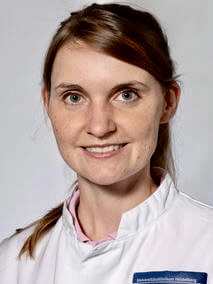
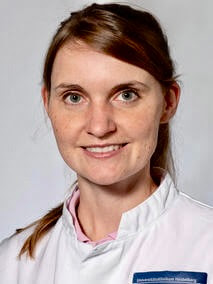
Dr. Corinna Seliger-Behme
The article quotes Dr. Corinnas Seliger-Behme, a neurologist at Heidelberg University in Germany, as saying, "Probably, we can prevent suicide if we talk about it, and if we really start that early."

Seliger-Behme and a colleague reviewed in their report "28 studies that included more than 22 million cancer patients across the world. Their analysis showed that the suicide rate as 85 percent higher for people than the general population."

Cancers with the worst prognoses, like stomach and pancreatic cancers, had the highest rates while the diseases with the best prognoses, including prostate, non-metastatic melanoma and testicular cancers, had the lowest.

The study's authors, according to the story, speculated that "the high cost of health care" in the U.S. might had led some patients "to forgo treatment to avoid bankrupting their families." The authors also wondered if easy access to firearms may have contributed to the higher suicide rates.

In the other new study, Alvina Lai, PhD, an associate professor at University College London, and a colleague examined health records of about 460,000 people in Britain with 26 different cancers. Five percent were diagnosed with depression, with the same number diagnosed with anxiety, after their diagnoses.

Alvina Lai, PhD

"Patients with brain tumors, prostate cancer, Hodgkin's lymphoma, testicular cancer and melanoma were most likely to hurt themselves," Wapner's piece reports.

Moreover, about 25% of the patients suffered from substance abuse — and psychiatric issues "tended to increase over time, even years after a diagnosis."

The biggest risk factor for developing a mental health condition, according to the story, was to those undergoing the triple-threat approach of surgery, radiation and chemotherapy. "The length, intensity and cumulative side effects… could explain why it triggers depression, anxiety and even personality disorders in many people," the article contends.

Chemotherapy on its own, it continues, is "also tied to high rates of psychiatric disorders, whereas 'kinase inhibitors' — targeted drugs that often have fewer side effects — had the lowest rates."

Dr. Lai wonders "whether patients are given enough opportunities to weigh the psychological risks of potential treatments," the story states. She's quoted as maintaining that "it would be useful for cancer patients who are newly diagnosed to see what the data tell us and make an informed decision."

Testicular cancer "carried a higher risk of depression than any other cancer type, affecting 98 of every 100 patients," according to her study, an unexpected result.  

Dr. Nathalie Moise, professor of medicine at Columbia University's Vegelos College of Physicians and Surgeons, suggests that while "current treatment guidelines suggest screening for depression as part of routine cancer care," these findings "may support the need to also screen for suicide and other risk factors."

More on the mental state of patients can be found in "Rollercoaster: How a man can survive his partner's breast cancer," a VitalityPress book that I, Woody Weingarten, aimed at male caregivers.

Saturday, March 5, 2022

Many physicians now favoring multiple options other than chemotherapy to treat cancers

A growing number of cancer patients, especially those with breast and lung malignancies, are being spared chemo in favor of other options.

At least that's the conclusion of The New York Times.

According to a recent story by the paper's most prolific cancer specialist, Gina Kolata, because "there is a growing willingness among oncologists to scale back unhelpful treatments" and because genetic tests "can now reveal whether chemotherapy would be beneficial," there are many better options for patients than chemo.

Among them, the article notes, are "an ever-expanding array of drugs, including estrogen blockers and drugs that destroy cancers by attacking specific proteins on the surface of tumors."

These alternative treatments, the piece notes, are increasingly being used for breast and lung cancers, and many others as well, sparing "thousands each year from the dread chemotherapy treatment, with its accompanying hair loss, nausea, fatigue, and potential to cause permanent damage to the heart and to nerves in the hands and feet."

And even when chemo is indicated, Kolata's story says, "doctors often give fewer drugs for less time."

Dr. Lisa Carey
"It's a totally different world," the article quotes Dr. Lisa Carey, breast cancer specialist at the University of North Carolina.

That view is supported by Dr. Robert Vonderheide, lung cancer specialist who heads the University of Pennsylvania's Abramson Cancer Center, who says that docs used to discuss whether to give patients two different types of chemo or three but now "are walking in to see even patients with advanced lung cancer and telling them, 'No chemo.'"

Kolata's piece calls the change "a quiet revolution" that has stemmed from "a slow chipping away" at the number of people for whom chemo — which for decades was considered "the rule, the dogma" — is recommended.

More information on new therapies can be found in "Rollercoaster: How a man can survive his partner's breast cancer," a VitalityPress book that I, Woody Weingarten, aimed at male caregivers.

Thursday, February 3, 2022

Biden pushes program to cut cancer death rate by 50 percent; experts say it just won't work

Experts doubt President Biden's plan to cut the cancer death rate in half will be that effective.

In a story by Sheryl Gay Stolberg and Gina Kolata in The New York Times today, those experts say his cancer "moonshot" program, which is to take 25 years, simply can't “so profoundly reduce the age-adjusted death rate, which accounts for expectations that older people are more likely to grow ill and die.”

The White House, the article continues, “billed the event as a fresh push by the president to ‘reignite’ the moonshot program” he initiated and presided over as vice president. The new push, it was claimed, would “end cancer as we know it.” 

But Biden did not offer specifics on how his goal would be achieved.

Part of the initiative will be “a campaign to urge Americans to undergo screenings that were missed during the coronavirus pandemic,” Stolberg and Kolata’s piece indicates.
 
In addition, Biden plans to create a new “cancer cabinet” to coordinate multiple government agencies and spearhead the fight against the disease.
 
Danielle Carnival, who worked on the moonshot program during Barack Obama’s administration, will help oversee the supercharged effort.
 
The Times article insists that “more screenings are not the answer — the only cancers for which screening has indisputably lowered the death rate are colon and cervical.”
 
Donald A. Berry, Ph.D.
Death rates for other cancers, like breast, have fallen, “but a large part of the drop, if not all of it, is because of improved treatment,” the story quotes Donald A. Berry, a Ph.D. biostatistician at the University of Texas M.D. Anderson Cancer Center who has spent decades studying these issues.

He also contends that “everybody loves early detection, but it comes with harms” — principally, the article goes on, the harm of finding and treating tumors that do not need to be treated because they are innocuous. “The harms we know, but the benefits of screening are very uncertain,” Berry again is quoted.

If the age-adjusted cancer death rate were to plunge by 50 percent, it would have to be because cancers were being cured, Stolberg and Kolata maintain. "Some treatments, like a drug that treats chronic myelogenous leukemia, have slashed death rates for that disease, but such marked effects in cancer are few and far between."

In contrast, according to their piece, Ellen V. Sigal, founder of Friends of Cancer Research, which works to support cancer research and deliver new therapies to patients, who was briefed on the plan, says, “These are audacious goals, and I have no doubt there will be mechanisms to achieve them.”
 
The article also quotes anonymous senior administration officials who pledged that although no new funding commitments would be announced, there would be “robust funding going forward.” 
 
Biden, it should be remembered, has a personal interest in cancer research; in 2015, his son Beau died of glioblastoma, an aggressive brain cancer. The next year, Obama called on the then-vice president to lead the moonshot program with, according to Stolberg and Kolata, “a goal of making ‘a decade’s worth of advances in cancer prevention, diagnosis and treatment’ in five years.”

At the time, Congress authorized $1.8 billion over seven years; roughly $400 million of that money has yet to be allocated. The National Cancer Institute, which oversees the initiative, says it has already spent $1 billion on more than 240 research projects.

The current White House says more than 9.5 million cancer screenings were missed in the United States because of Covid-19.
 
More details on the original cancer "moonshot" can be found in “Rollercoaster: How a man can survive his partner’s breast cancer,” a VitalityPress book that I, Woody Weingarten, aimed at male caregivers.

Saturday, January 15, 2022

Experts say pandemic lockdowns caused increase in advanced cancers by curtailing screenings

Covid-19 apparently is responsible for many cancers dangerously advancing, physicians have warned, because the pandemic caused a large drop in screenings.

The main reason, according to a recent story in The New York Times by Reed Abelson, is that mammograms and other tests to detect potential cancers were canceled or severely delayed by lockdowns, an action that may have led to undiagnosed malignancies.

"Waves of surging Covid cases," the article says, "shuttered clinics and testing labs, or reduced hours at other places, resulting in steep declines in the number of screenings, including for breast and colorectal cancers, experts have said."

The Times piece quotes Dr. Lucio N. Gordan, president of the Florida Cancer Specialists & Research Institute, one of the country's biggest independent oncology groups, as saying that there is "no question…that we are seeing patients with more advanced" cancers.

Dr. Patrick Borgen
The "fear of Covid was more tangible than the fear of missing a screen that detected cancer," reports Dr. Patrick I. Borgen, chief of surgery at Maimonides Medical Center in Brooklyn, where he also heads its breast center, the story adds.

Borgen believes healthy people "stayed away to avoid contagion," the piece notes.

And when clinics and other places reopened, it goes on, "some patients…could not easily get an appointment because of pent-up demand. Others skipped regular testing or ignored worrisome symptoms because they were afraid of getting infected or, after losing their jobs, they couldn't afford the cost of a test…even patients at high risk because of their genetic makeup or because they previously had cancer have missed critical screenings."

Dr. Barbara L. McAneny
The Times article also quotes Dr. Barbara L. McAneny, past president of the American Medical Association and chief exec of New Mexico Oncology Hematology Consultants, many of whose patients stayed away, even if they did have insurance, because they couldn't afford the deductibles or co-pays. 

"We know cancers are out there," she reportedly says. "We're seeing that, particularly with our poorer folks who are living on the edge anyway, living paycheck to paycheck."

More information about screenings can be found in "Rollercoaster: How a man can survive his partner's breast cancer," a VitalityPress book that I, Woody Weingarten, aimed at male caregivers.

Friday, November 19, 2021

Unnoticed breast cancer gene found to be almost as perilous as better known ones such as BRCA

Mutations of PALB2 can raise a woman's risk of breast cancer nearly as much as better known mutations like BRCA. 

According to a recent story by Susan Berger in The New York Times, doctors "are increasingly recomending that anyone who was tested before 2014 go through genetic testing again" — to look for the PALB2 gene, which also raises a patient"s chances of contracting ovarian and pancreatic cancer.
Dr. Peter Hulick

The Times article quotes Dr. Peter Hulick, medical director of the Mark R. Neaman Center for Personalized Medicine at NorthShore University HealthSystem in Evanston, Ill., as saying that "raising awareness with physicians and patients is critical, otherwise patients are getting an incomplete genetic assessment." 

Earlier this year, the American College of Medical Genetics and Gonomics advised that "women with PALB2 mutations be surveilled similarly to patients with BRCA mutations, and that, depending on family history, mastectomies could be an option to reduce the risk in some patients," Berger's piece reports. 

The Times article further notes that guidelines from the National Comprehensive Cancert Network, as well as the genetics organization,"suggest women with the PALB2 mutation should have breast MRIs and mammograms, alternating every six months." The guidance was based on peer-reviewed evidence by a global team of experts in cancer genetics.

Hulick also said, according to the story, that "the risk of developing breast cancer was 40 to 60 percent greater among women with the PALB2 mutation, similar to the risk from BRCA." 

More informatiom about the BRCA1 and BRCA2 mutations can be found in "Rollercoaster: How a man can survive his partner's breast cancer," VitalityPress book that I, Woody Weingarten, aimed at male caregivers.

Sunday, October 10, 2021

Dying actress Shannen Doherty posts pics of her with Stage 4 breast cancer to raise awareness

Actress Shannen Doherty, suffering from terminal Stage 4 breast cancer, recently posted photos on Instagram that show the ravages of the disease.

According to a recent story by Maria Cramer in The New York Times, the 50-year-old says she took the action to raise consciousness. She hopes the candid photos "will jar people into getting mammograms and regular breast exams and help people cut through 'the fear and face whatever might be in front of you,'" the article notes.

Doherty, now
One photo shows her totally bald, with a bloody cotton ball in her nose. "Is it pretty?" she wrote. "NO but it's truthful and my hope in sharing is that we all become more educated, more familiar with what cancer looks like."

Doherty, who was diagnosed in 2015, has had a mastectomy, radiation and chemo.  In 2020, she announced she was plagued by nose bleeds and, more importantly, "fighting to stay alive."'

Doherty, before
The actress gained fame in the 1990s playing Brenda Walsh for four years on "Beverly Hills, 90210," but was widely criticized for being difficult on set and her highly publicized love-life. In a 2008 interview with The New York Times, she claimed the bad press was based on false stories or exaggerations. She said, "I have nothing to apologize for…However other people may have reacted…is their issue."

Much more information on the disease can be found in "Rollercoaster: How a man can survive his partner's breast cancer," a VitalityPress book that I, Woody Weingarten, aimed at male caregivers.

Tuesday, November 12, 2019

Drug added to hormone treatment gets support

Younger women with advanced breast cancer can find hope in new targeted therapy, N.Y. Times says 


A new drug has brought new hope for younger women with advanced breast cancer.

According to a recent story by by Denise Grady in The New York Times, "adding a newer medicine to the standard hormonal treatment helped women who had not reached menopause or were still going through it."

Seventy percent of the women in a clinical test, the article says, "were still alive three and a half years [after taking the drug], compared with only 46 percent of those given the standard treatment alone."

Grady's piece explains that the "standard treatment uses drugs to block the hormone estrogen or stop the body from making it, because estrogen feeds the growth of breast cancer in many patients."

The new findings apply only to women "whose tumors are sensitive to estrogen but lack a protein called HER2."

Dr. Debu Tripathy
Dr. Debu Tripathy, an author of the study and chair of breast medical oncology at the M.D. Anderson Cancer Center in Houston, is quoted by Grady as follows: "I think there's a lot of optimism now that were have pushed the survival boundary, that we can go farther. Once you break a boundary, you learn how to break more boundaries."

The Times also quotes Dr. Sylva Adams, a breast cancer specialist and researcher at NYU Langone Health's Perlmuter Cancer Center but not a part of the study, as saying "this is wonderful news. It's a trial worth highlighting."

She also notes that — while citing the study as "a very important milestone" — "there have been very few studies in advanced breast cancer…showing a clear survival benefit."

The pill used in the trial, ribociclib, is, The Times reports, "a so-called targeted therapy, which blocks an enzyme that helps cancer grow. It was first approved by the Food and Drug Administration in 2017 for postmenopausal women with advanced breast cancer, and then in 2018 for younger women."

Ribociclib, which women may take for months (or even several years), costs $12,553 a month. Its usage must be monitored closely, Grady writes, "because it can cause dangerous abnormalities in heart rhythm, as well as liver and kidney problems and lowered blood counts that can increase the risk of infection."

Like all targeted therapies, the article adds, "it may stop working as the cancer developed resistance to it."

The results of the study, which were slated to be presented at the annual meeting of the American Society of Clinical Oncology, in Chicago, were published in The New England Journal of Medicine.

The study included 672 women aged 18 to 59. All had advanced breast cancer, "meaning it had recurred after treatment or had begun to spread, and was no longer considered curable."

More information about new drugs can be found in "Rollercoaster: How a man can survive his partner's breast cancer," a VitalityPress book that I, Woody Weingarten, aimed at male caregivers.

Sunday, November 3, 2019

Help possible for some breast, prostate diseases

Common dietary supplement might be the remedy for a rare genetic mutation that can lead to cancer


Although a rare genetic mutation leads to cancer, a fix may already be available.

According to a recent story by Gina Kolata in The New York Times, "a common dietary supplement may help overcome mutations in the Pten gene."

The real question, the Times asks, is, "Should patients take it?"

And the paper's answer, based on medical personnel that were interviewed, is a qualified yes.

Kolata's article says that the mutation "markedly raises the risk for several cancers, including prostate and breast cancer…as well as autism and schizophrenia in some individuals."

The lifetime risk in carriers, it indicates, is an astoundingly high 85 percent.

In theory, those at risk could help themselves by eating brussels sprouts, broccoli or other cruciferous veggies. The problem is, Kolata reports, to get enough to be of real use, "they'd have to eat a lot: six pounds of brussels sprouts a day — raw."

Instead, a healing compound "is widely available as a dietary supplement" found in local drugstores.

Experts, Kolata adds, "are debating whether to embark on a clinical trial with it."

The Times specifically cites a study published in the journal Science in which "researchers found evidence that a compound called indole-3-cabinol (i3c) blocks an enzyme that inhibits the activity of Pten. With the gene more active, patients with the mutation may be better protected against cancer."

The study, Kolata notes, "was done only in mice and in human cancer cells grown  in petrie dishes."

She explains, further, that although the findings do apply to Pten gene activity, "there is little evidence for most of the other wild claims made for i3c by supplement makers."

Although inherited Pten mutations are rare, striking one in 200,000, the gene also spontaneously mutates in many tumors. "When that happens," the Times piece maintains, "the patient's prognosis is poor."

Dr. Mustafa Sahin
The article quotes Dr. Mustafa Sahin, an expert on the gene at Boston Children's Hospital (who wasn't involved in the work at Beth Israel Deaconess Medical Center in Boston that was the basis for the Journal report), called the research a "tour de force study" whose result was "a paradigm shift in the field [that is] very exciting in terms of its therapeutic implications."

The Times also quotes Dr. Pier Paolo Pandolfi, director of the center who's been trying to find a way to restore Pten activity for years and is the senior author of the paper, as saying about the findings: "We got lucky — or smart."

More information about mutations, especially the BRCA1 and BRCA2 gene, can be found in "Rollercoaster: How a man can survive his partner's breast cancer" a VitalityPress book that I, Woody Weingarten, aimed at male caregivers.

Sunday, September 8, 2019

U.S. eyes label warning for Allergen devices

FDA pressure results in breast implants that cause rare cancer of the immune system being recalled


Allergen is recalling its textured breast implants worldwide that have been linked to anaplastic large-cell lymphoma, a rare cancer of the immune system.

The company has responded to belated pressure from the Federal Drug Administration.

According to a recent story by Denise Grady in The New York Times, however, the FDA reports that women who have the implants but no symptoms don't need to remove them.

Yet the article does note "the recall means that doctors and hospitals should not implant any more of the devices and should return any on their shelves to Allergen."

The disease is not breast cancer but developed in tissues around the implant. "In most cases," Grady's story says, "removing the implant and the scar tissue around it cures the cancer, but if it is not detected early it can spread and kill the patient."

The condition, it continues, "has occurred with implants placed for cosmetic breast enlargement and with those used for reconstruction after mastectomy for breast cancer."

Thirty-three deaths and 573 cases have been reported from implants, Grady's piece reports, with a dozen deaths and 481 of them attributed to Allergen Biocell, according to the FDA, which dragged its heels after first recognizing the link to breast implants in 2011.

The Times story, which notes that the devices were banned months ago in Europe, contends that the "Biocell textured implants carry a risk that is about six times that of other textured implants sold in the United States."
Dr. Binita Ashar
It also reports that Dr. Binita Ashar, director of the FDA's Office of Surgical and Infection Control Devices, said at a news briefing…about the recall" that "hundreds of thousands of women in the United States have Biocell implants." 

The article also quotes Dr. Jeffrey Shuren, director of the FDA's Center for Devices and Radiological Health, as saying that "the data regarding deaths was particularly informative of our decisions."

Main symptoms of the disease "are usually swelling and fluid accumulation around the implant," Brady writes.

FDA officials reportedly are considering "adding a black-box warning [to the labeling of the breast implants] to draw attention to the risks, and requiring doctors and patients considering the surgery to go over as checklist to help women understand the benefits and risks of the devices."

More information about implants can be found in "Rollercoaster: How a man can survive his partner's breast cancer," a VitalityPress book that I, Woody Weingarten, aimed at male caregivers.
Monday, August 26, 2019

'Gaping hole' is found in U.S. health system

N.Y. Times article exposes major economic hardships that some cancer caregivers are facing


America's health system is badly flawed because it's making caregivers of patients with cancer and other diseases work much too hard to negotiate it — especially economically.

Aaron E. Carroll
That's the basic conclusion of a recent The New York Times article by Aaron E. Carroll, a professor at Indiana University School of Medicine.

In the piece, Carroll says his friend, international fraternity CEO Jim Fleischer's story about a rare cancer taught him about the problem in our health system.

Despite his friend having "great insurance" and "enough money" and getting "excellent care," he discovered the "impossibility and hardship faced by…friends and family members who are caregivers."

The situation, Carroll writes, is "hugely disrupting and expensive. There's no system for it. It's a gaping hole." 

The writer cites as an example that following his surgery and chemotherapy, his friend's wife, mother-in-law, friends and co-workers needed to take lots of time off to care for him and take him to appointments.

Carroll also suggests that "if it was this hard for [Jim], it's probably unbearable for many others with fewer resources. People can be financially ruined by illness — and health insurance won't fix that."

Last year, the Times piece notes, "it's estimated that more than 1.7 million people faced a cancer diagnosis. The year before, America spent more than $147 billion caring for people with cancer. But that doesn't include the costs outside of health care."

This year, the article continues, "the National Cancer Institute will spend more than $5.7 billion on cancer research. Almost none of that will investigate how to support the families of those who have the disease."

Researchers in the past have estimated the "economic burden for caregivers for patients with lung and colorectal cancer," Carroll says. "They reported that the average cost to a caregiver in the initial phase of treatment was more than $7,000," with an additional $20,000 spent after treatment on so-called continuing care.

Another study cited caregiving costs for breast cancer at $38,000, lung cancer at $72,000, for ovarian cancer $66,000, for lymphoma $59,000.

Carroll concludes that it's crucial to recognize "that the efforts of caregivers are probably just as important to health as the drugs and procedures the medical system provides."

More details about the issues that helpmates have can be found in "Rollercoaster: How a man can survive his partner's breast cancer," a VitalityPress book that I, Woody Weingarten, aimed at male caregivers.

Monday, April 15, 2019

Medicare coverage of costly drug being debated

Will Trump administration drop the restrictions on new type of blood cancer treatment? Stay tuned!


Will insurance companies be able to block expanded Medicare coverage of cancer care?

The answer is a positive maybe.

According to a story last week by by Robert Pear in The New York Times, insurers are pushing to keep existing restrictions against an expensive new type of treatment, CAR-T cell therapy. 

"Cancer patients, doctors and drug companies are urging the Trump administration to remove the restrictions," the story says.

The restrictions are intended to hold down costs of the treatment, which Pear explains "is manufactured specifically for each patient." 

Many more "such 'personalized medicines' are in the pipeline," he adds.

Medicare's final decision is expected in the next few weeks. 

According to the Times, the federal "Food and Drug Administration has approved two CAR-T products to treat certain blood cancers: Kymriah, made by Novartis, with a list price of $375,000 or $475,000, depending on the type of cancer, and Yescarta, made by Gilead Sciences, with a list price of $373,000."

Although CAR-T treatments "generate high costs up front…the benefits could last for years," Pear contends.

The treatments, he notes, "have been remarkably effective in some patients who had a dismal prognosis after exhausting other options."


Dr. Francis S. Collins
Pear's story quotes Dr. Francis S. Collins, director of the Centers for Medicare and Medicaid Services, as saying that "harnessing the power of a patient's immune system in this way was a 'marvel of modern medicine."

And Pear attributes to Kirsten A. Sloan, vice president of the American Cancer Society Cancer Action Network, the notion of favoring people having access to the treatment and letting "the doctor decide which patients should be eligible."

In CAR-T therapy, immune- or T-cells are removed from a patient's blood, sent to a lab to be "genetically engineered  to recognize and attack cancer cells, and then sent back to the hospital for infusion into the patient."

The problem is the over-all cost: The infusion, doctors' fees and hospital stays can add up to $750,000 or more.

A statement from one of the nation's largest insurers, UnitedHealth Group, expresses concern that CAR-T therapies could create significant financial risks for both the government and private Medicare Advantage plans.

More information about controversies over new treatments or drugs can be found in "Rollercoaster: How a man can survive his partner's breast cancer," a VitalityPress book I, Woody Weingarten, aimed at male caregivers.

Sunday, January 13, 2019

Dubious ties to cancer industry undercut docs

Sloan Kettering pulls rug out from under its execs after apparent conflicts of interest


Memorial Sloan Kettering Cancer Center, under siege for potential conflicts of interest, has severely tightened the reins on its top executives.

No longer will they be able to serve on corporate boards of drug and health care companies, according to a story by Katie Thomas and Charles Ornstein in The New York Times this week.

The sanctions were imposed following a series of stories by The Times and ProPublica, a nonprofit journalism organization, that exposed questionable exec ties to the industry. 

In some cases, the article indicates, the companies "had paid them hundreds of thousands of dollars a year."

Officials at the facility, one of the world's most prominent, apparently also were informed by officials of their parent hospital that "a series of reforms designed to limit the ways in which its top executives and leading researchers could profit from work developed at Memorial Sloan Kettering, a nonprofit with a broad social mission that admits about 23,500 cancer patients each year," were being made permanent.

The conflicts at the center, the story continues, "have had a rippling effect on other leading cancer institutions across the country."

Dana-Farber Center Institute in Boston and Fred Hutchinson Cancer Center in Seattle, for example, are said to be reconsidering their policies on financial ties.

Dr. Craig B. Thompson
After muck-raking reports were published last fall that included information that Dr. Craig B. Thompson, Sloan Kettering's chief exec, was paid about $300,000 for his services in 2017, Thompson resigned from the board of Merck.

Earlier, The Times and ProPublica had alleged that Dr. José Baselga, Sloan Kettering's chief medical officer, "had failed to disclose millions of dollars in payments from drug and health companies in dozens of articles in medical journals."

Baselga resigned within days of the stories going public — and "stepped down from the boards of the drugmaker Bristol-Myers Squibb and Varian Medical Systems, a radiation equipment manufacturer."

Sloan Kettering employees who represent the hospital on corporate boards now will be barred from "accepting personal compensation, like equity stakes or stock options, from the companies."

The Times story quotes Dr. Walid Gellad, director of the Center for Pharmaceutical Policy and Prescribing at the University of Pittsburgh, as calling the policy changes a "watershed moment."

More information about research facilities can be found in "Rollercoaster: How a man can survive his partner's breast cancer," a VitalityPress book that I, Woody Weingarten, aimed at male caregivers.

Saturday, November 17, 2018

Memorial Sloan Kettering forced to shift focus

Are conflict of interest chances sullying the reputation of a prestigious cancer center?


The famed Memorial Sloan Kettering Cancer Center apparently is in turmoil, at least as far as raising money is concerned.

And possibly as far as its reputation is concerned.

According to a recent story by Katie Thomas and Charles Ornstein in The New York Times, the facility — which the piece refers to as "one of the nation's most prestigious cancer centers" — "has abruptly changed the focus of an annual fund-raising campaign amid a widening crisis that has already led to the resignation of its chief medical officer and a sweeping re-examination of its policies."

A brochure on the center's website indicated that the campaign, "initially titled 'Harnessing Big Data,' was to have focused on the cancer center's research into the use of artificial intelligence in cancer  treatment."


The shift in focus followed an earlier Times article, written in conjunction with ProPublica, a nonprofit journalism organization — just as the latest story was. That piece dealt with an exclusive deal the center made with an AI start-up "to use digital images of 25 million tissue slides analyzed over decades."


But the company, Paige.AI, "was founded by three hospital insiders and also involved investors who were Memorial Sloan Kettering board members."


According to the Times story by Thomas and Ornstein, pathologists at the hospital, whose main campus is in New York City, "complained that their work was being commercialized for private gain and that patients were not being informed that images of their tissue slides were being shared with an outside company." 


Although the hospital and its officials claimed they didn't do anything wrong, they did acknowledge "that they could have communicated better," the Times piece contended.

Kenneh Manotti
After the first article, Kenneth Manotti, the center's senior vice president and chief development officer, sent an email "to board members of the Society of MSK, the hospital's fund-raising effort, and an affiliated committee [that said the effort] would be postponed 'under the current circumstances, as we navigate through the issues at hand.'"
The society normally raised between $800,000 and $1 million annually for the hospital.

In September, Dr. José Baselga, the hospital's chief medical officer, quit under fire after the Times and ProPublica "revealed that he had failed to disclose his extensive industry ties in dozens of medical journal articles in recent years."

The hospital, the latest article says, "has announced a task force to study its conflict-of-interest policies."

In an email from Dr. Craig B. Thompson, the hospital's chief executive, and Dr. Lisa DeAngelis, acting physician-in-chief, low staff morale was acknowledged. 

Other stories about fund-raising efforts can be found in "Rollercoaster: How a man can survive his partner's breast cancer," a VitalityPress book I, Woody Weingarten, aimed at male caregivers.
Wednesday, February 28, 2018

Rare, aggressive, often-fatal cancers cured

Immunotherapy puts ovarian cancers in 4 countries into remission despite docs' qualms


Although physicians declared that immunotherapy couldn't cure their ovarian cancer, the docs were mistaken.

According to a recent story by Gina Kolata in The New York Times, four young women — living in different countries — "had an extremely rare, aggressive and fatal form of ovarian cancer" and weren't expected to live much longer.

All four managed to get immunotherapy and their cancers, in total contrast to conventional wisdom, went into remission.


Dr. Jedd Wolchok
Kolata quotes Dr. Jedd Wolchok, chief of the melanoma and immunotherapeutics service at Memorial Sloan Kettering Cancer Center in New York, as saying, "What we are seeing here is that we have not yet learned the whole story of what it takes for tumors to be recognized by the immune system."

He contends that researchers and medical personnel "need to study the people who have a biology that goes against the conventional generalizations."
Dr. Drew Pardoll

Dr. Drew Pardoll, who directs the Bloomberg-Kimmel Institute for Cancer Immunotherapy at Johns Hopkins Medicine in Baltimore, notes that although four women hardly constitutes a clinical trial, "it is the exceptions that give you the best insights."

The cancer that had struck all four was hypercalcemic small cell ovarian cancer, which, Kolata writes, "occurs in a woman's teens or 20s [and] is so rare that most oncologist never see a single patient with it."

Immunotherapy drugs have been successful in treating lung cancer, a genetic type of colorectal cancer and melanoma but cancers of the prostate, pancreas, breast and ovaries have rarely responded.

More details about cancer research and trials can be found in "Rollercoaster: How a man can survive his partner's breast cancer," a VitalityPress book I, Woody Weingarten, aimed at male caregivers.

Sunday, December 17, 2017

Is Johnson & Johnson's talcum powder perilous?

4,800 file suits contending baby powder caused their ovarian cancer, N.Y. Times reports


Consumer goods giant Johnson & Johnson is being sued by thousands of women in the United States over its baby powder.

According to a recent story by Tiffany Hsu in The New York Times, the women, at least 4,800 strong, claim that "talcum particles in the popular products caused their ovarian cancer."

The plaintiffs "are taking the company to court one at a time," the story says, rather than work together to file a class action that can be tough to win. 

In addition to seeking restitution, they "are asking that Johnson & Johnson add a warning to its baby powder label or replace the product entirely with a similar one formulated with cornstarch."

Only seven cases have been decided so far. Of those, six verdicts favored those who sued.

Johnson & Johnson — which is also facing suits regarding Xarelto alleging that the drug caused uncontrollable bleeding, and its pelvic mesh for women, which supposedly caused "urinary dysfunction, loss of sexual function, constipation and other complications" — is appealing those verdicts.

Pretrial procedures "in nearly 900 talc cases have been consolidated into what is known as a multidistrict litigation, or MDL," according to the Times. "MDLs tend to reduce costs and time. Only one set of expert witnesses needs to be called."
Nora Freeman Engstrom
Hsu's story quotes Stanford Law School prof Nora Freeman Engstrom to the effect that no global settlement can be reached "until both sides have a really clear sense of the strengths and weaknesses and value of these claims. And the only way to test that is on the battlefield, which is trial."

The plaintiffs in the newest suits cite studies from 1977 on and claim "that talc in baby powder can be absorbed by the reproductive system and cause inflammation in the ovaries when applied for feminine hygiene purposes."

Experts don't necessarily support the plaintiffs' claims, however.

Hsu's story also quotes the National Cancer Institute website, for example, that "the weight of evidence does not support an association between perineal talc exposure and an increased risk of ovarian cancer."

Information on other studies about apparent heightened risks can be found in "Rollercoaster: How a man can survive his partner's breast cancer," a VitalityPress book I, Woody Weingarten, aimed at male caregivers.