Showing posts with label rectal cancer. Show all posts

Wednesday, August 20, 2025

Marathon and extreme runners much more likely to have pre-cancerous colon polyps, study says

A new study conducted by a Virginia doctor shows that comparatively young marathon and ultra-marathon runners are more apt to have pre-cancerous colon growths.

Dr. Timothy Cannon
The study by oncologist Timothy Cannon, who tested colonoscopies at the Inova Schar Cancer Institute in Fairfax, Va., on 100 volunteers aged 35 to 50, was showcased yesterday in a story by Roni Caryn Rabin in The New York Times.

"The results," the article says, "were staggering. Almost half the participants had polyps, and 15 percent had advanced adenomas likely to become cancerous."

The new study, the piece continued, "comes amid heightened concerns about a rise in colon and rectal cancer rates among adults under 50, a population that  historically has had a low risk of cancer."

Cannon, who ran the New York City marathon in 2010, is quoted believing that "after what I've seen from my patients and what we've found here, that extreme exercise may increase the risk."

As for continuing to run, he added that "you never want to give people an excuse not to exercise, because by and large we have bigger problems from people not exercising enough.

More information on what can cause the disease can be found in Rollercoaster: How a man can survive his partner's breast cancer, a VitalityPress book that I, Woody Weingarten aimed at male caregivers. My other books are MysteryDates — How to keep the sizzle in your relationship; The Roving I, a compilation of 70 of my newspaper columns; and Grampy and His Fairyzona Playmates, a whimsical fantasy intended for 6- to 10-year-olds that I co-authored with my then 8-year-old granddaughter. Check out my website at https://woodyweingarten.com for details.

Tuesday, February 27, 2024

Thousands of rectal cancer patients might be spared the brutal effects of radiation, study says

Tens of thousands of patients annually might be able to rely not on radiation but only surgery and chemotherapy to treat their rectal cancer. 

According to a recent story by Gina Kolata in The New York Times that cites a large clinical trial initially reported in the New England Journal of Medicine, more than 10,000 people each year may therefore avoid potentially serious side effects.

Dr. Eric Winer
Dr. Eric Winer, president of the American Society of Clinical Oncology, the organization to which the results of the test were revealed, was quoted as indicating that the study is part of a new direction for cancer researchers.

"Now that cancer treatments have  improved," Kolata reports him saying, "researchers are starting to ask different questions. Instead of asking how cancer therapy can be intensified, they are asking if there are elements of successful treatments that can be eliminated to provide patients with a better quality of life." 

Winer, who wasn't directly involved in the study, was asked to comment because of his expertise.

Rectal cancer annual affects 47,500 U.S. residents.

The study determined that radiation treatment didn't improve outcomes, despite the fact that, the Times piece indicates, for decades "it was typical to use pelvic radiation, [which] puts women into immediate menopause and damages sexual function in men and women. It also can  injure the bowel, causing issues like chronic diarrhea. Patients risk pelvic fractures, and the radiation can cause additional cancers." 

More information about less being better can be found in Rollercoaster: How a man can survive his partner's breast cancer, a VitalityPress book that I, Woody Weingarten, aimed at male caregivers.

Thursday, March 2, 2023

New report shows more colon cancer cases being found in younger people, Washington Post says

Experts are worried that the proportion of cases of colon cancer has been shifting to those younger than 55 — despite an overall drop in cases of colon and rectal cancer.

According to a story by Teddy Amenabar in yesterday's editions of The Washington Post, the report — from the American Cancer Society (ACS) — also indicates that "more patients are being diagnosed with later stage disease."

The shift toward younger adults, the story says, is shown by the statistics: "One in five new cases of colorectal cancer in the United States occur in people younger than 55 — about  twice the rate in 1995, when 11 percent of cases were in this age group."

Amenabar's piece also says that in "another alarming shift, 60 percent of patients are being diagnosed with an advanced stage of the disease, up from 52 percent in the mid-2000s."

No reason for the shift is addressed in the study. But the findings suggest that "steady progress to reduce the incidence of colon cancer through screening during the past few decades is losing momentum," the article continues.

Dr. Paul Oberstein
Quoted, then, is Dr. Paul Oberstein, a  medical oncologist at the NYU Langone Permutter Cancer Center, who was not involved in the study. He says "there is a bit of a worrisome trend. Something is clearly different among the young, the under 50 population, that does suggest…that the number of cancers is going up."

Also quoted is Rebecca Siegel, senior scientific director at the ACS and lead author of the report. "We know rates are increasing in young people," she says in a statement, "but it's alarming to see how rapidly the patient population is shifting longer, despite shrinking numbers in the overall population. The trend toward more advanced disease in people of all ages is also surprising and should motivate everyone 45 and older to get screened."

More information on screenings can be found in Rollercoaster: How a man can survive his partner's breast cancer, a VitalityPress book that I, Woody Weingarten, have aimed at male caregivers.

Sunday, June 19, 2022

Small study shows that experimental drug makes rectal cancers vanish in 100 percent of the cases

A small rectal cancer clinical trial has had an unexpected result — remission in every patient.

According to a story by Gina Kolata in recent editions of The New York Times, the cancer vanished in each of the 18 patients, "undetectable by physical exam, endoscopy, PET scans or MRI scans." 
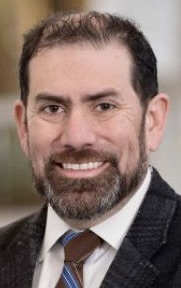
Dr. Luis A. Diaz Jr.
Dr. Luis A. Diaz Jr. of Memorial Sloan Kettering Cancer Center, who published a paper on the trial in the New England Journal of Medicine, is quoted as saying he knew of no other study in which a treatment completely obliterated a cancer in every patient. "I believe this is the first time this has happened in the history of cancer" he says.

That view is confirmed by Dr. Alan P. Venice, a colorectal cancer specialist at the University of California, San Francisco, was wasn't involved in the study. That kind of record, he says, is "unheard of."

The patients entered the study with the expectation that they might face chemotherapy, radiation and, most likely surgery that cold result in bowel, urinary and sexual dysfunction — and require colostomy bags. All 18 were pleasantly surprised to find that no such treatments were necessary.

Dr. Andrea Cercek
"There were lots of happy tears," Dr. Andrea Cercek, an oncologist at Memorial Sloan Kettering and a co-author of the paper, is quoted.

The immunotherapy drug the patients were given every three weeks for six months — dostarlimab, a checkpoint inhibitor produced by GlaxoSmithKline, which sponsored the clinical trial — costs about $11,000 per dose. "It unmasks cancer cells, allowing the immune system to identify and destroy them," the story says.

The study's authors indicate that although the earliest patient to complete the trial is more than two years post-treatment, many have only been involved for six months, and all patients will be monitored for at least five years.
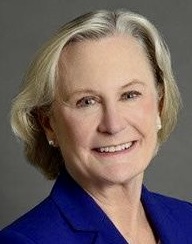
Dr. Julie Gralow
A follow-up story by Kim Bellware and Lenny Bernstein in The Washington Post notes that the study's results marked "the first time immunotherapy alone eliminated the need for chemotherapy, radiation or surgery."

The Post story quotes Dr. Julie Gralow, chief medical officer and executive vice president of the American Society of Clinical Oncology, as commenting that "I'm excited when you see such a dramatic response. It gives me hope we can find such a dramatic [treatment] for other cancers, too." 

More information about clinical trials can be found in "Rollercoaster: How a man can survive his partner's breast cancer," a VitalityPress book that I, Woody Weingarten, aimed at male caregivers.

Tuesday, December 11, 2018

American Cancer Society vs. U.S. advisory group

Agency and task force disagree on when people should start screening for colon cancer 


Whether U.S. adults should start colon cancer screening at age 45 or 50 is still in doubt.

The most recent guidelines from the American Cancer Society advocate the former, but an influential government advisory group, the U.S. Preventive Services Task Force, still believes the latter age is perfectly okay.

According to an Associated Press story by Mike Stobbe a while back, the cancer society admits its recommendation of the earlier age "could cause confusion for doctors and patients." 

Both groups, however, apparently recommend six other kinds of screening exams, "from inexpensive take-home stool tests performed every year to colonoscopies done every 10."
Dr. Rich Wender
The best test, the cancer society's Dr. Rich Wender is quoted as saying, "is the test that gets done. All of these tests are good tests, and the choice should be offered to patients."

Most colon cancer occurs, according to the story, "in adults 55 and older, and the good news is rates of cases and deaths have been falling for decades."

Colon cancer, combined with rectal cancer, is the second leading cause of cancer deaths in the United States — the top cause being lung cancer.

Some 140,000 Americans were expected to be diagnosed with colon cancer this year, "and about 50,000 will die from it," Stobbe's piece reports.

Only "about two-thirds of people 50 and older have been following screening guidelines," the article notes, quoting Dr. Marcus Plescia of the Association of State and Territorial Health Officials as saying that "it's hard enough to get people to do it at all."

But Dr. Andrew Wolf, lead author of the American Cancer Society study, reportedly said his agency had considered and rejected that reasoning.

More information about conflicting research and findings can be found in "Rollercoaster: How a man can survive his partner's breast cancer,"  a VitalityPress book that I, Woody Weingarten, aimed at caregivers

Monday, March 6, 2017

Lead author calls research results 'shocking'

New study says risk of Gen Xers and millennials getting colon and rectal cancer is rising


Americans under 55 — those known as Gen Xers and millennials — are at a greater risk today of colon and rectal cancer than any generation before.

According to American Cancer Society (ACS) and National Cancer Institute (NSI) researchers, those born in 1990 have double the risk of colon cancer and quadruple the risk of rectal cancer than those born in 1950 had at the same age.

And most of those cancers would be in more advanced stages when discovered, a study published today in the Journal of the NSI indicates — probably because routine screening normally isn't recommended for those under 50.

Rebecca Siegel
The lead author of the study, Rebecca Siegel, an ACS epidemiologist, called the size of the increase "very shocking,'" most likely because the surge of younger diagnoses contrasts with the decades-long descent of colorectal cancer cases.

According to a Washington Post story by Laurie McKinley reprinted in the San Francisco Chronicle last week, Siegel noted that the drop has been driven by older adults who've gotten regular screenings, including colonoscopies, that detect growths before they become cancerous.

She also suggested that younger people are more apt to be uninsured, which might keep them from seeing a doctor until they can no longer ignore their symptoms.

"We had such great strides just in the past years in insurance coverage because of the Affordable Care Act," she said — hinting that the situation might change for the worse under the Trump administration and Congressional Republicans' desire to "repeal and replace" Obamacare.

The study looked at nearly half a million cases of colorectal cancer from 1974 to 2013. 

It found that colon cancer rates increased about 1 to 2 percent per year for people in their 20s and 30s, and that rates for middle-aged adults also rose, albeit at a slower pace.

"Rectal rates climbed even faster in recent decades," the story added, "at about 3 percent per year for people in their 20s and 30s and 2 percent annually for those 40 to 54."

Specific reasons for the increases, not incidentally, remain unclear.

The ACS, which predicts more than 95,000 new cases of colon cancer and almost 40,000 of colorectal cancer will be diagnosed this year, is reviewing colorectal cancer screening guidelines.

Research into the risks of diseases is an integral part of "Rollercoaster: How a man can survive his partner's breast cancer," a VitalityPress book I, Woody Weingarten, aimed at male caregivers.