Showing posts with label lawsuits. Show all posts

Tuesday, June 25, 2024

Biotech giant Bayer pushing House Republicans to help it fight lawsuits linking Roundup to cancer

Bayer, a giant in the biotech industry, has been lobbying Congress to help shape a provision that could aid in the corporation's battle with lawsuits that tie its weed-killer Roundup to cancer.

The provision in the House's sweeping agricultural bill, according to a story by Tony Romm in last week's editions of The Washington Post, was drafted by Republicans with Bayer's help. Critics say it would undo nationwide pesticide protections.

Romm's piece says the farm bill "threatens to make it harder for farmers and groundskeepers to argue that they were not fully informed about some health and safety risks posed by the popular herbicide."

The focus is on glyphosate, the active ingredient in Roundup, which plaintiffs in thousands of cases have claimed regular exposure to which "could cause them to develop debilitating or deadly diseases, such as non-Hodgkin's lymphoma."

Although Bayer, a German firm that acquired Roundup in 2018 as part of its purchase of Monsanto, has agreed to pay $10 billon in a landmark settlement that ended thousands of claims in  2020 without any admission of wrongdoing, it still faces nearly 60,000 additional claims.

Daniel Savery
The Post story quotes Daniel Savery, a senior legislative representative for Earthjustice, a climate advocacy group, as saying Bayer has been losing so it's "coming to Congress with hat in hand trying to change the law."

Currently, the article continues, "the Environmental Protection Agency does not treat the underlying chemical in Roundup as a carcinogen. While the agency plans to reevaluate its stance on glyphosate in 2026, its views are at odds with some global health experts, including the World Health Organization's International Agency for Research on Cancer, which identified glyphosate as 'probably carcinogenic' in 2015."

Bayer apparently has spent about $9.6 million to lobby federal policymakers on the legislation and other issues since the start of 2023.

More information about Monsanto and Bayer's legal woes can be found in Rollercoaster: How a man can survive his partner's breast cancer, a VitalityPress book that I, Woody Weingarten, aimed at male  caregivers.

Friday, September 16, 2022

California county, 9 municipalities sue Monsanto for contaminating them with toxic PCBs

Marin County and nine of its municipalities, including my hometown, San Anselmo, have sued Monsanto because its products allegedly caused contamination.

The lawsuit — according to a press release from officials — claims the giant agri-business "deliberately misled the public, environmental regulators, and its own customers so it could reap massive profits" from its sales of toxic PCBs (polychlorinated biphenyl), chemical compounds that eventually were banned by the Toxic Substance Control Act of 1976.

Monsanto, which produced nearly 99 percent of all PCBs used in the United States since the 1930s, faces similar court actions nationwide.

PCBs are known or suspected to cause many diseases, including non-Hodgkin's lymphoma, breast cancer, liver cancer, gallbladder cancer, gastrointestinal cancer, pancreatic cancer, and skin cancer, says a recent story by Gideon Rubin, staff writer for Patch's San Anselmo-Fairfax website.

County officials explain, the Patch piece notes, that the suit about PCBs "aims to provide relief for the costs the jurisdictions will incur to remove the contaminants."

Monsanto, which was bought out by Bayer in 2018, has meanwhile settled multiple lawsuits involving its product Roundup, the nation's most popular weedkiller, after plaintiffs alleged it had caused cancer. But thousands of other suits are pending.

Rubin's article quotes county officials as saying that "according to Monsanto's own internal documents, company officials knew and were warned about the dangers to human health and the environment form PCBs, but Monsanto wrongfully promoted the product and failed to warn customers about its dangers."

The story states that two other companies, Solute, Inc., and Pharmacia LLC, are included in the new suit filed in Marin County Superior Court. A later article, by Richard Halstead in the Marin Independent Journal today, explains that the two companies had been spun off from Monsanto. While Monsanto retained its agriculture business, Solute took on the chemical business, and Pharmacia acquired the pharmaceutical business.

In addition to the county and San Anselmo, plaintiffs include the cities of Belvedere, Mill Valley, Novato, San Rafael, and Sausalito, and the towns of Corte Madera, Ross, and Tiburon.
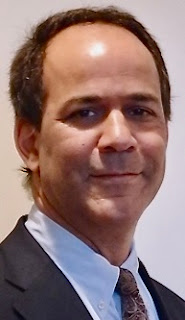
Brian Washington
All the plaintiffs, according to Rubin's article, "opted out of a national class-action settlement because it failed to sufficiently cover the anticipated costs to comply with regulations and prevent further damage, Marin County Counsel Brian Washington said in a statement."

The piece further quotes Washington as saying "PCBs have left a long toxic legacy. The companies responsible need to contribute to the solution so that the taxpayers do not have to carry the entire burden."

The chemical compounds, Rubin's story says, have also been implicated "in non-cancer health problems such as cardiovascular, endocrine,  gastrointestinal, hepatic (liver), immune, neonatal, neurological, ocular, and reproductive harm."

PCB contamination "resulting from the defendants' actions is already widespread across the [San Francisco] Bay Area," Patch reports, adding that "the entire bay is classified as 'impaired' by PCBs under the federal Clean Water Act. This impairment endangers natural resources and human health, county officials said."

That contamination has been so severe in the bay, the story continues, "that the California Office of Environmental Health Hazard Assessment has advised some people not to eat certain types of fish caught in the bay."

Rubin's piece details the suggestion: "Children and women aged 18 to 49 are advised not to eat striped bass, sharks, and white sturgeon caught in the bay. Everyone is also advised not to eat the skin and fatty tissue of any fish caught in the bay."

More information on product-caused contamination can be found in "Rollercoaster: How a man can survive his partner's breast cancer," a VitalityPress book that I, Woody Weingarten, aimed at male caregivers.

Thursday, March 21, 2019

2nd major ruling against Monsanto weedkiller

Unanimous U.S. court verdict labels Roundup as major factor in Sonoma man's non-Hodgkin's lymphoma 


In what might be a bellwether case, a six-person federal jury in San Francisco unanimously found this week that Roundup, Monsanto's weedkiller, was a substantial factor in a Santa Rosa man's cancer.

Or at least one active chemical ingredient in it — glyphosate — was.

The case could affect hundreds of others: Monsanto faces 9,000 similar lawsuits in the United States alone.

According to a story by Sam T. Levin in The Guardian, the 70-year-old plaintiff, Edwin Hardeman, said he'd used the herbicide for nearly three decades, had at least once gotten it on his skin, and "alleged that his exposure to [it] caused him to develop non-Hodgkin's lymphoma [NHL], cancer that affects the immune system."

In a second phase, the jury still must weigh liability and damage.

Hardeman, who was diagnosed with non-Hodgkin's lymphoma in 2015, has used Roundup to control weeds and poison ivy on his properties since the '80s.

A BuzzFeed News story notes that "Jennifer Moore, an attorney for the Sonoma County man, said Hardeman used Roundup regularly, spraying approximately 6,000 gallons of the herbicide over the course of 26 years."

The so-called bellwether trial, which means the verdict could possibly affect future litigation, followed a California state court verdict last August that Roundup caused the terminal cancer of Dewayne Johnson, a former school groundskeeper.

That jury, Levin's piece asserts, "said Monsanto failed to warn Johnson of Roundup's health hazards and 'acted with malice or oppression.'"

It awarded Johnson $289 million in damages, although that was later slashed to $78 million.

Monsanto, predictably, has appealed.

The Guardian story notes, however, that "Hardeman's trial has been more limited in scope. While Johnson's attorneys argued that Monsanto had 'bullied' scientists and fought to suppress negative studies about its product, the federal judge barred Hardeman's lawyers  from discussing Monsanto's alleged influence on research and regulations during the hearings."

Judge Vince Chhabria
Judge Vince Chhabria did, on the other hand, verbally flog the company on a procedural order during the trial by saying, "Although the evidence that Roundup causes cancer is quite equivocal, there is strong evidence from which a jury could conclude that Monsanto does not particularly care whether its product is in fact giving people cancer, focusing instead on manipulating public opinion and undermining anyone who raises genuine and legitimate concerns about the issue."

Despite the latest verdict, Monsanto, which has been bought by Bayer for $63 billion, continues "to argue that Roundup is safe to use and does not cause NHL."

The Hardeman trial is in effect a test case for almost 800 others nationwide that were consolidated. At least six more trials, according to MarketWatch, are expected to start this year in federal and state courts.

Details on other court cases about products that cause disease can be found in "Rollercoaster: How a man can survive his partner's breast cancer," a VitalityPress book that I, Woody Weingarten, aimed at male caregivers.

Friday, July 13, 2018

400 lawsuits filed against Monsanto's herbicide

Is Monsanto's Roundup weed killer carcinogenic? Contentious trial underway in San Francisco  

The first court trial to determine if Roundup weed killer is likely to cause cancer is underway in San Francisco.

According to an Associated Press story by Sudhin Thanawala , the contentious trial — with a school groundskeeper dying of the disease as the plaintiff and agribusiness giant Monsanto, the hericide's manufacturer, as defendant — is expected to last about a month.
Dewayne Johnson, plaintiff
The plaintiff, Dewayne Johnson, who was diagnosed in 2014 at age 42, claims Roundup caused his non-Hodgkin's lymphoma after he sprayed it from a 50-gallon tank attached to a truck as a school district pest control manager. 

The AP quoted the opening statement of Johnson's attorney, Brent Wisner, to the effect that "when the wind was gusty, it would cover his face. When a hose broke once, it soaked his entire body."

The attorney showed jurors photographs of lesions on the body of the plaintiff, who had also sprayed with a similar product, Ranger Pro. 

Wisner alleged that between the diagnosis "and now, it's just nothing but pain."

Monsanto's lawyer, George Lombardi, countered by saying that "non-Hodgkin's lymphoma takes years to develop, so Johnson's cancer started well before he began working at the school district."

Thanawala's story notes that "many government regulators have rejected a link between the active ingredient in Roundup — glyphosate — and cancer. Monsanto has vehemently denied such a connection, saying hundreds of studies have established that glyphosate is safe."

While the plaintiff "is seeking unspecified damages against Monsanto [and] the outcome of Johnson's case will not affect the hundreds of other lawsuits in state and federal courts...it may serve as an indicator of how the others might go."

Earlier this week, a San Francisco U.S. District judge, Vince Chhabria, ruled that although evidence seems weak that Roundup causes cancer, experts still could make that claim at trial.

The main claim of the lawsuits by cancer victims and their families is that Monsanto long knew about Roundup's cancer risk but failed to warn them.

Chhabria is handling more than 400 of those suits.

The AP article indicates that Monsanto developed glyphosate in the '70s and that the weed killer is sold in more than 160 countries. "Farmers in California, the most agriculturally productive state in the U.S., use it on more than 200 types of crops. Homeowners use it on their lawns and gardens."

In 2015, the France-based International Agency for Research on Cancer, part of the World Health Organization, classified the herbicide as a "probable human carcinogen." California later added it to its list of chemicals known to cause cancer.

But the U.S. Environmental Protection Agency, according to the AP, "says glyphosate is safe for humans when used in accordance with label directions."

And in February, the story continues, a federal judge in Sacramento blocked California from required that Roundup carry a warning label, saying it would be "misleading because almost all regulators have concluded that there is no evidence glyphosate is carcinogenic."

In Johnson's case, according to an online story by Helen Christopher of Courthouse News Service, San Francisco County Superior Court Judge Suzanne Ramos Bolanos sided with Monsanto yesterday by disallowing testimony of an cancer-risk expert. The ruling came on a technicality after the corporation's lawyers accused the plaintiff's legal team of trying to sneak into evidence information about the amount of exposure Johnson experienced.

Much more information about cancer causes can be found in "Rollercoaster: How a man can survive his partner's breast cancer," a VitalityPress book I, Woody Weingarten, aimed at male caregivers.

Wednesday, June 6, 2018

Java industry fighting California jurist's decision

Professor-doctor rebukes judge's final ruling that coffee labels warn about cancer risks


After countless delays (that have taken eight years), it's a done deal at last. Almost.

At least a Los Angeles Superior Court judge's final ruling about the need for warning labels on coffee has become a fait accompli, though not everyone's sanguine about his decision. 

The decision, as might be expected, is being appealed by coffee producers.
Dr. Aaron E. Carroll

And in a recent article in The New York Times under the rubric The New Health Care, Dr. Aaron E. Carroll claims the ruling — which harkens back to statewide ballot Proposition 65 enacted in 1986 and concerns a suit filed against about 90 coffee companies by a nonprofit, Council for Education and Research on Toxics — isn't backed by evidence and could do more harm than good.

The judge's decision is based on the fact that coffee contains acrylamide, which the International Agency for Research on Cancer has warned is a "probable human carcinogen." 

But Carroll, a pediatrics prof at the Indiana University School of Medicine who blogs on health research and policy, maintains the agency "has backpedaled in recent years, [essentially reversing itself when] in 2016 it declared that 'drinking coffee was not classifiable as to its carcinogenicity to humans.'"

Superior Court Judge Elihu Berle finalized his ruling in early May after having tentatively made the same decision in March.

The coffee industry has argued all along that the acrylamide is present in coffee but at harmless levels.

What's next? 

The nonprofit, according to an Associated Press story, now must "seek a permanent injunction that would either lead to ominous warning labels" or a commitment by the industry to reduce the chemical from their product, as the potato chip industry did years ago when it, too, was sued by the same group.

Carroll, who's also been outspoken that there's little evidence to support the notion that artificial sweeteners pose a health risk, asserts that acrylamide "is found in about 40 percent of the calories consumed by people in the United States," and notes that the Food and Drug Administration "reports that there is no viable commercial process for making coffee without producing at least some acrylamide."

The writer, who's opposed to most warning labels, points out that "meta analyses have shown that coffee is associated with lower risks of liver cancer, and no increased risk of prostate cancer or breast cancer," and that "when we look at cancer over all, it appears that coffee — if anything — is associated with a lower risk of cancer."

Carroll has authored a new book, "The Bad Food Bible: How and Why to Eat Sinfully," which contends that butter, salt, diet soda and alcohol have undeserved bad reputations.

Prop 65 had mandated "that businesses with more than 10 employees warn consumers if their products contain one of many chemicals that the state has ruled as carcinogenic" — a category acrylamide falls into. 

More details on which carcinogens appear in which products can be found in "Rollercoaster: How a man can survive his partner's breast cancer," a VitalityPress book I, Woody Weingarten, aimed at male caregivers.

Tuesday, April 24, 2018

Can chemical in Roundup cause cancer?

California ruling that might lead to warning labels on weed killer is challenged in federal court


Agricultural groups are trying to overturn a California ruling that might require warning labels on a popular weed killer.

According to a recent Associated Press story, a coalition of a dozen national and Midwestern groups is seeking an injunction that would keep the state from enforcing a ban that could include a cautionary phrase about Roundup potentially causing cancer.  

The lawsuit, filed in federal court in Sacramento, claims the warning would be "false" and "misleading" and alleges that the state's decision "violates constitutional due process and free speech rights and should be superseded by federal regulations."

Roundup's main ingredient, glyphosate, has been widely used since 1974. The AP story notes that it kills unwanted weeds while leaving crops and other plants alive — and is not restricted by the U.S. Environmental Protection Agency.

However, the story also reports that International Agency for Research on Cancer, based in Lyon, France, has classified glyphosate as "a probable human carcinogen," an action that prompted the California Office of Environmental Health Hazard Assessment to add it last summer to a list of chemicals known to cause cancer.

That listing, the AP indicates, "could eventually lead to a requirement for warning labels on the product."

Among the plaintiffs is the St. Louis-based Monsanto Co., which makes Roundup and, the suit says, has invested "'hundreds of millions of dollars" in the herbicide and its related glyphosate-tolerant seeds.

Gordon Stoner
Sam Delson
The story quotes Gordon Stoner, past president of the National Association of Wheat Growers, as saying a cancer warning "would result in higher food costs, crushing blows to state and agricultural economies and lost revenue up and down the entire supply chain."

But Sam Delson, COEHHA spokesman, said the agency "is confident its rules are legal."

Details about various disease risks can be found in "Rollercoaster: How a man can survive his partner's breast cancer," a VitalityPress book I, Woody Weingarten, aimed at male caregivers.

Friday, March 30, 2018

Acrylamide chemical in java may be perilous

Judge rules Starbucks, 90 other companies may have to display coffee warning in California


Because of a judge's decision, Starbucks and about 90 other roasters, grocery stores and retail shops may soon have to display a cancer warning on coffee sold in California.

According to yesterday's Associated Press story by Brian Melley, the Los Angeles judge ruled in favor of a nonprofit, the Council for Education and Research on Toxics, that had sued the companies in 2010 for failing to comply with state law by not providing a "clear and reasonable warning" of a known carcinogen.

Superior Court Judge Elihu Berle's decision — to the effect that the companies hadn't shown the threat from the chemical was insignificant — was issued as a proposed ruling, which means he could change his mind (although, reportedly, that's unlikely).

Berle, the AP piece said, gave the defense several weeks "to file objections to the proposed ruling before he makes it final."

After that ruling, a decision on monetary damages could be forthcoming.

The suit has centered on a chemical, acrylamide, that was produced in the roasting process.

Berle wrote that, while the "defendants failed to satisfy their burden of proving…that consumption of coffee confers a benefit to human health," the plaintiff had "offered evidence that consumption of coffee increases the risk of harm to the fetus, to infants, to children and to adults."

He also said that the "defendants' medical and epidemiology experts testified that they had no opinion on causation."

The AP story noted that the coffee industry has maintained that "the chemical was present at harmless levels and should be exempt from the law because it results naturally from the cooking process necessary to make the beans flavorful."

The article also indicated that attorney Raphael Metzger, who brought the lawsuit, said "he wants the industry to remove the chemical from its process [but] coffee companies have said that's not feasible and would make their product taste bad."

Metzger's group had earlier brought a similar case that resulted in potato-chip makers agreeing in 2008 "to pay $3 million and remove acrylamide from their products rather than post startling warnings that can be found throughout California and are largely ignored," the story added.

Many coffee companies, according to the AP, "have already posted warnings that specifically say acrylamide is found in coffee and is among chemicals that cause cancer. However, many of those warnings are posted in places not easily visible, such as below the counter where cream and sugar are available."

William Murray
William Murray, president and CEO of the National Coffee Association, has claimed in an emailed statement that "coffee has been shown, over and over again, to be a healthy beverage. This lawsuit…has confused consumers, and does nothing to improve public health."

Nearly half the defendants in the coffee case have already settled — and agreed to post warnings. Among the latest was 7-Eleven.

Details on everyday products that may cause cancer can be found in "Rollercoaster: How a man can survive his partner's breast cancer," a VitalityPress book I, Woody Weingarten, aimed at male caregivers.

Tuesday, February 20, 2018

Carcinogenic chemical in java? Lawsuit may tell

Longstanding suit against possible cancer perils in coffee may be resolved by year's end


Will coffee labels in California soon warn about cancer risks?

Perhaps — at least if Long Beach attorney Raphael Metzger has his way.
Raphael Metzger

Metzger, according to a recent story by Hoa Quách on the Patch website, has "sued restaurants, stating that the warning is needed as coffee contains acrylamide, a carcinogen."

A judge finally is expected to rule before the end of the year on the lawsuit he filed way back in 2010 — against companies such as Starbucks and 7-Eleven, based on Proposition 65, a 1986 law that requires items containing the chemical to have warning labels.

That suit, not incidentally, followed another by the attorney and his Metzger Law Group, one that he filed against fast-food companies in 2002 "contending that french fries also contained the hazardous ingredient," the story notes.

The current suit, on behalf of the Council for Education and Research on Toxics, offers an alternative request to the java labels — have the manufacturers "reduce the acrylamide content of their coffee products to safe levels."

But the National Coffee Association offers this defense: "There is no evidence that coffee causes cancer."

On its website, it says coffee "is a complex beverage (both compositionally and culturally) — and it's much, much more than just one of its elements. Pretending otherwise does not serve public interest in any way."

Meanwhile, CNN writer Jen Christenen has reported that at least 13 of the defendants have settled and agreed to give a warning, most recently 7-Eleven.

Private mediation with some of the remaining retailers, she contends, has been slated.

At a bench trial last fall, Christenen writes, "the coffee companies argued that the level of acrylamide in coffee should be considered safe under the law and that the health benefits of coffee essentially outweigh the risk."

Her story quotes Metzger on a personal level: "I'm addicted to coffee, I confess, and I would like to be able to have mine without acrylamide."

Christenen also points out that "in addition to coffee, acrylamide can be found in potatoes and baked good like crackers, bread and cookies, breakfast cereal, canned black olives and prune juice, although its presence is not always labeled."

A Bloomberg article indicates that the lawyer's initial complaint "grew to include about 90 coffee producers, distributors and retailers, from mom-and-pop roasters to multinationals such as Nestle."

That piece also stated his complaint had "alleged that a 12-ounce cup of coffee contains about 10 times more acrylamide than the state's 'no significant risk level.'"

Metzger's nine-attorney law group, according to its website, was founded in 1987 and "is a boutique firm whose practice is concentrated on the litigation of toxic tort and environmental exposure cases in the state of California."

A multitude of products has previously been linked to the disease. To check out many of these, pick up a copy of "Rollercoaster: How a man can survive his partner's breast cancer," a VitalityPress book I, Woody Weingarten, aimed at male caregivers.

Sunday, December 17, 2017

Is Johnson & Johnson's talcum powder perilous?

4,800 file suits contending baby powder caused their ovarian cancer, N.Y. Times reports


Consumer goods giant Johnson & Johnson is being sued by thousands of women in the United States over its baby powder.

According to a recent story by Tiffany Hsu in The New York Times, the women, at least 4,800 strong, claim that "talcum particles in the popular products caused their ovarian cancer."

The plaintiffs "are taking the company to court one at a time," the story says, rather than work together to file a class action that can be tough to win. 

In addition to seeking restitution, they "are asking that Johnson & Johnson add a warning to its baby powder label or replace the product entirely with a similar one formulated with cornstarch."

Only seven cases have been decided so far. Of those, six verdicts favored those who sued.

Johnson & Johnson — which is also facing suits regarding Xarelto alleging that the drug caused uncontrollable bleeding, and its pelvic mesh for women, which supposedly caused "urinary dysfunction, loss of sexual function, constipation and other complications" — is appealing those verdicts.

Pretrial procedures "in nearly 900 talc cases have been consolidated into what is known as a multidistrict litigation, or MDL," according to the Times. "MDLs tend to reduce costs and time. Only one set of expert witnesses needs to be called."
Nora Freeman Engstrom
Hsu's story quotes Stanford Law School prof Nora Freeman Engstrom to the effect that no global settlement can be reached "until both sides have a really clear sense of the strengths and weaknesses and value of these claims. And the only way to test that is on the battlefield, which is trial."

The plaintiffs in the newest suits cite studies from 1977 on and claim "that talc in baby powder can be absorbed by the reproductive system and cause inflammation in the ovaries when applied for feminine hygiene purposes."

Experts don't necessarily support the plaintiffs' claims, however.

Hsu's story also quotes the National Cancer Institute website, for example, that "the weight of evidence does not support an association between perineal talc exposure and an increased risk of ovarian cancer."

Information on other studies about apparent heightened risks can be found in "Rollercoaster: How a man can survive his partner's breast cancer," a VitalityPress book I, Woody Weingarten, aimed at male caregivers.

Wednesday, July 27, 2016

Mastectomy may be in the offing for 45-year-old

Actress Shannen Doherty preempts breast cancer hair loss by shaving her head


Shannen Doherty, with pre-cancer
treatments haircut in process.
Suddenly, actress Shannen Doherty is bald.

Temporarily, at least.

She's shaved her head while fighting breast cancer, according to a recent Associated Press story in the Washington Times.

The 45-year-old Doherty posted six black-and-white photos on Instagram that showed her lopping off her locks, preceded by another picture with a caption carrying the phrase #cancersucks.

Her cancer initially was disclosed in a lawsuit filed last year against her ex-business managers.

It alleged that they caused her health to deteriorate while they mismanaged her money. She charged in the suit that her cancer went undetected because she put off going to a doctor when they let her insurance lapse.

Doherty gained fame in a four-year stint as Brenda Walsh on "Beverly Hills 90210" — but even greater notoriety as being someone extremely difficult to work with.

The actress — who maintains she'll probably be unable to have children because of her cancer treatments — has signed to do a television series based on the 1995 Kevin Smith movie, "Mallrats."

She's also said she's prepared to have a mastectomy if other treatments fail.

You can learn about the psychological damage of hair loss in "Rollercoaster: How a man can survive his partner's breast cancer," a VitalityPress book I, Woody Weingarten, aimed at male caregivers.

Thursday, September 3, 2015

Shh! Don't talk of how docs, hospitals mess up

N.Y. lawyers argue for easing legislation and regulations that stifle malpractice suits


Malpractice suits are something hospital execs and physicians prefer no one talk about, especially in public.

But two attorneys took to the op-ed page of The New York Times this week to argue for a change in New York state law to lengthen the time in which lawsuits can be filed.


Thomas Moore
The pair, partner Thomas Moore and associate Steve Cohen of the firm Kramer, Dillof, Livingston and Moore, also maintained that "as long as hospitals and doctors block legislation and fight regulation, patients will remain in peril."

Their jumping off point, according to their opinion piece, was a futile legislative attempt to update a state law that allows victims only two and a half years "from the time of the medical mistake in which to bring an action, not from the time the error was discovered or should have been discovered" — the latter being the standard in 44 of the nation's 50 states.

The lawyers also asserted that "hospitals are dangerous places," noting that in 1999 "the Institute of Medicine at the National Academy of Sciences published a study…which concluded that at least 44,000 patients were killed (and many more injured) in hospitals each year because of medical errors. By 2011, a study in the journal HealthAffairs estimated that the number of avoidable deaths was probably 10 times higher."

The attorneys, whose agenda clearly would line their own pockets, went on to claim that "doctors and hospitals are doing a poor job of policing themselves, yet they have been successful at keeping anyone else from doing it."

As might be expected, opposition to extending the statute of limitations came from the hospital and health care lobby, whose agenda is equally one-sided.

The KDL&M website cites the firm's success "in medical malpractice cases, labor law and negligence cases," and notes that it's won "more than 120 verdicts of over $1 million" and "negotiated settlements on behalf of their clients in excess of $1 billion."

I, Woody Weingarten, discuss medical silences and malpractice possibilities in "Rollercoaster: How a man can survive his partner's breast cancer," a VitalityPress book particularly aimed at male caregivers.