Showing posts with label Monsanto. Show all posts

Thursday, June 25, 2026

Supreme Court blocks thousands of suits that claim Roundup weed-killer causes cancer

A new Supreme Court ruling will restrict "one the largest waves of product liability lawsuits in the history of the nation."

According to a dispatch by Justin Jouvenal in today's editions of The Washington Post, the court specifically blocked "thousands of suits claiming Roundup causes cancer."

The court, in a 7-2 decision (liberal Justice Ketanji Brown Jackson and conservative Justice Neil M. Gorsuch voted against), ruled that "Monsanto was not required to offer a warning because the Environmental Protection Agency holds that Roundup's active ingredient, glyphosate, is not a cancer risk," the story says.

The EPA finding, however, contrasts with another by the World Health Organization (WHO), which, Jouvenal's piece says, "found glyphosate was 'probably carcinogenic to humans' after reviewing available research on the chemical. In particular, the agency found a likely link between non-Hodgkin lymphoma and  glyphosate."

In  light of that report, some countries have banned the weed-killer.

Paul D. Clement
Paul D. Clement, attorney for Monsanto, now owned by Bayer, had argued before the Supreme Court that the Federal Insecticide, Fungicide and Rodenticide Act (FIFRA), which regulates the sale and marketing of pesticides and herbicides, "preempts state-court claims" that the company had to warn cancer victims of alleged dangers posed by Roundup because the EPA ruled it was safe.

According to the Post story, the court decision "turned on a technical legal question, but one with enormous stakes. On the line are billions of dollars, the fate of tens of thousands  of lawsuits filed by cancer victims, and the future of an herbicide farmers say is crucial to the nation's food supply but health groups warn is a danger."

Litigation, the article notes, had "prompted Monsanto to remove glyphosate-based Roundup from the consumer market, but it is still available to farmers and commercial users."

More information on lawsuits and disease can be found in Rollercoaster: How a man can survive his partner's breast cancer, aVitalityPress book that I, Woody Weingarten aimed at male caregivers. My other books are MysteryDates — How to keep the sizzle in your relationship; The Roving I, a compilation of 70 of my newspaper columns; and Grampy and His Fairyzona Playmates, a whimsical fantasy intended for 6- to 10-year-olds that I co-authored with my then 8-year-old granddaughter. Check out my website at https://woodyweingarten.com for details.

Tuesday, June 25, 2024

Biotech giant Bayer pushing House Republicans to help it fight lawsuits linking Roundup to cancer

Bayer, a giant in the biotech industry, has been lobbying Congress to help shape a provision that could aid in the corporation's battle with lawsuits that tie its weed-killer Roundup to cancer.

The provision in the House's sweeping agricultural bill, according to a story by Tony Romm in last week's editions of The Washington Post, was drafted by Republicans with Bayer's help. Critics say it would undo nationwide pesticide protections.

Romm's piece says the farm bill "threatens to make it harder for farmers and groundskeepers to argue that they were not fully informed about some health and safety risks posed by the popular herbicide."

The focus is on glyphosate, the active ingredient in Roundup, which plaintiffs in thousands of cases have claimed regular exposure to which "could cause them to develop debilitating or deadly diseases, such as non-Hodgkin's lymphoma."

Although Bayer, a German firm that acquired Roundup in 2018 as part of its purchase of Monsanto, has agreed to pay $10 billon in a landmark settlement that ended thousands of claims in  2020 without any admission of wrongdoing, it still faces nearly 60,000 additional claims.

Daniel Savery
The Post story quotes Daniel Savery, a senior legislative representative for Earthjustice, a climate advocacy group, as saying Bayer has been losing so it's "coming to Congress with hat in hand trying to change the law."

Currently, the article continues, "the Environmental Protection Agency does not treat the underlying chemical in Roundup as a carcinogen. While the agency plans to reevaluate its stance on glyphosate in 2026, its views are at odds with some global health experts, including the World Health Organization's International Agency for Research on Cancer, which identified glyphosate as 'probably carcinogenic' in 2015."

Bayer apparently has spent about $9.6 million to lobby federal policymakers on the legislation and other issues since the start of 2023.

More information about Monsanto and Bayer's legal woes can be found in Rollercoaster: How a man can survive his partner's breast cancer, a VitalityPress book that I, Woody Weingarten, aimed at male  caregivers.

Friday, September 16, 2022

California county, 9 municipalities sue Monsanto for contaminating them with toxic PCBs

Marin County and nine of its municipalities, including my hometown, San Anselmo, have sued Monsanto because its products allegedly caused contamination.

The lawsuit — according to a press release from officials — claims the giant agri-business "deliberately misled the public, environmental regulators, and its own customers so it could reap massive profits" from its sales of toxic PCBs (polychlorinated biphenyl), chemical compounds that eventually were banned by the Toxic Substance Control Act of 1976.

Monsanto, which produced nearly 99 percent of all PCBs used in the United States since the 1930s, faces similar court actions nationwide.

PCBs are known or suspected to cause many diseases, including non-Hodgkin's lymphoma, breast cancer, liver cancer, gallbladder cancer, gastrointestinal cancer, pancreatic cancer, and skin cancer, says a recent story by Gideon Rubin, staff writer for Patch's San Anselmo-Fairfax website.

County officials explain, the Patch piece notes, that the suit about PCBs "aims to provide relief for the costs the jurisdictions will incur to remove the contaminants."

Monsanto, which was bought out by Bayer in 2018, has meanwhile settled multiple lawsuits involving its product Roundup, the nation's most popular weedkiller, after plaintiffs alleged it had caused cancer. But thousands of other suits are pending.

Rubin's article quotes county officials as saying that "according to Monsanto's own internal documents, company officials knew and were warned about the dangers to human health and the environment form PCBs, but Monsanto wrongfully promoted the product and failed to warn customers about its dangers."

The story states that two other companies, Solute, Inc., and Pharmacia LLC, are included in the new suit filed in Marin County Superior Court. A later article, by Richard Halstead in the Marin Independent Journal today, explains that the two companies had been spun off from Monsanto. While Monsanto retained its agriculture business, Solute took on the chemical business, and Pharmacia acquired the pharmaceutical business.

In addition to the county and San Anselmo, plaintiffs include the cities of Belvedere, Mill Valley, Novato, San Rafael, and Sausalito, and the towns of Corte Madera, Ross, and Tiburon.
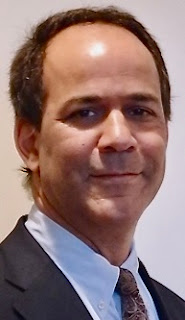
Brian Washington
All the plaintiffs, according to Rubin's article, "opted out of a national class-action settlement because it failed to sufficiently cover the anticipated costs to comply with regulations and prevent further damage, Marin County Counsel Brian Washington said in a statement."

The piece further quotes Washington as saying "PCBs have left a long toxic legacy. The companies responsible need to contribute to the solution so that the taxpayers do not have to carry the entire burden."

The chemical compounds, Rubin's story says, have also been implicated "in non-cancer health problems such as cardiovascular, endocrine,  gastrointestinal, hepatic (liver), immune, neonatal, neurological, ocular, and reproductive harm."

PCB contamination "resulting from the defendants' actions is already widespread across the [San Francisco] Bay Area," Patch reports, adding that "the entire bay is classified as 'impaired' by PCBs under the federal Clean Water Act. This impairment endangers natural resources and human health, county officials said."

That contamination has been so severe in the bay, the story continues, "that the California Office of Environmental Health Hazard Assessment has advised some people not to eat certain types of fish caught in the bay."

Rubin's piece details the suggestion: "Children and women aged 18 to 49 are advised not to eat striped bass, sharks, and white sturgeon caught in the bay. Everyone is also advised not to eat the skin and fatty tissue of any fish caught in the bay."

More information on product-caused contamination can be found in "Rollercoaster: How a man can survive his partner's breast cancer," a VitalityPress book that I, Woody Weingarten, aimed at male caregivers.

Monday, August 22, 2022

Ingredient in weedkillers tied to cancer is found in 80% of U.S. urine samples, new study finds

Scientists declare "disturbing" and "concerning" a new study's findings that 80% of urine samples drawn from U.S. children and adults contain a pesticide ingredient linked to cancer. 

The Centers for Disease Control (CDC) report, according to a recent story by Carey Gillam in The Guardian, says glyphosate, the active ingredient in herbicides (including Roundup, the world's best-selling weedkiller), was found in 1,875 samples out of 2,310 tested.

The samples were intended to be representative of the U.S. population, with almost a third of the participants being children between the ages of six and 18.

Professor Lianne Sheppard
Gillam's article quotes Lianne Sheppard, professor at the University of Washington's department of environmental and occupational health sciences, to the effect that she expects "the realization that most of us have glyphosate in our urine will be disturbing to many people."

Sheppard co-authored a 2019 analysis that found glyphosate exposure "increases the risk" of non-Hodgkin's lymphoma.

The amount of glyphosate in human urine, the Guardian story says as it cites research published by University of California San Diego School of Medicine scientists, "has been steadily rising since the1990s when Monsanto Co. introduced genetically altered crops [such as corn and soybeans] designed to be sprayed direction with Roundup."

In 2015, the International Agency for Research on Cancer, an arm of the World Health Organization, classified glyphosate as a probable human carcinogen.

The U.S. Environmental Protection Agency (EPA), however, claimed it was not likely to be that. Only last month, in contrast, a federal appeals court ruled the agency needs to give "further consideration" to the risks; that opinion also vacated the agency's safety determination. 

Dr. Philip J. Landrigan
Dr. Philip J. Landrigan, who worked at both the CDC and EPA for years and now directs Boston College's Program for Global Public Health and the Common Good, is also quoted by Gillam: "People of all ages should be concerned, but I'm particularly concerned for children. Children are more heavily exposed to pesticides than adult because pound-for-pound they drink more water, eat more food and breathe more air. Also, children have many years of future life when they can develop diseases with long incubation periods such as cancer. This is particularly a concern with the herbicide, glyphosate."

More information about disease studies can be found in "Rollercoaster: How a man can survive his partner's breast cancer," a VitalityPress book that I, Woody Weingarten, aimed at male caregivers.

Tuesday, July 12, 2022

U.S. judge OKs refunds for customers in suit that says Monsanto masked Roundup's cancer risks

A federal judge has tentatively approved small refunds for customers in a lawsuit accusing Roundup's manufacturer of hiding cancer risks.

According to a recent story by Bob Egelko in The San Francisco Chronicle, buyers of the weed killer in recent years would be eligible for 20% refunds. 

The amount would be minuscule, however — between 50 cents and $33, depending upon the amounts of 19 versions of the herbicide purchased "during a period determined by the statute of limitations in their state."

Gillian Wade
As an example, the story cites California, the state in which the ruling jurist, U.S. District Judge Vince Chhabria of San Francisco, resides. 

There, Egelko's article quotes Gillian Wade, a lawyer for the plaintiffs, as saying, the judgment would mean a refund based on "one product per year for the last five years if they no longer have a receipt or other proof of purchase, and more products if they have such documentation."

The proposed settlement calls for Bayer, the parent company of Monsanto, the giant agribusiness that makes Roundup, to pay between $23 million and $45 million, depending on the claims. Of that amount, the Chronicle story says, "up to 25% would go to attorneys for legal fees and costs, and the rest to customer refunds."

Despite Chhabria's ruling, which seemingly validates the nationwide settlement of the lawsuit accusing Monsanto of false advertising, the company continues to describe the product "as perfectly safe."

Egelko's story notes that Monsanto still cites the weed killer's "approval since 1991 by the U.S, Environmental Protection Agency. But the International Agency for Research on Cancer, an arm of the World Health Organization, classified the herbicide's main ingredient, glyphosate, as a probable cause of human cancer in 2015. And the EPA has now offered to allow California to place cancer warning labels on Roundup sold in the state."

The settlement is separate from the tens of thousands of suits filed against Monsanto and Bayer by people diagnosed with cancer after spraying Roundup, the world's most popular weed killer, on their crops. San Francisco Bay Area juries alone already have awarded damages of $133 million in three of those cases, and just recently the U.S. Supreme Court denied review of Monsanto's appeal of the award to one of the plaintiffs, Edwin Hardeman, a former school groundskeeper in Benicia who was diagnosed with non-Hodgkin's disease in 2015.

Chhabria's ruling, the judge emphasized, doesn't hinder any customer's right to sue for any illness or other harm caused by the weed killer.

He is scheduled to finalize his approval of the refunds in January.

Information on other lawsuits related to diseases can be found in "Rollercoaster: How a man can survive his partner's breast cancer," a VitalityPress book that I, Woody Weingarten, aimed at male caregivers.

Tuesday, June 21, 2022

Top U.S. court rejects Roundup maker's appeal of decision that the weed killer causes cancer

The U.S. Supreme Court has let a $25 million verdict against Bayer, parent company of Monsanto, manufacturer of the popular weed killer Roundup, stand. 

The original jury found that Monsanto, the giant agribusiness that manufactures the pesticide, had failed to warn about cancer risks to those using the product.

The top court's decision not to intervene means not only that the decision in the suit brought by Edwin Hardeman, who was diagnosed in 2015 with non-Hodgkin's lymphoma, can remain intact but the way is cleared for thousands of similar lawsuits against Bayer. 

A story by Ann E. Marimow in an edition of The Washington Post this week notes that the "Biden administration had urged the court to deny the company's [stance], a departure from the Trump administration's position."

Hardeman's suit alleged that his use of Roundup for more than two decades caused his cancer and that Monsanto, which Bayer purchased in 2018, failed to warn about the risks associated with the active ingredient, glyphosate.

After an international research group in 2015 classified glyphosate as "probably carcinogenic to humans," the state of California demanded a warning label on Roundup, the nation's most widely used weed killer — in opposition to the Environmental Protection Agency's repeatedly concluding that "glyphosate is unlikely to cause cancer in humans."

Two years ago, according to the story, "Bayer agreed to pay more than $10 billion to settle tens of thousands of potential U.S. claims" but it admitted no wrongdoing. It also said it was moving toward alternate ingredients to "manage litigation risk in the U.S. and not because of safety concerns."

Judge Michelle Friedland
Just days before the Supreme Court ruling about the Hardeman suit, "a separate ruling from the 9th Circuit ordered the EPA to reconsider its finding in 2020 that glyphosate did not pose 'any unreasonable risk to man or the environment,'" Marimow's article reports. As a part of the unanimous decision, Judge Michelle Friedland writes that the Trump-era opinion "was not supported by substantial evidence" and didn't meet the agency's "legal obligations for reviewing environmental impact."

More information on court battles over carcinogenics can be found in "Rollercoaster: How a man can survive his partner's breast cancer," a VitalityPress book that I, Woody Weingarten, aimed at male caregivers.

Monday, December 6, 2021

Monsanto appeals a $25.2 million damage verdict against Roundup herbicide to Supreme Court

Monsanto has challenged a $25.2 million award to a cancer patient.

Edwin Hardeman
According to a recent story by Bob Egelko in the San Francisco Chronicle, the agribusiness giant told the Supreme Court that the damage verdict in favor of the patient, Edwin Hardeman, who sprayed Roundup on his North Bay properties "should never have gone to the jury." 

The basis of the claim by Bayer, Monsanto's parent company, is that the U.S. Environmental Protection Agency (EPA) had concluded that the herbicide, the world's most widely used, was safe.

However, an arm of the World Health Organization (WHO), the International Agency for Research on Cancer, had concluded in 2015, that the main ingredient in Roundup, glyphosate, "was a probable cause of human cancer, a finding endorsed by California health officials," the Chronicle piece says.

The court is expected to consider the appeal at its weekly conference Dec. 10.

Monsanto filed the appeal despite it agreeing to replace glyphosate "with another active ingredient for U.S. home and garden sales, starting in 2023, while continuing to market the current version for agricultural use," Egelko's story reports.

The Ninth U.S. Circuit Court of Appeals, in a May ruling that upheld Hardeman's damage award, "said the EPA's approval did not carry the force of law, and it did not preclude a judge or jury from deciding whether Monsanto had violated a California law requiring warnings against risks that are 'known or knowable.'" 

Hardeman was diagnosed with lymphoma, a sometimes fatal disease, in 2015 after having used Roundup for 26 years on properties in Galla and Santa Rosa.

A federal court jury in July 2019 found the weed-killer was a "substantial cause" of his cancer. It awarded him, according to Egelko's story, "damages for economic losses, pain and suffering and emotional distress, along with punitive damages against the company for selling a product it knew, or should have known, to be dangerous." 

The article also notes that "state courts, meanwhile, have upheld damages of $21.5 million to Dewayne 'Lee' Johnson, diagnosed with terminal cancer after spraying the herbicide as a groundskeeper for the Benicia Unified School District, and $82.2 million to Alva and Alberta Pilliod of Livermore, who sprayed Roundup on their crops for 30 years."

More information about consumer products that may cause disease can be found in "Rollercoaster: How a man can survive his partner's breast cancer," a VitalityPress book that I, Woody Weingarten, aimed at male caregivers.

Friday, May 28, 2021

U.S. judge rejects $2 billion Monsanto offer to quash future suits by Roundup cancer victims

A federal jurist in San Francisco has rejected Monsanto's proposed $2 billion Roundup settlement.

According to a story by Bob Egelko in the San Francisco Chronicle two days ago,  U.S. District Judge Vince Chhabria indicates the plan by the giant agribusiness, intended "to fend off suits by cancer victims" who sprayed the company's herbicide on their crops, offered little to users who might be diagnosed with cancer in the future.

Chhabria labeled the proposal "clearly unreasonable."

"More than 100,000 people nationwide who suffer from non-Hodgkin's lymphoma and other cancers," the story notes, "have already sued Monsanto and its parent company, Bayer AG." 

Bayer has offered nearly $10 billion to settle those pending lawsuits, resolving almost 70 percent of them. But yesterday's ruling was about an additional $2 billion for those who have yet to go to court.

Three San Francisco juries, including one in which Chhabria presided, have awarded tens of millions of damages to cancer victims of the world's most widely used weed-killer. Those verdicts were undoubtedly based in part on a 2015 statement by the International Association for Research on Cancer, a World Health Organization arm, that glyphosate is a probable cause of cancer in human beings.

Bill Freese, science director of the nonprofit Center for Food Safety, was quoted in the Chronicle article as saying that the settlement would have left many users "high and dry in order to limit Bayer/Monsanto's liability for their carcinogenic herbicide."

The rejected proposal included the limitations that victims already diagnosed with cancer would accept payments no more than $200,000 each and that they could seek compensation for personal harm but not punitive damages, despite the latter being the largest part of previous jury verdicts.

Those not yet diagnosed would have been able to seek four years of company-funded medical monitoring and receive payments from the $2 billion fund if they subsequently got cancer; Chhabria, however, maintained that the proposed compensation fund might run out of money by the time they were diagnosed.

After the ruling, Bayer said it would reevaluate "the future of glyphosate-based products in the U.S. residential market," according to the Chronicle piece.

Monsanto and Bayer have long contended that the U.S. Environmental Protection Agency found Roundup safe and said it could be sold without warning labels.

Details on other litigation over disease-producing agents can be found in "Rollercoaster: How a man can survive his partner's breast cancer," a VitalityPress book that I, Woody Weingarten, aimed at male caregivers.

Thursday, October 22, 2020

Bayer adjunct loses plea about ignoring safety

Top court in California rejects Monsanto appeal in case where jury ruled that herbicide caused cancer


The California Supreme Court has turned down both defendant and plaintiff appeals in a case where a jury decided the weed-killer Roundup was the reason the defendant contracted cancer.

A story by Bob Egelko in yesterday's San Francisco Chronicle explains that the court denied Monsanto's appeal of a "groundbreaking verdict that found the company's widely used herbicide caused a school groundskeeper's cancer and that the company disregarded public safety in marketing its product."

Simultaneously, however, it rejected a review of the plaintiff's appeal of a lower-court ruling that reduced his damages from $78.5 million to $21.5 million.

The case had been the first in the United States to go to trial among many thousands filed against the giant agribusiness now owned by Bayer, which paid $63 billion for it in 2018. Cancer victims maintain that the problem is glyphosate, the active ingredient in Roundup and a more concentrated version called Ranger Pro.

Dewayne Johnson
The plaintiff in the groundbreaking case, Dewayne Johnson, had developed non-Hodgkin's lymphoma, a blood cancer, after using the Ranger Pro from two to three hours a day over a four-year period as a groundskeeper and pest-control manager for the Benicia School District. At the time of the 2018 trial, lesions covered his body. 

The Vallejo resident testified, Egelko's story says, that "he wore protective clothing but couldn't fully protect his face from wind-blown spray, and twice was drenched with herbicide sprays from a detached hose and a leaking container."

According to the Chronicle article, the jury determined that Monsanto "should have known the product was carcinogenic, and 'acted with malice or oppression' by failing to notify Johnson's employer."

Bayer has indicated it may consider further review of Wednesday's rulings, which most likely would mean seeking a federal court judgment. The company has previously said it would pay nearly $10 billion to upwards of 125,000 claimants, as well as setting aside another billion for potential future plaintiffs. Those settlements, announced in June, haven't yet been finalized and, in fact, have been challenged by some plaintiffs' lawyers. 

Information on other suits against manufacturers can be found in "Rollercoaster: How a man can survive his partner's breast cancer," a VitalityPress book that I, Woody Weingarten, aimed at male caregivers.

Wednesday, June 24, 2020

30,000 suits against weed-killer still in play

Bayer, parent of Monsanto, agrees to pay $10 billion to thousands who claim Roundup caused their cancer


Bayer AG has unexpectedly agreed to pay $10 billion in cancer settlements in regard to the world's most widely used weed-killer.

According to a story by Hannah Denham in The Washington Post, the German company, the world's largest seed and agrochemical maker that had merged with agribusiness giant Monsanto in a $63 billion deal, "will allocate between $8.8 billion and $9.6 billion to resolve the current Roundup litigation."

That will cover "75 percent of the 125,000 current filed and unfixed claims that the product leads to non-Hodgkin's lymphoma" — meaning that some 30,000 suits remain unsettled.

Judge Vince Chhabria
In addition, Bayer "will also pay $1.25 billion for a separate class agreement for potential future claims, which will be subject to approval in the U.S. District Court for the Northern District of California by Judge Vince Chhabria," Denham's piece reports.

Although agreed to, the settlements have yet to be signed and sealed.

At the time of the 2018 merger, and since, Monsanto has "maintained that glyphosate — the active weed-killing ingredient in Roundup — had a history of safe use, and Bayer has echoed that since its acquisition."

In 2015, however, the International Agency for Research on Cancer, an arm of the World Health Organization, proclaimed that the herbicide was "probably carcinogenic to humans."

Details of the settlements became public today, only one day after U.S. District Judge William Shubb, ignoring the verdicts of three California juries against Monsanto, had issued a permanent injunction against the state's requiring a warning label on the pesticide.

Plaintiffs in those cases had won nearly $300 million. Monsanto, however, will continue to appeal all of them, and the settlements — which involved negotiations with 25 different law firms — do not apply to any of the three.

Lawyers for the plaintiffs, according to EcoWatch, an environmental website, had “argued that the [Environmental Protection Agency's earlier] insistence that Roundup does not cause cancer is spurious since there was evidence the company had unduly influenced the federal agency and had ‘ghost-written’ purported research studies on the product’s safety.” 

EcoWatch strongly suggested that the settlement, one of the largest ever in U.S. civil litigation, came about because of "the spate of lawsuits and their legal fees [that made Bayer] lose 40 percent of its value."

The plaintiffs also alleged, the website's story said, that “Bayer manipulated studies and deceived the scientific community to make glyphosate seem safer than it actually is, according to Reuters.”

The Post article noted meanwhile that "Bayer said that the settlement was a unanimous decision from the company's board of management, supervisory board and input from the special litigation committee, adding that the settlement doesn't mean an admission of liability or wrongdoing."

The piece indicated further that "chief executive Werner Baumann said in a statement that the action allows the company to 'bring a long period of uncertainty to an end.'" 

More information on court cases alleging that products cause disease can be found in "Rollercoaster: How a man can survive his partner's breast cancer," a VitalityPress book that I, Woody Weingarten, aimed at male caregivers.

Tuesday, June 23, 2020

Verdicts of three California juries nixed

Federal judge sides with Monsanto, blocks cancer-warning labels from most widely used weed-killer


Ignoring the verdicts of three California juries, a federal judge ruled yesterday that the state can’t require a warning label on Roundup.

U.S. District Judge William Shubb
U.S. District Judge William Shubb, according to an Associated Press story, issued a permanent injunction against the labeling of the world’s most widely used weed-killer — despite plaintiffs in the three cases having won nearly $300 million after the juries agreed that glyphosate, the main ingredient in Roundup, Monsanto’s herbicide, causes non-Hodgkin’s lymphoma and other blood cancers.

The AP cited a contrary quote by Shubb in the San Francisco Chronicle to the effect that “the great weight of evidence indicates that glyphosate is not known to cause cancer.”

The U.S. District judge noted that the U.S. Environmental Protection Agency and similar agencies in Europe “haven’t found a connection between the chemical and cancer.”

The judge contended, according to the AP, that “the state couldn’t meet a legal standard” for requiring the labeling — in effect overturning California’s warning requisite on cancer-causing products under its Safe Drinking Water and Toxic Enforcement Act that was approved in 1986 by voters. 

California had wanted the labels based on a 2016 finding by the International Agency for Research on Cancer, an arm of the World Health Organization, that glyphosate "was probably a cause of cancer in humans.”

Monsanto, which is now owned by Bayer AG, a German chemical and pharmaceutical giant, sued to overturn that position and, in 2018, Shubb temporarily blocked the labeling. In his latest ruling, the judge suggested that the state can force a company to change its label only if the statement is purely factual and non-controversial — itself apparently a controversial posture.

The monster agribusiness, meanwhile, has appealed the verdicts in all three cases.

It had been facing some 125,000 lawsuits in spite of contending Roundup is safe. But of those cases — reports a story on the EcoWatch website that features “environmental news for a healthier planet and life” — Bayer “made a verbal agreement to settle 50,000 to 85,000 cases in May, awarding plaintiffs anywhere from a few thousand dollars to a few million, according to Fortune” magazine.

The reason for those settlements, EcoWatch speculated, is “the spate of lawsuits and their legal fees [that] made the company lose 40 percent of its value.”

Lawyers for the plaintiffs in those instances, that article continues, “argued that the EPA’s insistence that Roundup does not cause cancer is spurious since there was evidence the company had unduly influenced the federal agency and had ‘ghost-written’ purported research studies on the product’s safety.” 

The story also noted that the verdicts in the three cases with huge settlements, all of which are being appealed by Monsanto, came after the plaintiffs alleged that “Bayer manipulated studies and deceived the scientific community to make glyphosate seem safer than it actually is, according to Reuters.”

More information about lawsuits pertaining to products that may cause disease can be found in “Rollercoaster: How a man can survive his partner’s breast cancer,” a VitalityPress book that I, Woody Weingarten, aimed at male caregivers.

Monday, February 17, 2020

Calif. attorney general backs weed-killer victims

Agri-business Monsanto claims that federal ruling supersedes California law as it appeals big cancer award


Who's gonna win in court — cancer victims or the manufacturer of weed-killers that have been deemed apt to cause malignancies?

Monsanto, which produces Ranger Pro as well as Roundup, has, in effect, decided to test that question.
Dwayne "Lee" Johnson

According to a story by Bob Egelko in an edition of the San Francisco Chronicle last week, the giant agri-business is — by challenging a $78.5 million damage award to Dwayne "Lee" Johnson, a Vallejo groundskeeper who was stricken with non-Hodgkin's lymphoma in 2014 after spraying Benicia school grounds with Ranger Pro for four years — betting a federal ruling supersedes California law.

But Egelko's story indicates that Xavier Becerra, the state's attorney general, told the First District Court of Appeal in San Francisco on Wednesday that the 2018 verdict "was valid based on state laws requiring warning labels for cancer-causing chemicals."

Glyphosate, the weed-killers' active ingredient, is the chemical that's been said to be carcinogenic.

Monsanto is depending on a U.S. Environmental Protection Agency ruling — repeated in August — that the chemical is safe. 

Becerra's office, meanwhile, "argued that the EPA's statements about glyphosate, and its approval of a product label without cancer warnings, 'do not carry the force of law.'"

Lawyers from that office also contended that the EPA's stance "does not prohibit a state from finding that the agency-approved label 'is inadequate to protect public health and therefore constitutes misbranding.'"

In a statement, the article continues, Becerra maintained that "California process its residents from dangerous pesticides. We shouldn't be forced to put our heads in the sand simply because the EPA won't do its job."

Johnson's lawyers have said that Monsanto, now a subsidiary of the German pharmaceutical company Bayer AG, "unduly influenced EPA decisions and had 'ghost-written' reports for the government agency."

They furthermore cited a 2015 assessment by an arm of the World Health Organization, the International Agency for Research on Cancer, that glyphosate was a probable cause of cancer in humans.

The jury that awarded Johnson $78.5 million found unanimously that Monsanto was responsible for his cancer and should have known of the product's perils, Egelko's story notes.

Suzanne Bolano, the San Francisco Superior Court judge in Johnson's case, allowed lawyers to argue that Mosanto knew its product was dangerous and should have informed the public. 

Similar stances were taken by judges in two similar cases where huge verdicts were rendered against the company.

More information on corporations that are blamed for manufacturing products that cause cancer can be found in "Rollercoaster: How a man can survive his partner's breast cancer," a VitalityPress book that I, Woody Weingarten, aimed at caregivers. 

Thursday, August 8, 2019

Pair to get $87 million for Roundup lymphoma

An Alameda County judge blames Monsanto for cancer-causing agent despite cutting $2 billion award 


Even as a judge sliced an award against Monsanto from $2 billion, she reaffirmed the jury's conclusion that the company's weedkiller was "a substantial factor" in causing cancer.

Judge Winifred Smith
Alameda County Superior Court Judge Winifred Smith recently reduced the verdict to $87 million in the lawsuit brought by Alva and Alberta Pilliod after, having used Roundup for three decades, the couple contracted non-Hodgkin's lymphoma.

But the judge also asserted, according to an Associated Press story, that evidence "supported the finding that Monsanto knew the herbicide's active ingredient, glyphosate, could be dangerous and failed to warn the couple from Livermore, California."

It marked the third time a judge had reduced an award over the disputed chemical.

Smith cut the punitive damages from $1 billion each to $70 million for the pair, and awarded the Pilliods $17 million for future pain and suffering.

The lawyer for the couple, Brent Wisner, called the overall ruling "a major victory."

But Monsanto's corporate parent, the German pharmaceutical firm Bayer AG, intends to appeal.

The three California trials were the first involving an estimated 13,000 plaintiffs with pending suits again the agribusiness, the AP story indicates.

Monsanto will face its first non-California trial at a courthouse in St. Louis this month.

Information about other trials of manufacturers whose products cause disease can be found in "Rollercoaster: How a man can survive his partner's breast cancer," a VitalityPress book that I,
Woody Weingarten, aimed at male caregivers.

Friday, July 5, 2019

Jurist raps Bayer company for being uncaring

Judge expected to trim $80 million jury verdict against Monsanto for its cancer-causing Roundup


The judge in the first federal court suit against Monsanto intends to reduce a jury's $80 million damage award.
Bob Egelko
According to a story by Bob Egelko this week on the San Francisco Chronicle's website, although Judge Vince Chhabria plans to reconsider the Roundup weed-killer verdict in favor of Edwin Hardeman, he's not expected to totally eliminate punitive damages "for what he called the company's 'reprehensible' conduct."

The judge has already rebuked the agribusiness for ignoring a 2015 World Health Organization agency ruling that glyphosate, an active ingredient in the weed-killer, is a probable carcinogen — and for "showing no interest in conducting new studies or reconsidering their public assurances to regulators or consumers."

In short, he charged during last week's hearing, evidence at the trial showed the Bayer AG company "not caring whether its products cause cancer."

Hardeman, 70, had sprayed Roundup on his Sonoma County property for more than 26 years. He was diagnosed with non-Hodgkin's lymphoma in 2015. 

Jurors had awarded him $75 million in punitive damages as well as $3 million for past pain and suffering, another $2 million for emotional distress in the future, and $200,000 for economic losses. 

Monsanto had requested Chhabria overturn the verdict. The judge has showed no signs of doing that. 

He did, however, indicate he'd probably cut the punitive damages damages to comply with Supreme Court standards limiting awards, under normal circumstances, to nine times the amount of awarded compensation.

No date has been set for his latest decision.

More information on court verdicts regarding products that may cause disease can be found in "Rollercoaster: How a man can survive his partner's breast cancer," a VitalityPress book that I, Woody Weingarten, aimed at male caregivers.

Friday, June 28, 2019

Bayer/Monsanto trying to fix damaged image

Maker of Roundup herbicide planning to spend $5.6 billion on research to find a new weed-killer


Despite, or maybe because of, facing more than 5,000 lawsuits over its Roundup herbicide causing cancer, Bayer AG plans to spend $5.6 billion on researching a new weed-killer.

Bayer, parent company of agribusiness Monsanto, which recently lost three court cases that found the glyphosate-based weed-killer caused cancer, is desperately trying to wipe the tarnish from its image.

All three court cases are being appealed.

According to a recent story by Rachel Siegel in The Washington Post, though Bayer still insists that glyphosate is safe, it announced it's not only investing that $5.6 billion but it's pledging "to reduce the company's environmental footprint by 30 percent through 2030."

That promise, Siegel's story says, "signaled a change in tone for Bayer. On its website, along with a full-page ad in [the] Post, Bayer said, 'We listened. We learned.'"

The vow reportedly also added the following phrases: "As a new leader in agriculture, Bayer has a heightened responsibility and the unique potential to advance farming for the benefit of society and the planet. We are committed to living up to this responsibility."

Ken Cook
Siegel's piece, however, quoted Ken Cook, president and co-founder of the nonprofit Environmental Working Group, as saying that "if Bayer is serious about reforming its products, it has to commit to a fundamentally new paradigm for pesticides, which must start with a simple principal: This class of chemicals should not end up in people."

EWG last week published a report, the Post story asserts, that Roundup has "been detected in 21 oat-based cereals and snack products tested by the organization."

Siegel apparently believes Monsanto/Bayer "underestimated the reputational damage" that stemmed from the losing lawsuits "and how they damaged the company's public perception."

The Post also quotes Anthony Johndrow, an expert on how corporations manage crises, to the effect that Bayer is making its decisions more transparent and "is sincerely making a change."

Bayer, he indicates, knew what they were getting when they bought Monsanto last June: "This is their going forward, whether they like it or not."

When a jury recently awarded $2 billion to a Livermore couple who blamed Roundup for their non-Hodgkins lymphoma diagnoses, the verdict added to Bayer's steep stock descent to its lowest level in seven years, erasing more than 40 percent of its market value.

To read about more court cases involving manufacturers sued because their products caused disease, check out "Rollercoaster: How a man can survive his partner's breast cancer," a VitalityPress book that I, Woody Weingarten, aimed at male caregivers.

Thursday, June 20, 2019

Is Calif. too liberal to try Roundup cancer cases?

Maker of weed-killer Roundup gets change-of-venue win in cases that contend product causes disease


A federal court judge in San Francisco has handed Monsanto a big victory in its bid to ward off large money verdicts in trials alleging that its Roundup weed-killer causes cancer.

According to a recent online Courthouse News Service story by Helen Christophi, U.S. District Judge Vince Chhabria is giving the agribusiness a chance to pick the venue of upcoming trials.

Monsanto, which is owned by Bayer AG, had sought to have the trials take place "in agricultural states where farmers heavily depend on the company's glyphosate-based herbicides Roundup and Ranger Pro, and where medical-causation laws favor the defendants," the article explains. 

Chhabria oversees nationwide litigation over the product.
Brian Stekloff
Monsanto was represented by Brian Stekloff of the Washington, D.C., law firm Wilkinson Walsh Eskovitz, who admitted that the company was looking to try the cases in states more favorable to his clients than liberal California.

Aimee Wagstaff of the Colorado law firm Andrus Wagstaff has been representing the plaintiffs.

The judge's ruling followed Monsanto losing three trials in a row in California courts in which plaintiffs testified that they developed non-Hodgkin's lymphoma after using Roundup.

The World Health Organization's cancer agency in 2015 had declared the weed-killer's main ingredient, glyphosate, a probable human carcinogen.

Chhabria also postponed the next bellwether case until Feb. 10 of next year. It had been scheduled to start this month.

More information on litigation regarding products that may cause disease can be found in "Rollercoaster: How a man can survive his partner's breast cancer," a VitalityPress book that I, Woody Weingarten, aimed at male caregivers.

Friday, May 31, 2019

Roundup maker fights 'liberal standard,' damages

Monsanto asks federal court to shift venue of Roundup cancer suits from California and its 'media bias'


Monsanto want the federal Roundup cancer lawsuits moved out of California, claiming, among other things, that the state's media is biased against the company.

According to a San Francisco Chronicle story by Bob Egelko yesterday, the agrichemical giant says California has "plaintiff-friendly laws and 'highly prejudicial coverage' in news media."

Shades of Donald Trump screeching about bias and fake news.

The Monsanto request — in which the company cites Proposition 65, a 1986 ballot measure authorizing state health officials to declare that chemicals and other products pose a risk of cancer or birth defects — came after three verdicts by San Francisco Bay Area juries awarded huge damages to cancer victims who used the company's herbicides.

The agribusiness has asked that the next federal cases be shifted to Nebraska and North Carolina, where some other plaintiffs live.

Ironically, the next trial is slated Aug. 19 in County Circuit Court in St. Louis, Monsanto's hometown, where, an online story by Carey Gillam in Environmental Health News indicates, "corporate officials can be forced to appear on the witness stand, and legal precedence shows a history of anti-corporate judgments."

Aimee Wagstaff
Aimee Wagstaff, who was co-lead counsel for Edwin Hardeman, a Sonoma County, California, man who was awarded $80 million in damages, will also be co-counsel in the Missouri case filed by Sharlean Gordon, who was diagnosed with non-Hodgkin's lymphoma after 15 years of using Roundup.

Wagstaff, Gillam's story says, "plans to subpoena several Monsanto scientists to appear on the witness stand to answer questions directly in front of a jury. She and the other attorneys trying the California cases were not able to force Monsanto employees to testify live because of the distance. The law provides that witnesses cannot be compelled to travel more than 100 miles or out of state from where they live or work."

Egelko's piece notes that of "more than 3,000 pending lawsuits nationwide by users of Roundup and other Monsanto weed killers, about 1,300 federal suits have been consolidated before U.S. District Judge Vince Chhabria of San Francisco," who'd presided over the first federal trial in March.

The International Association for Research on Cancer, an arm of the World Health Organization, has classified Roundup's active ingredient, glyphosate, as a probable cause of cancer in humans — although it isn't listed "as hazardous by the U.S. Environmental Protection Agency or regulatory agencies in other countries," the Chronicle article asserts.

California, not incidentally, "listed glyphosate as a cancer-causing substance in 2017, although a federal judge later stopped the state from requiring Monsanto to post warning labels on the product."

The company's attorneys, the article also reports, claim California law "allows juries to find that a product is a 'substantial factor' of an illness, a more liberal standard than in other states; makes it easer than other states to qualify witnesses as experts; and, unlike some states, has no limits on damages for emotional distress or punitive damages."

The lawyers also contend that "California's pool of prospective jurors is tainted by the extensive and highly prejudicial coverage in local, state and national news media of the prior three California verdicts."

The judgments against Monsanto, after lawyers for cancer victims had argued that the company had "unduly influenced the EPA," Egelko adds, have included "$289 million by a San Francisco jury for a Benicia school groundskeeper, later reduced by a judge to $78.5 million; $80 million by a jury in Chhabia's court for [Hardeman], and more than $2 billion, mostly in punitive damages, by an Oakland jury for a Livermore couple."

Monsanto, which was purchased by Bayer AG last June, a German pharmaceutical company, is appealing all three verdicts, after which the stock prices of Bayer dipped to their lowest level in seven years, erasing more than 40 percent of their market value.

More information on lawsuits stemming from chemicals can be found in "Rollercoaster: How a man can survive his partner's breast cancer," a VitalityPress book that I, Woody Weingarten, aimed at male caregivers.

Tuesday, May 14, 2019

Agribusiness giant to appeal cancer decisions

Oakland jury hits Monsanto with a $2 billion verdict because Roundup weedkiller caused lymphoma


Although an Oakland jury awarded a couple more than $2 billion this week in their suit claiming a Monsanto weedkiller caused their cancer, the verdict is expected to be severely trimmed.

The large punitive damages, in the third consecutive trial that ruled against Bayer AG's glyphosate-based Roundup since August, "is likely to be reduced due to U.S. Supreme Court rulings that limit the ratio of punitive to compensatory damages to 9:1," according to a story by Tina Bellon of Reuters.
Alberta and Alva Pilliod. Photo courtesy
Baum, Hedlund, Aristei & Goldman

The jury in this case awarded only $55 million in compensatory damages to Alva and Alberta Pilliod, both of whom had contracted non-Hodgkin's lymphoma after using the weedkiller between 1975 and 2011.

Each were awarded $1 billion in punitive damages. 

The Reuters story reports that Alva was awarded $18 million in compensatory damages by the state court jury in Alameda, California; Alberta, his wife, $37 million — because Roundup purportedly was "defectively designed, that the company failed to warn of the herbicide's cancer risk and that the company acted negligently"

Bayer, which faces more than 13,400 U.S. lawsuits over Roundup's alleged cancer risk, had acquired the agribusiness giant Monsanto for $63 billion last year. An appeal is planned.

The Reuters story notes that Alberta Pilliod "called on Bayer to add a warning label to Roundup, saying she and her husband would not have used the product had it alerted them to a chance of risk. 'We've been fighting cancer for more than nine years now and we can't do any of the things we wanted to do. We really resent Monsanto for that,' Pilliod said."

The two prior San Francisco jury verdicts against Monsanto triggered steep declines in shares of Bayer; this decision is likely to cause a further dip. The earlier litigation wiped out some $33 billion from Bayer's market value.

The next suit to be adjudicated will be in Missouri state court in August, the first time a jury outside of California will hear a Roundup case. The trial will take place in St. Louis County, where Monsanto’s former headquarters are located. 

Lawsuits against the company so far have been based on the 2015 conclusion by the World Health Organization's cancer arm that classified glyphosate as "probably carcinogen to humans."

More information on verdicts in cases against manufacturers can be found in "Rollercoaster: How a man can survive his partner's breast cancer,"4 a VitalityPress book that I, Woody Weingarten, aimed at male caregivers.

Friday, March 29, 2019

Agribusiness 'negligent' about herbicide risks

Monsanto loses second consecutive case that finds Roundup causes cancer, this time for $80 million 


A federal jury in San Francisco slapped an $80 million judgment against Monsanto this week for causing a Sonoma man's cancer through Roundup.

The six-person jury deliberated only one day. 

Its verdict, that Monsanto had been "negligent by not using reasonable care" to warn of the risks of the herbicide, was unanimous. 


Edwin Hardeman
The award against Monsanto, now owned by Bayer AG, which intends to appeal, included $75 million in punitive damages, $5 million in compensation and $200,000 for medical expenses for 70-year-old Edwin Hardeman, a retiree who'd contracted non-Hodgkin's lymphoma, a blood cancer, after more than two decades of using Roundup to kill weeds on his 56-acre property.

According to an online story by Amanda Bronstad in law.com's The Record, Hardeman's attorneys, Aimee Wagstaff and Jennifer Moore, issued a statement after the verdict asserting that "it is clear from Monsanto's actions that it does not care whether Roundup causes cancer, focusing instead on manipulating public opinion and undermining anyone who raises genuine and legitimate concerns about Roundup."

The lawyers noted that "it speaks volumes that not one Monsanto employee, past or present, came live to trial to defend Roundup's safety or Monsanto's actions," the article continues.

Bayer, through a statement, claimed that "over four decades of extensive science and the conclusions of regulators worldwide…support the safety of our glyphosate-band herbicides," which the company continues to insist "are not carcinogenic."

The World Health Organization's cancer arm, however, has certified that glyphosate is "probably carcinogenic to humans."

The federal verdict, which may be as bellwether for 800 other lawsuits against Monsanto, follows a case in a San Francisco Superior Court in which jurors awarded $289 million, which was cut to $78 million by the judge.

Another case against the agribusiness was scheduled to start today in Alameda County Superior Court. Plaintiffs are Alva and Alberta Pilliod, both of whom contracted non-Hodgkin's lymphoma after decades of using Roundup.

Information on other verdicts against major corporations can be found in "Rollercoaster: How a man can survive his partner's breast cancer," a VitalityPress book that I, Woody Weingarten, aimed at male caregivers.

Thursday, March 21, 2019

2nd major ruling against Monsanto weedkiller

Unanimous U.S. court verdict labels Roundup as major factor in Sonoma man's non-Hodgkin's lymphoma 


In what might be a bellwether case, a six-person federal jury in San Francisco unanimously found this week that Roundup, Monsanto's weedkiller, was a substantial factor in a Santa Rosa man's cancer.

Or at least one active chemical ingredient in it — glyphosate — was.

The case could affect hundreds of others: Monsanto faces 9,000 similar lawsuits in the United States alone.

According to a story by Sam T. Levin in The Guardian, the 70-year-old plaintiff, Edwin Hardeman, said he'd used the herbicide for nearly three decades, had at least once gotten it on his skin, and "alleged that his exposure to [it] caused him to develop non-Hodgkin's lymphoma [NHL], cancer that affects the immune system."

In a second phase, the jury still must weigh liability and damage.

Hardeman, who was diagnosed with non-Hodgkin's lymphoma in 2015, has used Roundup to control weeds and poison ivy on his properties since the '80s.

A BuzzFeed News story notes that "Jennifer Moore, an attorney for the Sonoma County man, said Hardeman used Roundup regularly, spraying approximately 6,000 gallons of the herbicide over the course of 26 years."

The so-called bellwether trial, which means the verdict could possibly affect future litigation, followed a California state court verdict last August that Roundup caused the terminal cancer of Dewayne Johnson, a former school groundskeeper.

That jury, Levin's piece asserts, "said Monsanto failed to warn Johnson of Roundup's health hazards and 'acted with malice or oppression.'"

It awarded Johnson $289 million in damages, although that was later slashed to $78 million.

Monsanto, predictably, has appealed.

The Guardian story notes, however, that "Hardeman's trial has been more limited in scope. While Johnson's attorneys argued that Monsanto had 'bullied' scientists and fought to suppress negative studies about its product, the federal judge barred Hardeman's lawyers  from discussing Monsanto's alleged influence on research and regulations during the hearings."

Judge Vince Chhabria
Judge Vince Chhabria did, on the other hand, verbally flog the company on a procedural order during the trial by saying, "Although the evidence that Roundup causes cancer is quite equivocal, there is strong evidence from which a jury could conclude that Monsanto does not particularly care whether its product is in fact giving people cancer, focusing instead on manipulating public opinion and undermining anyone who raises genuine and legitimate concerns about the issue."

Despite the latest verdict, Monsanto, which has been bought by Bayer for $63 billion, continues "to argue that Roundup is safe to use and does not cause NHL."

The Hardeman trial is in effect a test case for almost 800 others nationwide that were consolidated. At least six more trials, according to MarketWatch, are expected to start this year in federal and state courts.

Details on other court cases about products that cause disease can be found in "Rollercoaster: How a man can survive his partner's breast cancer," a VitalityPress book that I, Woody Weingarten, aimed at male caregivers.