Showing posts with label early detection. Show all posts

Friday, May 30, 2025

Younger adults are missing early warning signs of colon cancer, writer reports in The N.Y. Times

Many adults in their 20s, 30s, and 40s are missing the red flags for colon cancer, a problem that's partially responsible for colorectal cancer rates rapidly rising in that age bracket.

A story by Roni Caryn Rabin in editions of The New York Times a while ago notes that the most common warning sign for the disease is passing blood in the stool.

Rabin's article explains, too, that "rectal bleeding is associated with a fivefold increased risk of colorectal cancer, according to the new analysis, which looked at 81 studies that included nearly 25 million adults under 50 from around the world."

Other common warning signs are abdominal pain, change in bowel habits, and anemia.

At the same time, the story says, rates have declined among older people, "who are far more likely to get colonoscopies that can catch cancers and precancerous lesions called polyps."

Despite the fact that "millennials born around 1990 are at almost twice the risk of colon cancer compared with people born in the 1950s, and have a risk of rectal cancer that is four times as high, young people without a strong family history of colon cancer aren't eligible for colonoscopies until the age of 45," the Times piece adds. 
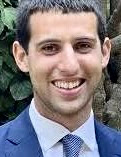
Dr. Joshua Demb
According to Dr. Joshua Demb, cancer epidemiologist at the University of California, San Diego, and one of the lead authors of the paper that was published in the journal JAMA Network Open, because physicians are less likely to suspect malignancies in younger people, they may attribute a symptom like rectal bleeding to a benign condition like hemorrhoids, rather than cancer.

"We need to facilitate early detection," he was quoted as saying, "and one way is identifying these red flags."

According to Rabin, "from the time younger adults first go to a caregiver with a complaint about a symptom until thy receive a diagnosis can take four to six months on average [and] because the diagnosis is often delayed, younger adults tend to have more advanced disease that s harder to treat."

Colorectal cancer, the story also says, "has long been associated with obesity, smoking, a sedentary lifestyle, high alcohol intake, and diets that are rich in red meat, processed food, and sugary drinks."

More information about red flags can be found in Rollercoaster: How a man can survive his partner's breast cancer, a VitalityPress book that I, Woody Weingarten, aimed at male caregivers.

Thursday, September 29, 2022

Katie Couric, diagnosed with breast cancer, intends to publish details about her ordeal

Veteran TV anchor/host Katie Couric, now fighting breast cancer, is planning to speak out more about her experience with the disease — and become an advocate for screenings.

According to a story by Claire Fahy in yesterday's editions of The New York Times, when she received the troubling diagnosis on June 21, she "handled it the way she handles any other news event — as a journalist."

Katie Couric
The 65-year-old TV stalwart is quoted as saying, "I actually treated this whole ordeal like a reporter. I went and tried to learn as much as I could."  

Al Rabson, former leader of the National Cancer Institute, "use to call her 'Dr. Couric' because she had amassed so much knowledge," the Times story says. 

Couric, once the host of the "Today Show" and anchor of "CBS Evening News," apparently will publish more about her ordeal, as well as information about breast cancer in general, throughout October, which has long been designated as Breast Cancer Awareness Month.

She also plans to use her experience as a goad to officialdom. The Times quotes her as saying, "Hopefully this will be a kick in the pants for a lot of policymakers and just a lot of women in general to make sure they are up to date on their screenings."

Fahy also quotes Couric to the effect that this bout with the disease isn't her "first rodeo" — her first husband, Jay Monahan, died from colon cancer in 1998, and her sister, Emily, died from pancreatic cancer in 2001.

The Times observes that Couric published an article yesterday noting that the day of her diagnosis was her eighth wedding anniversary. In that piece, she details the specifics of her cancer, including the fact that her dense breasts, not an uncommon condition, made it difficult for mammograms to detect the cancer. 

According to Fahy, the news anchor colorfully describes finding an abnormality in dense breasts "like looking for a snowball in a snowy field."

Her cancer apparently was found by an additional ultrasound.

The National Cancer Institute reports, not incidentally, that almost half the women over 40 in the United States have dense breasts.

Reportedly, one in eight women develop breast cancer, with the survival rate for those whose cancer has not metastasized as 99 percent. Couric's, which was detected early and is labeled as State 1A, hasn't spread to her lymph nodes or anywhere else.

A lot more information about the disease and its history in the United States can be found in  "Rollercoaster: How a man can survive his partner's breast cancer," a VitalityPress book that I, Woody Weingarten, aimed at male caregivers.

Thursday, September 9, 2021

Lumpectomy and radiation treatments fix Minnesota senator's early-detected breast cancer

Sen. Amy Klobuchar admits she underwent treatment for early-stage breast cancer in January.

According to a story by Felicia Sonmez in The Washington Post today, the former 2020 Democrat presidential candidate said in a post on Medium, a platform for professionals, that she'd had a lumpectomy and radiation.

Sen. Amy Klobuchar
The 61-year-old Minnesota politician said she was told by her doctors last month that the treatments had gone well and that her "chances of developing cancer again are no greater than the average person."

Sonmez's article says Klobuchar "urged Americans not to put off routine health screenings, noting that 'doctors are seeing patients who are being treated for more serious conditions that could have been caught earlier.'" 

She also noted that it is "easy to put off health screenings, just like I did. But I hope my experience is a reminder for everyone of the value of routine health checkups, exams, and follow-through. I am so fortunate to have caught the cancer at an early enough stage and to not need chemotherapy or other extensive treatments, which unfortunately is not the case for so many others."

The senator thanked her physicians, family and friends for their support during her surgery and radiation treatment, which she observed had coincided with the illness and death of her father, a Minneapolis journalist.

"Their support allowed me to continue my work with my colleagues on major pandemic and economic legislation," the story quotes her as saying, "as well as chairing the joint Senate Jan. 6 investigation and the For the People hearings while undergoing cancer treatment."

According to a story by Quint Forgey on today's Politico website, the three-term senior senator also admitted that "this has been scary at times, since cancer is the word all of us fear." Each day, she said, "is a gift."

Further information on early detection can be found in "Rollercoaster: How a man can survive his partner's breast cancer," a VitalityPress book that I, Woody Weingarten, aimed at male caregivers.

Sunday, September 8, 2019

U.S. eyes label warning for Allergen devices

FDA pressure results in breast implants that cause rare cancer of the immune system being recalled


Allergen is recalling its textured breast implants worldwide that have been linked to anaplastic large-cell lymphoma, a rare cancer of the immune system.

The company has responded to belated pressure from the Federal Drug Administration.

According to a recent story by Denise Grady in The New York Times, however, the FDA reports that women who have the implants but no symptoms don't need to remove them.

Yet the article does note "the recall means that doctors and hospitals should not implant any more of the devices and should return any on their shelves to Allergen."

The disease is not breast cancer but developed in tissues around the implant. "In most cases," Grady's story says, "removing the implant and the scar tissue around it cures the cancer, but if it is not detected early it can spread and kill the patient."

The condition, it continues, "has occurred with implants placed for cosmetic breast enlargement and with those used for reconstruction after mastectomy for breast cancer."

Thirty-three deaths and 573 cases have been reported from implants, Grady's piece reports, with a dozen deaths and 481 of them attributed to Allergen Biocell, according to the FDA, which dragged its heels after first recognizing the link to breast implants in 2011.

The Times story, which notes that the devices were banned months ago in Europe, contends that the "Biocell textured implants carry a risk that is about six times that of other textured implants sold in the United States."
Dr. Binita Ashar
It also reports that Dr. Binita Ashar, director of the FDA's Office of Surgical and Infection Control Devices, said at a news briefing…about the recall" that "hundreds of thousands of women in the United States have Biocell implants." 

The article also quotes Dr. Jeffrey Shuren, director of the FDA's Center for Devices and Radiological Health, as saying that "the data regarding deaths was particularly informative of our decisions."

Main symptoms of the disease "are usually swelling and fluid accumulation around the implant," Brady writes.

FDA officials reportedly are considering "adding a black-box warning [to the labeling of the breast implants] to draw attention to the risks, and requiring doctors and patients considering the surgery to go over as checklist to help women understand the benefits and risks of the devices."

More information about implants can be found in "Rollercoaster: How a man can survive his partner's breast cancer," a VitalityPress book that I, Woody Weingarten, aimed at male caregivers.

Tuesday, March 1, 2016

Melanoma mistaken for pulled shoulder muscle

Young Liverpool woman's death proves that not testing for a cancer can be a fatal decision


Clare Daly
I've long advocated advance testing for the purpose of detecting cancer early.

For good reason.

I still believe all women over 40 should get mammograms regularly — despite the insurance and cancer industries pushing to delay most tests until 50.

Had my wife not had them regularly, and not been doing self-exams as well, she'd most likely have been dead from the breast cancer she contracted.

I still routinely get PSA tests, despite their now being pooh-poohed by most medical folks.

Had I not had such tests with regularity, I'd most likely been dead from the prostate cancer I contracted.

A Liverpool Echo story repeated by other publications many times this week tended to underscore my feelings.

It told of a 29-year-old British woman, Clare Daly, a fair-skinned blonde who died in December, three months after being diagnosed with a malignant melanoma, an aggressive skin cancer.

She'd had chronic shoulder pain but believed it was just a pulled muscle.

So she hadn't checked out any possibility of cancer, and settled for physical therapy.

A story by Dana Dovey in yesterday's Medical Daily, one of multiple online and print sites that reiterated the Echo tale, quoted the Skin Cancer Foundation to the effect that "a melanoma is the most dangerous form of skin cancer, and grows when unprepared DNA damage to skin cells, most often caused by the sun or tanning beds, triggers mutations that cause skin cells to multiply rapidly."

Doctors eventually linked Daly's melanoma to a mole she'd had removed years earlier.

Moles are usually harmless.

When Daly's cancer finally was diagnosed, she began aggressive treatment with a therapy not covered by health insurance.

But it was too late.

After her death, her family and friends, who'd previously pitched in to cover her medical costs, began a nonprofit foundation to raise melanoma awareness.

Because it made the story more sensational, Daly was described in many reports as a newlywed. She'd actually been married to her partner of five years in July 2014.

Details of my journey with my wife's breast cancer, and my own with prostate cancer, can be found in "Rollercoaster: How a man can survive his partner's breast cancer," the book I, Woody Weingarten, wrote to help male caregivers.