Showing posts with label mammograms. Show all posts

Saturday, March 28, 2026

Breast cancer screenings and AI may protect against heart disease, new study suggests

Routine mammograms can “flag the risk of heart disease,” according to a new study in the European Heart Journal.

A recent story by Carolyn Y. Johnson in The Washington Post confirms that information. It also notes that radiologists for decades “have observed that breast cancer screening scans also reveal calcium deposits in the arteries woven through breast tissue, which cause the blood vessels to stiffen.”

According to Johnson, the study shows “how artificial intelligence [AI] can be used…to turn this ‘incidental finding’ into a warning system…a marker of increased risk for heart failure, heart attacks, stroke, and death.”


Heart disease is “the leading and often under-recognized cause of death in women,” his Post piece adds.


The story says that “studies have shown that many women mistakenly believe that breast cancer is the leading cause of death, and they may not take seriously the much greater risk of heart disease.”


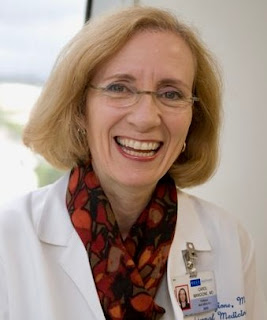
Dr. Mary Cushman
Mary Cushman, professor of pathology and laboratory medicine at the University of Vermont, who wasn't part of the study, is quoted to the effect that if women were educated while getting a mammogram, "it could be a game changer."


She also contends, according to an email she wrote, that “it is a clarion call that younger women [under 50] do have risk, that it can be detected, and that detection of risk should lead to interventions.”


By 2050, it is projected, “a third of women between the ages of 20 and 44 will have some form of heart disease,” the study says.


More information on cancer and heart disease can be found in Rollercoaster: How a man can survive his partner's breast cancer, a VitalityPress book that I, Woody Weingarten aimed at male caregivers. My other books are MysteryDates — How to keep the sizzle in your relationship; The Roving I, a compilation of 70 of my newspaper columns; and Grampy and His Fairyzona Playmates, a whimsical fantasy intended for 6- to 10-year-olds that I co-authored with my then 8-year-old granddaughter. Check out my website at https://woodyweingarten.com for details.

Saturday, May 31, 2025

Mammogram that proves better for women with dense breasts barely used in the United States

A large study shows that one particular mammogram can find more cancers for women with dense breast tissue.

According to a recent story by Roni Caryn Rabin in The New York Times, the study, which compared various types of scans, "has found that mammography enhanced with iodine-based dye can detect three times as many invasive cancers in dense breast tissue as ultrasound."

Women with dense breast tissue are at an elevated risk for breast cancer. Because insurers often decline to pay for scans such as the contrast-enhanced mammograms, many women stick with basic mammograms that often miss tumors buried in dense breasts.

Dr. Fiona J. Gilbert
Rabin quotes Dr. Fiona J. Gilbert, lead author of the study that was published in The Lancet and a professor of radiology at the University of Cambridge's  School of Clinical Medicine, as saying that "contrast-enhanced mammography needs to become standard of care for women with dense breasts" — if they're at high risk of developing breast cancer.

She explained that "when you have lots of white normal breast tissue, it's hard to see the white cancers, but when you do the contrast, the cancers take up the iodine, and all you're seeing is this cancer lighting up."

The Times piece also quotes JoAnn Pushkin, executive director of the educational group DenseBreast-info, to the effect that the study showed contrast-enhanced mammograms could save lives. She said that researchers not only found more tumors but detected them when they were small and had not yet spread to the lymph nodes.

"These," she said, "were tragedies averted. If they had not been found, they would have grown undetected until they were horror stories."

Contrast-enhanced mammography has yet to be approved by the Food and Drug Administration for breast cancer screening, so it is barely used in the United States. It is, however, utilized in limited cases as a diagnostic tool after suspicious findings appear on a regular mammogram.

More information about screenings can be found in Rollercoaster: How a man can survive his partner's breast cancer, a VitalityPress book that I, Woody Weingarten, aimed at male caregivers. My other books are MysteryDates — How to keep the sizzle in your relationship; The Roving I, a compilation of 70 of my newspaper columns; and Grampy and His Fairyzona Playmates, a whimsical fantasy intended for 6- to 10-year-olds that I co-authored with my then 8-year-old granddaughter.

Saturday, May 13, 2023

Major U.S. panel drops longstanding mammogram recommendations from 50 years of age to 40

"All women should start getting regular mammograms at age 40, an influential advisory panel said, in a stark revision of standard medical advice."

That paragraph in a recent online "breaking news" short by The New York Times led to a story by staffer Roni Caryn Rabin indicating that women shouldn't wait until 50, as had been advised since 2009.

The new advice, the piece says, "comes as breast cancer diagnoses rise among younger women and mortality rates among Black women remain persistently high."

Troubling trends in recent years, the article continues, "include an apparent increase in the number of cancer diagnosed in women under 50 and a failure to narrow the survival gap for younger Black women, who die of breast cancer at twice the rate of White women of the same age."

Dr. Carol Mangione
The story quotes Dr. Carol Mangione, immediate past chair of the I.S. Preventive Services Task Force, as saying that " we don't really know why there has been an increase in breast cancer among women in their 40s, but when more people in a certain age group are getting a condition, then screening of that group is going to be more impactful."

The new recommendations, the Times piece goes on, "covers more than 20 million women in the United States between the ages of 40 and 49."

Breast cancer has remained "the second mosts common cancer in women after skin cancer and is the second leading cause of cancer deaths, after lung cancer, among women in the United States," the story notes. 

One possible reason for the increase in younger women, it is speculated, might be postponement of childbearing — or not having children at all. At least that's the opinion of Rebecca Siegel, senior scientific director of surveillance research at the American Cancer Society. "Having children before age 35," the Times story says, "reduces the risk of breast cancer, as does breast feeding."

More information about screening recommendations can be found in Rollercoaster: How a man can survive his partner's breast cancer, a VitalityPress book that I, Woody Weingarten, aimed at male caregivers.

Saturday, April 8, 2023

FDA gives providers 18 months to implement new standards on mammograms and dense breasts

The Federal Drug Administration has established national mammogram standards to protect women with dense breasts.

According to the headline on a recent story by David Ovalle in The Washington Post, "almost half of women over 40 have dense breast tissue, which is tied to a higher risk of breast cancer — and also makes it harder to detect cancer."

The article notes that the new FDA standards require mammogram providers "to inform women with dense breast tissue that their cancer screenings may be difficult to interpret and suggest that they consult with their doctors about the need for additional tests" — such as MRIs or ultrasound.

Providers must implement the new regulations, which are expected to save lives by helping women detect cancer earlier, within 18 months.

The new standards are a minimum, but states can still require more severe language.

Breast cancer, Ovalle's story says, "is the most common cancer among women, after skin cancer, and the second leading cause of cancer deaths among women overall."

The American Cancer Society estimates, the piece continues, that in 2023 almost 300,000 women will be diagnosed with invasive breast cancer, and almost 44,000 will die from it.

Dr. Hilary Marston
Dr. Hilary Marston, the FDA's chief medical officer, claims in a statement that the "action represents the agency's broader commitment to support innovation to prevent, detect, and treat cancer," the Post article reports,

Currently, according to JoAnn Pushkin, executive director of the New York-based Dense Breast-info, a resource website that aims to teach patients and health-care professionals about dense breasts, some states tell women only that they have dense breasts, "really not enough to raise a red flag."

Pushkin in 2005 had a mammogram that showed no cancer, but an ultrasound shortly thereafter did. Because her breast cancer wasn't detected years earlier, she had to undergo eight surgeries, eight rounds of chemotherapy, and 30 rounds of radiation.

"Someone should have told me," the Post story quotes her saying about the greater difficulty detecting cancer in  people with dense breasts. "When I'm denied this information, I have effectively been denied an opportunity for early-stage diagnosis."

JoAnn Pushkin
The National Cancer Institute cautions that women with dense breast have a higher risk getting breast cancer.

Additional information on mammograms and dense breasts can be found in Rollercoaster: How a man can survive his partner's breast cancer, a VitalityPress book I, Woody Weingarten, aimed at male caregivers.

Wednesday, March 29, 2023

Actress Sharon Stone opens up about having to surgically remove tumors bigger than her breast

After receiving a Courage Award from the Women's Cancer Research Fund earlier this month, actress Sharon Stone revisited having had "gigantic [tumors] bigger than my breasts" removed in 2001. 

A recent story by Anthony Dominic on the ET (Entertainment Tonight) website indicates that the 65-year-old actor insisted women shouldn't "ever feel compelled not to get a mammogram, not to get a blood test, not to get surgery because it doesn't matter. I'm standing here telling you I had a one and a half and more tissue of my breasts removed and none of you knew it."

Stone had opted to half one breast removed, and half of the second, ending with reconstruction that resulted in an unauthorized breast enlargement, before learning that her massive tumors had been benign.

Sharon Stone
The Basic Instinct star, speaking at the fundraising event at the Four Seasons Beverly Wilshire in Beverly Hills, admitted that "those mammograms are not fun," but also said that the "mammogram machines that your taxpayer dollars pay for don't work if you don't walk up and put your breast up in that machine and let them slam that thing down."

She recalled that she'd gone into the hospital saying, "'If you open me up and it's cancer, please take both breasts,' because I am not a person defined by my breasts. You know, that might seem funny coming from me since you've all seen 'em."

During her plea for donations, she wiped tears from her eyes and noted that she'd just lost "half my money" via "this banking thing," an apparent reference to the Silicon Valley Bank collapse. It's been a tough time in the world for everyone, she added, specifying her own difficulties — including the death of her brother Patrick to a heart attack last month at age 57. 

Stone, who'd received an Oscar nomination in 1996 for Casino, had originally revealed in her memoir, The Beauty of Living Twice, that not only had she had the breast surgery but that she'd suffered a stroke in 2001.

Multiple sources reported that Stone was being honored for raising awareness about breast cancer. At one pint, she honored survivors in the audience by asking them to stand up and be recognized.

For more information on diagnoses and reconstruction, check out Rollercoaster: How a man can survive his partner's breast cancer, a VitalityPress book that I, Woody Weingarten, aimed at male caregivers.

Monday, November 7, 2022

Despite Katie Couric's advice, doctors repudiate some ultrasound breast cancer screenings

Many doctors are questioning Katie Couric's new call for ultrasound screenings beyond annual mammograms to detect breast cancer.

A recent online Kaiser Health News story by Michelle Andrews notes that the 65-year-old former co-host of NBC's "Today" show is now pushing those sonograms because they "can sometimes identify malignancies that are hard to spot on a mammogram in women whose breasts are dense — that is, having a high proportion of fibrous tissue and glands vs. fatty tissue."
Dr. Carol Mangione
The KHN article, however, quotes Dr. Carol Mangione, professor of medicine and public health at UCLA who chairs the U.S. Preventive Services Task Force, a group of medical experts who make recommendations for preventive services after weighing their benefits and harm, as being in doubt. She says clearly, "We don't have evidence that auxiliary screening reduces breast cancer mortality or improves quality of life."

Dr. Sharon Mass, an OB-GYN in Morristown, New Jersey, and the former chair of the American College of Obstetricians and Gynecologists' New Jersey section, echoes that sentiment. "On the one hand," Andrews' piece quotes her as saying, "we want to do everything we can to improve detection. But on the other hand, there are lots of costs and emotional distress" associated with false-positive results.

Couric first shared the news of her own breast cancer diagnosis in September.

In addition to regular mammograms, many women are getting 3D mammograms, sonograms or MRIs as supplemental testings. That imaging in those who aren't at high risk for breast cancer, the KHN story says, "may identify potential trouble spots, which can lead to follow-up testing such as breast biopsies that are invasive and raise cancer fears for many patients. But research has found that very often these results turn out to be false alarms."

And that doesn't count the possible extra cost. "An ultrasound screening might cost $250 out-of-pocket while a breast MRI could run $1,084," according to the Brem Foundation to Defeat Breast Cancer," Andrews' story says. 

Meanwhile, Rep. Rosa DeLauro (D-Conn.) recently tweeted that she's working in conjunction with Couric on a bill to cover MRIs and ultrasounds for women with dense breasts "without any out-of-pocet costs," the article reports.

What are the real results of added screenings? Studies show, the KHN piece notes, that "if 1,000 women with dense breasts get an ultrasound after a negative mammogram, the ultrasound will identify two to three cancers. But the extra imaging will also identify up to 117 potential problems that lead to recall visits and test but are ultimately determined to be false positives."

Mass' group doesn't recommend supplemental screening for women with dense breasts who don't have any additional risk factors for cancer, the article reports. "Many other professional groups take a similar position."

Dense breasts, the story says, "are relatively common. In the United States, an estimated 43% of women 40 and older have breasts that are considered dense or extremely dense…Women with dense breasts are up to twice as likely to develop breast cancer as women with average-density breasts, research shows."

Other steps instead of extra screening could be helpful, according to Dr. Karla Kerlikowske, a professor of medicine and epidemiology/biostatistics at the University of California, San Francisco. "If you really want to help yourself, lose weight," she's quoted as saying. "Moderate your alcohol intake and avoid long-term hormone replacement. Those are things you can control."

Additional information on mammograms, sonograms and other screenings can be found in Rollercoaster: How a man can survive his partner's breast cancer, a VitalityPress book that I, Woody Weingarten, aimed at male caregivers.

Saturday, November 25, 2017

DNA trials may end mammograms, colonoscopies

Doc expects blood tests that predict cancer recurrences to have major effect on millions


In the not-so-distant future, a single blood test may be able to locate cancer.
Dr. Salvatore Iaquinta
At least that's the prediction of Dr. Salvatore Iaquinta, "Highway to Health" columnist for the Marin Independent Journal and a surgeon at Kaiser Permanente San Rafael.

Noting in a recent piece headlined "Closing in on cancer" that "we already have blood tests to monitor for cancer recurrences," Iaquinta forecasts the end of mammograms and colonoscopies.

Biomarkers "that expose the presence of otherwise invisible recurrences," he indicates, are already known for "certain ovarian, prostate, breast, liver and pancreatic cancers."

The same applies to some thyroid cancers.

But researchers at Johns Hopkins, he notes, have now "announced their success developing a 'liquid biopsy' — a blood test to screen for cancer DNA."

And "for patients with colon cancer, the screening test found about 90 percent of all stage 2, 3 and 4 cancers."

Iaquinta adds that it was almost as important that false positives didn't result.

And although the experimental tests for breast, lung and ovarian cancers didn't fare as well, they did find "at least 45 percent of stage 1 cancers for each of these tumor types," he writes.

Researchers at Stanford, the doctor maintains, "have done the same sort of profiling with some types of lymphoma."

And the "Institute of Cancer Research in London also found a tumor DNA for breast cancer and has announced they can detect recurrent disease eight months before standard tests reveal it."

In the meantime, a different group at Stanford "used a similar test to detect the effect of chemotherapy on women being treated for breast cancer. They found that a blood test could predict how the tumor was responding to treatment within two weeks of the start of treatment, far earlier than the standard methods."

The experimental process is not yet available to the general public and is still expensive, Iaquinta explains, "because of the cost of DNA sequencing. But like everything else tech, the price will come down as scientists find easier, faster ways to run the tests."

He concludes that "the ability to detect multiple cancers from a simple blood draw will have a profound effect on millions, and ultimately billions, of lives."

More information about experimental drugs and treatments can be found in "Rollercoaster: How a man can survive his partner's breast cancer," a VitalityPress book I, Woody Weingarten, aimed at caregivers.

Thursday, October 12, 2017

African-American health care being undermined

Breast cancer mortality rate remains higher for whites than blacks, new study shows


Despite strides in meds and treatments, black women are still at a much greater risk of dying from breast cancer.

A recent story on the Huffington Post website by Suzy Strutner points out that while total survival rates for the disease are improving, a new study shows a huge gap remains. 

The new report, from the American Cancer Society, finds that "breast cancer death rates declined 39 percent between 1989 and 2015" but whites have a 39 percent greater chance of survival than blacks."

The gap, the study says, "emerged in the early '80s, widened through 2015 and has remained steady since."

Why the gap?

Because of "biological differences in breast cancer tumors, along with health care policy."

Regarding the latter, Strutner's story indicates that "unequal access to preventive screenings and treatment" includes black women getting mammograms "slightly more often than white women nowadays, but they had lower screening rates in the past, which 'may be one possible reason for the difference in survival rates today,' according to the Susan G. Komen website."

Not to mention "access to follow-up care [possibly differing] among the races."


Beth Glenn, Ph.D.
The HuffPost story goes on to explain that "less screening means black women might wait longer between  mammograms, be diagnosed late or be unable to follow up altogether when a mammogram comes back abnormal," according to Beth Glenn, Ph.D. associate director for the UCLA Kaiser Permanente Center for Health Equity.

Besides, "for black women who live in poverty, clinics might be too far away," the story adds. 


Christine Ambrosone, Ph.d.
The story also quotes Christine Ambrosone, cancer prevention chair at the Roswell Park Cancer Institute, about poverty blocking black women from care: "Things like transportation for cancer treatment can be a barrier, particularly for women who need radiation therapy, a treatment that needs to be given daily, and who cannot get that time off from work."

Strutner also cites "racial discrimination in health care settings."

As to the biological differences, her HuffPost story says "black women are twice as likely to be diagnosed with triple negative breast cancer, an aggressive form that's harder to treat. And tamoxifen, a drug that's hugely responsible for the overall improvement in death rates, treats another type of breast cancer, called hormone-receptor-positive breast cancer, that black women are less likely to get."

At the same time, Strutner's story indicates, Native American, Latina and Asian women all have lower rates of breast cancer and death from the disease than white women.

It also cites the report mentioning the states of Massachusetts, Connecticut and Delaware as managing to "close the gap, likely by widening health care access so it's easier for everyone to get treatment when they need it" — including Massachusetts passing "a health care reform that requires all residents to have health insurance and offering free health insurance to poor residents who qualify."

The story quotes Glenn as saying that "in general, states with more coverage for low-income women tend to have better outcomes."

Further information on different situations for different races can be found in "Rollercoaster: How a man can survive his partner's breast cancer," a VitalityPress book I, Woody Weingarten, aimed at male caregivers.

Friday, October 14, 2016

Overdiagnosis worries research project leader

New study renews the question of whether mammograms provide more benefits or harms 


A new study has led to amped up questioning of mammograms as appropriate breast cancer screenings.

The study, published this week in the New England Journal of Medicine, heightens discussions of recent years of whether the screening benefits outweigh the harms.

Clearly the jury's still out.

Dr. H. Gilbert Welch
According to an Associated Press story by Marilynn Marchione about the study, Dr. H. Gilbert Welch of the Dartmouth Medical School, a leader of the research project, said whether to have a mammogram "is a close call, a value judgment."

The study, the AP wrote, had concluded that women were "more likely to be diagnosed with a small tumor...not destined to grow than she is to have a true problem spotted early."

Many experts believe that improved treatment has rendered early detection less important, and that screenings are worth it only when they detect life-threatening cancers whose treatment would increase survival rates beyond what would occur if the disease were treated only when it became absolutely necessary.

The new thinking, advocated by Welch, is that many early cancers will never grow or spread or become a health threat.

Screenings can lead to overdiagnosis and overtreatment.

Welch, in fact, was the lead author of a recent book titled "Overdiagnosis: Making People Sick in the Pursuit of Health." And the new study, Marchione's story says, "parallels work he published from the same data sources four years ago."

At least one aspect of the new study — its assumption that there's been no change in cancer incidence — has been severely challenged by Dr. Robert Smith, American Cancer Society vice president of cancer screenings, who says cases have increased.

His perspective, according to the AP story, is that "when we find breast cancer early, women have a much, much better prognosis."

The study, the article continues, applies only to screening mammograms when a problem is suspected.

More details about the long-running mammogram controversy can be found in "Rollercoaster: How a man can survive his partner's breast cancer," the VitalityPress book that I, Woody Weingarten, aimed at male caregivers.

Monday, September 12, 2016

For 1st time, mammogram doesn't scare survivor

Breast cancer anxieties of 'Rollercoaster' author's wife vanish — after only 23 years 


Cancer-free Fox and Weingarten
My wife, Nancy Fox, wasn't at all afraid.

For the first time in 23 years.

She'd previously been nervous each time she'd gone for a mammogram, fearful the test would show her breast cancer had returned.

This go-'round, just last week, no anxiety — probably because she'd been cleared by her gynecologist two days before.

The follow-up letter from her primary physician confirmed the good news:

"No signs of breast cancer."

The letter also reprinted a statement required by California law that her dense breast tissue "can make it harder to evaluate the results of your mammogram and may also be associated with an increase risk of breast cancer."

But even that didn't scare her.

Her current emotional stability and mine clearly are far from the emotions I detailed more than two decades ago about having to let go "of my anger at doctors for not having instant answers, at pharmaceutical companies for manufacturing life-extending but not necessarily life-saving drugs, at myself for not having a magic wand."

Yes, I'd initially been petrified "breast cancer would be my wife's killer," but I also was thrilled to note more than two decades later that "she's flourishing today, as am I."

Specifics on how I, Woody Weingarten, and my wife managed the ups and downs of the diagnosis, treatments and aftermath can be found in "Rollercoaster: How a man can survive his partner's breast cancer," my VitalityPress book aimed at male caregivers.

Wednesday, May 11, 2016

'Dual duty' digital screenings are lauded

Research finds mammograms can find signs of heart disease at same time as breast cancer


Sure, we all know mammograms can detect early breast cancers and, therefore, save lives.

But we didn't know until recently that the tests may also red-flag heart disease.

And strokes.


Dr. Harvey Hecht
According to a Newsday story by Delthia Ricks, Dr. Harvey Hecht, a professor of medicine at Mount Sinai's Icahn School of Medicine in Manhattan, says calcium deposits that show up on the digital screenings can be "a more powerful predictor of heart disease risk than other well-established cardiovascular indicators such as high cholesterol, high blood pressure and diabetes."

It takes "less than 15 seconds to analyze," he said.

Heart disease kills 10 times more women than breast cancer, the story indicated.


Dr. Laurie Margolies
Dr. Laurie Margolies, chief of breast imaging at Mount Sinai Hospital's Dubin Breast Center, and one of Hecht's co-researchers in a study that involved nearly 300 women, emphasized that "a single mammogram can yield results about cancer and heart disease at the same time."   

The pair presented their findings at a meeting of the American College of Cardiology in Chicago about the possibilities of the "unappreciated tool" in effect doing double duty.

Questions about the efficacy of mammography? They may be answered in "Rollercoaster: How a man can survive his partner's breast cancer," a VitalityPress book I, Woody Weingarten, have aimed at male caregivers.

Tuesday, March 8, 2016

You can learn about radiation, lumps, self-exams

Kansas City newspaper debunks seven popular myths about mammograms, breast cancer 


Lisa Gutierrez
Ignorance about breast health can can be fatal.

But it's now questionable if determining whether obtaining information via mammograms is the most intelligent way.

The American Cancer Society recently issued new guidelines that urged most women to get mammograms yearly only between the ages of 45 and 54. Other groups, however, still recommend starting them at 40.

Virtually all organizations have hedged their bets by insisting that testing be voluntary, meaning woman still can choose to have mammograms earlier or more often. 

No matter what, consultations with physicians are strongly advocated.

According to a recent story by Lisa Gutierrez in the Kansas City Star, there are at least seven popular misconceptions — or myths — about breast health. They are:

Myth No. 1: "Annual mammograms increase your risk of cancer because of the radiation they use."

Fact: The amount typically used is low and safe. Older machines that used higher amounts have been discontinued.

Myth 2: A negative mammogram means you're safe.

Fact: Tests fail to detect from 10 to 20 percent of breast cancers. 

Myth 3: Lumps always mean cancer.

Fact: About 80 percent of breast lumps are benign.

Myth 4: Your self-exam showed no lumps so you must be safe.

Fact: Breast cancer can present itself in other ways. Good breast health means routine checking for pain or nipple tenderness, changes in how breasts feel and look, lumps or thickening near a breast or in the underarm area, red or swollen skin on a breast, a breast that feels warm to the touch, and nipple discharge.

Myth 5: Small breasts mean no cancer.

Fact: Size means nothing. But larger breasts can be harder to examine and might be less comfortable with the mammogram procedure.

Myth 6: Men don't get breast cancer.

Fact: Wrong. More than 2,000 males are diagnosed with the disease each year.

Myth 7: Coffee, antiperspirants, underwire bras and chemical hair straighteners cause cancer.

Fact: None of them have been proved to be causal. Some research, in fact, shows coffee can lower your risk.

To read about other myths and facts concerning the disease, check out "Rollercoaster: How a man can survive his partner's breast cancer," the VitalityPress book I, Woody Weingarten, aimed at male caregivers.

Tuesday, March 1, 2016

Melanoma mistaken for pulled shoulder muscle

Young Liverpool woman's death proves that not testing for a cancer can be a fatal decision


Clare Daly
I've long advocated advance testing for the purpose of detecting cancer early.

For good reason.

I still believe all women over 40 should get mammograms regularly — despite the insurance and cancer industries pushing to delay most tests until 50.

Had my wife not had them regularly, and not been doing self-exams as well, she'd most likely have been dead from the breast cancer she contracted.

I still routinely get PSA tests, despite their now being pooh-poohed by most medical folks.

Had I not had such tests with regularity, I'd most likely been dead from the prostate cancer I contracted.

A Liverpool Echo story repeated by other publications many times this week tended to underscore my feelings.

It told of a 29-year-old British woman, Clare Daly, a fair-skinned blonde who died in December, three months after being diagnosed with a malignant melanoma, an aggressive skin cancer.

She'd had chronic shoulder pain but believed it was just a pulled muscle.

So she hadn't checked out any possibility of cancer, and settled for physical therapy.

A story by Dana Dovey in yesterday's Medical Daily, one of multiple online and print sites that reiterated the Echo tale, quoted the Skin Cancer Foundation to the effect that "a melanoma is the most dangerous form of skin cancer, and grows when unprepared DNA damage to skin cells, most often caused by the sun or tanning beds, triggers mutations that cause skin cells to multiply rapidly."

Doctors eventually linked Daly's melanoma to a mole she'd had removed years earlier.

Moles are usually harmless.

When Daly's cancer finally was diagnosed, she began aggressive treatment with a therapy not covered by health insurance.

But it was too late.

After her death, her family and friends, who'd previously pitched in to cover her medical costs, began a nonprofit foundation to raise melanoma awareness.

Because it made the story more sensational, Daly was described in many reports as a newlywed. She'd actually been married to her partner of five years in July 2014.

Details of my journey with my wife's breast cancer, and my own with prostate cancer, can be found in "Rollercoaster: How a man can survive his partner's breast cancer," the book I, Woody Weingarten, wrote to help male caregivers.

Friday, October 23, 2015

Screenings urged at age 45 rather than 40

American Cancer Society suggests women start getting mammograms at a later age


Mammograms: At what age to begin?

The American Cancer Society has done an about-face on mammogram screenings by recommending women get less testing.

In new guidelines released Oct. 20, the ACS, the nation's largest cancer charity and previously the main advocate for those screenings, said women at average risk of breast cancer should begin yearly screenings at age 45.

That's "five years later than it had previously recommended," the Associated Press noted.

By age 55,  the AP paraphrased the new guidelines, because the cancers "tend to grow more slowly after menopause," women should be screened only every other year if they're healthy and expect to live another 10 years. 

That conclusion stems from the notion that if women have a life expectancy of less than a decade, they're then apt to die with breast cancer, not from it.
Breast screenings: Still controversial.

If adopted as policy in the United States, the new practice would result in a major shift from the aggressive screenings that had been standard since the 1990s.

The action puts the ACS more in line with many other organizations (excluding the American College of Radiology, which still suggests starting at age 40). 

According to The New York Times, the National Comprehensive Cancer Network, an alliance of prominent cancer centers, all "recommends mammograms every year starting at age 40" — and the America College of Obstetricians and Gynecologists suggests them every year or two from age 40 to 50 and every other year after that.

As the cliché goes, ya pays yer money and takes yer choice.

But some skeptics, including me, think the medical profession is being unduly lobbied and influenced by big insurance companies that simply don't want to pay for the tests.

Those advocating the later start maintain, however, that the chief reasons are women's changing risk as they age and a growing concern some mammograms may produce more harm than benefit (because of "false positive" results that could lad to unnecessary follow-up tests, including invasive biopsies).

Still, according to the AP story, mammograms actually "reduce the risk of dying from breast cancer by as little as 15 percent to as much as 40 percent."

Another oft-cited issue is over-diagnosis, when screenings find slow-growing cancers that may never imperil life but still may lead to doctors choosing surgery, radiation or other treatments the patients really don't require.

Although some studies claim up the 50 percent of breast cancers don't need to be treated, the ACS has said in the past that the actual number is only between 1 and 10 percent.

The new guidelines, which have reignited debates over the testing, only take into account women of average risk, not those with family histories of the disease or genetic mutations.

In 2009, the U.S. Preventive Services Task Force had decided that women could wait until 50 to start routine mammograms — and then get them every other year.

The newest guidelines also suggest that "doctors no longer need to perform breast exams during women's checkups, since these exams have not been shown to save lives" — yet another ACS change in policy.

Those six-minute examinations, according to the latest flip-flopped medical consensus, simply don't accomplish much.

The latest American Cancer Society guidelines were published online in JAMA, formerly the "Journal of the American Medical Association," sharply contrasting with public ACS opinions as recently as 1992 that urged women to get a "baseline mammogram" between the ages of 35 and 39 so physicians could compare later screening results.

The constant flip-flopping of researchers, physicians and, in fact, the entire cancer industry is detailed in the book I, Woody Weingarten, aimed at male caregivers, "Rollercoaster: How a man can survive his partner's breast cancer."

Thursday, July 2, 2015

Findings conflict with American Cancer Society

Task force retains old ideas — women under 50 must decide for selves about mammograms


Six years ago, the U.S. Preventive Services Task Force kickstarted a debate on what precise age women should get mammograms.

How?

By making integral to its report the notion that those under 50 should consider not doing the screenings.

The task force recently revisited its recommendations regarding breast cancer testings — and added a segment on 3-D mammography.

But its basic findings are unchanged.

It still suggests women 50 to 74 get a screening every two years, and that women 40 to 49, after consultation with their physicians, decide on their own.

The task force's recommendations come in direct conflict with the American Cancer Society, which urges all women to have yearly mammograms beginning at age 40.

Some of the cancer industry's conflicts and flip-flopping are detailed in a new VitalityPress book I, Woody Weingarten, wrote: "Rollercoaster: How a man can survive his partner's breast cancer."

Tuesday, June 30, 2015

N.Y. governor supports cable star's surgery

Famed TV chef recovering from double mastectomy after breast cancer diagnosis in New York 


Sandra Lee gets kiss from partner,
N.Y. Gov. Andrew Cuomo, in
hospital after double mastectomy.
Sandra Lee, celebrated Food Network chef and longtime partner of N.Y. Gov. Andrew Cuomo, is recovering from a double mastectomy.

He was by her side during last month's operation — along with her sister, Kimber.

Cuomo, who's been the 48-year-old's boyfriend for a decade, has assumed the role of prime caregiver, one that I, Woody Weingarten, author of "Rollercoaster: How a man can survive his partner's breast cancer," am totally familiar.

Lee reported that the 57-year-old Cuomo had been "extremely supportive."

The star of "Semi-Homemade Cooking with Sandra Lee" underwent the procedure last month after tearfully announcing it to co-anchor Robin Roberts on "Good Morning America.

She said she'd been stunned by the diagnosis by her medical team that she was "a ticking time bomb." 

Lee said she hoped her story would inspire women to get mammograms, even though the cancer industry is split on what age those screenings should begin. 
Sandra Lee, recovering at home,
 admires gifts from fans.

Some groups recommend they don't start until age 50; others prescribe 40 as a beginning point.

Lee said that one of the first things she planned to do next was encourage the women in her family to have mammograms. She emphasized that if she'd waited until she was 50 to have the screening, "I probably wouldn't even be sitting here."

Her original lumpectomy hadn't resulted in clean margins, so she faced six to eight weeks of daily radiation. She opted not to do that.

She said, however, that she was opting for reconstruction surgery.

Roberts herself had breast cancer more than four years ago.

According to ABC News, a "devastated" Cuomo, when he originally heard the news, had said in a statement to the media that "a situation like this quickly puts life in the proper perspective and reminds one of what's truly important…I want to be with Sandy to support her in any way I can as she handles the trauma of her operation and the pain of the recovery."

Lee, who lost 15 pounds during her hospital stay, earlier had exclaimed that cancer "beats up your body [and] beats you up emotionally…I wasn't going to let it rob me from one day of happiness."

On her Facebook page, she subsequently wrote, after her week in the hospital and "a rough couple days" — "So happy to be in my own backyard. There is no place like home."