Showing posts with label artificial intelligence. Show all posts

Thursday, August 10, 2023

Artificial intelligence improves breast cancer detection rate by 20 percent, Politico reports

The detection rate of breast cancer can go up 20 percent when AI is used, according to a story this week on the Politico website.

Ashleigh Furlong's article says the results from a study in Sweden "show the potential of using artificial intelligence in mammography."

The study, the first "randomized controlled trial" to look at using AI in breast cancer screening, showed that interim results have indicated "that using AI-supported analysis of mammograms alongside either of two radiologists was as good as using two radiologists without AI and led to 20 percent more cancers being detected," the story contends.

A significant reduction in workload for radiologists reportedly occurred, Furlong's piece continues, "with the doctors having to spend 44 percent less time reading mammograms."

The still-ongoing trial looked at more than 80,000 women.
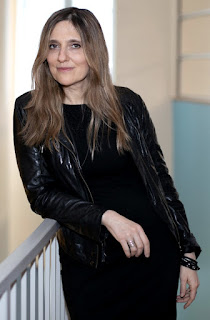
Kristina Lang

Despite the positive findings, the story says, lead author Kristina Lang maintains that the results "are not enough on their own to confirm that AI is ready
to be implemented in mammography screening" outside clinical trials yet because additional screenings are necessary. 

The story also quotes Stephen Duffy, professor of cancer screening at Queen Mary University of London, as saying that there could be concern that using AI might over-detect harmless lesions.

More information about global research is available in Rollercoaster: How a man can survive his partner's breast cancer, a VitalityPress book that I, Woody Weingarten, aimed at caregivers.

Thursday, December 23, 2021

New artificial intelligence technique may be able to predict breast cancer cases, research shows

Will AI be able to transform the mammogram and "allow patients to avoid aggressive treatments and even save the lives of countless people who get breast cancer"?

Professor Regina Barzilay
According to a recent story by Steven Zeitchik in The Washington Post, Regina Barzilay, an MIT professor and artificial-intelligence expert who endured chemotherapy, two lumpectomies and radiation for that cancer, as well as "all the brutal side effects that come along with those treatments," may have found "a marriage of tech and health care that could alter millions of lives without a single drop of medicine."

The Post article reports that Barzilay and Adam Yala, a student protege, "have built an AI that seems able to predict with unprecedented accuracy whether a healthy person will get breast cancer, in an innovation that could seriously disrupt how we think about the disease."

How it works was laid out in an piece in the Journal of Clinical Oncology: "By analyzing a mammogram's set of byzantine pixels and then cross-referencing them with thousands of older mammograms, the AI — known as Mirai — can product nearly half of all incidences of breast cancer up to five years before they happen."

"If the data is validated, I think this is very exciting," Zeitchik's story quotes Janine T. Katzen, radiologist at Weill Cornell Medicine who specializes in breast imaging. It also quotes Dorraya El-Ashry, chief scientific officer for the Breast Cancer Research Foundation, as saying, "This is the next, very positive step forward. There is a lot of work to do. But this is very encouraging."

Meanwhile, breast cancer statistics are discouraging. "While many cancers, such as lung cancer, have been declining in the United States," the Post story says, "breast cancer rates have been going up — an annual average of half a percentage point between 2008 and 2017, according to the American Cancer Society."

More information on out-of-the-ordinary treatments can be found in "Rollercoaster: How a man can survive his partner's breast cancer," a VitalityPress book that I, Woody Weingarten, aimed at caregivers.

Saturday, November 17, 2018

Memorial Sloan Kettering forced to shift focus

Are conflict of interest chances sullying the reputation of a prestigious cancer center?


The famed Memorial Sloan Kettering Cancer Center apparently is in turmoil, at least as far as raising money is concerned.

And possibly as far as its reputation is concerned.

According to a recent story by Katie Thomas and Charles Ornstein in The New York Times, the facility — which the piece refers to as "one of the nation's most prestigious cancer centers" — "has abruptly changed the focus of an annual fund-raising campaign amid a widening crisis that has already led to the resignation of its chief medical officer and a sweeping re-examination of its policies."

A brochure on the center's website indicated that the campaign, "initially titled 'Harnessing Big Data,' was to have focused on the cancer center's research into the use of artificial intelligence in cancer  treatment."


The shift in focus followed an earlier Times article, written in conjunction with ProPublica, a nonprofit journalism organization — just as the latest story was. That piece dealt with an exclusive deal the center made with an AI start-up "to use digital images of 25 million tissue slides analyzed over decades."


But the company, Paige.AI, "was founded by three hospital insiders and also involved investors who were Memorial Sloan Kettering board members."


According to the Times story by Thomas and Ornstein, pathologists at the hospital, whose main campus is in New York City, "complained that their work was being commercialized for private gain and that patients were not being informed that images of their tissue slides were being shared with an outside company." 


Although the hospital and its officials claimed they didn't do anything wrong, they did acknowledge "that they could have communicated better," the Times piece contended.

Kenneh Manotti
After the first article, Kenneth Manotti, the center's senior vice president and chief development officer, sent an email "to board members of the Society of MSK, the hospital's fund-raising effort, and an affiliated committee [that said the effort] would be postponed 'under the current circumstances, as we navigate through the issues at hand.'"
The society normally raised between $800,000 and $1 million annually for the hospital.

In September, Dr. José Baselga, the hospital's chief medical officer, quit under fire after the Times and ProPublica "revealed that he had failed to disclose his extensive industry ties in dozens of medical journal articles in recent years."

The hospital, the latest article says, "has announced a task force to study its conflict-of-interest policies."

In an email from Dr. Craig B. Thompson, the hospital's chief executive, and Dr. Lisa DeAngelis, acting physician-in-chief, low staff morale was acknowledged. 

Other stories about fund-raising efforts can be found in "Rollercoaster: How a man can survive his partner's breast cancer," a VitalityPress book I, Woody Weingarten, aimed at male caregivers.