Tuesday, October 18, 2022

National study finds frequent use of hair straighteners may pose risk for uterine cancer

Can frequent use of hair straighteners pose a small risk for uterine cancer?

According to a story by Roni Caryn Rabin in today's editions of The New York Times, the answer is yes. 

Rabin's article says the risk is higher than for women who have never used the products.

The study, which was published yesterday in The Journal of the National Cancer Institute, followed nearly 34,000 U.S. women for more than a decade.

Hair straightener use has previously been tied in studies to a higher risk of ovarian and breast cancer.

"While the increased risk [for uterine cancer] was found among women from all racial and ethnic backgrounds," the story continues, "Black women might be disproportionately affected: Sixty percent of participants who reported using hair straighteners self-identified as Black women, according to the study."

A March report from an expert panel indicated that over all Black women die of uterine cancer at twice the rate that White women do.

Frequent use is defined as more than four times in the previous year, and includes "any personal use, whether women applied products themselves or had the straighteners applied by others."

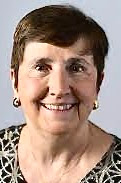
Alexandra White, PhD
Alexandra White, PhD head of the environmental and cancer epidemiology group of the National Institute of Environmental Health Sciences (HIEHS) and the study's lead author, is quoted as saying that "there is a lot of pressure on women, especially Black women, to have straight hair. It's not an easy decision to not do this."

Researchers have cautioned that the study's findings need to be confirmed by other studies.

The uterine cancer study, Rabin's piece says, shows that some chemicals found in straighteners — such as parabens, bisphenol A, metals, and formaldehyde — could week "play a role in the increased" risk.

Uterine cancer, the story maintains, "is increasing rapidly. The number of cases diagnosed each year has rises to 65,950 this year from 39,000 just 15 years ago." 

When detected early, overall survival rates are high.

More information about risk factors, including those for minority groups, can be found in "Rollercoaster: How a man can survive his partner's breast cancer," a VitalityPress book that I, Woody Weingarten, aimed at male caregivers.

Tuesday, October 11, 2022

Docs hopeful about developing cancer vaccines despite some giving up on them a decade ago

Physicians have begun to feel optimistic about developing immunizations against pancreatic, colon, and breast cancers. 

According to an article by Gina Kolata in today's editions of The New York Times, that report comes from early research with animals despite many doctors having given up a decade ago on the notion of finding cancer vaccines.

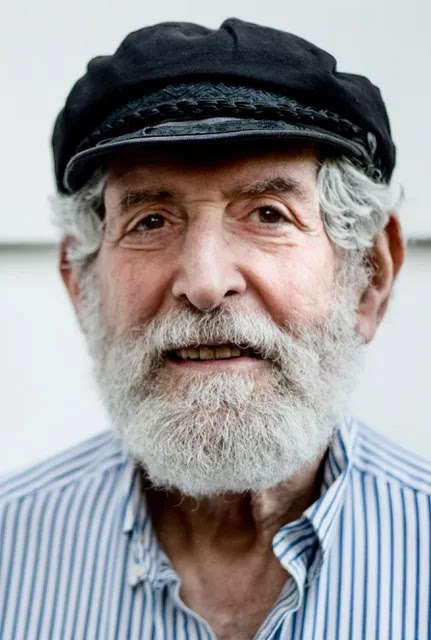
Dr. Sachet Shukla
The story quotes Dr. Sachet A. Shukla, who directs a cancer vaccine program at MC Anderson Cancer Center, as saying "cancer vaccines are an idea whose time has come…There is no reason why [they] would not work if given at the earliest stage."

Dr. Susan Domchek, principal investigator of a breast cancer vaccine study at the University of Pennsylvania, foresees "a time when anyone with a pre-cancerous condition or a genetic predisposition to cancer could be vaccinated and protected," the piece continues.

"People would have said this is insane," she's quoted as saying. Now, "it's super-aspirational, but you've got to think big."

Kolata's story asserts that "the search for cancer vaccines started with Olivera Finn, PhD, a distinguished professor in the departments of immunology and surgery at University of Pittsburgh School of Medicine" in 1993. She began with a trial of 63 patients with Stage 4 cancer. It quickly became clear, however, "that the cancers were too far advanced for immunizations to work."

Olivera Finn, PhD

After all, Finn notes, with the exception of rabies, no one vaccinates against an infectious disease in people who are already infected."

Now, she and a colleague at Pittsburgh, Dr. Robert Schoen, a gastroenterologist, are trying to prevent pre-cancerous colon polyps with a vaccine that worked in mice.

More information about research on diseases can be found in "Rollercoaster: How a man can survive his partner's breast cancer," a VitalityPress book that I, Woody Weingarten, aimed at male caregivers.

Sunday, October 2, 2022

Master artist Joe Marciniak strikes again — with whimsical cover for new book, “The Roving I”

Joe Marciniak, master artist who designed cover and inside illustrations for "Grampy and His Fairyzona Playmates,” has followed up with an incredibly lighthearted front cover for “The Roving I.”

Marciniak self-portrait
The cover features a walking cartoon body of the author, Woody Weingarten, replete with an à-propos pot belly — and uses a real photo for the head, replete with elongated, cartoonish nose. The whimsical illustration represents the tone of many of the 70 favorite columns the writer has selected for the anthology (which he, for fun, refers to as florilegium, a word he admits he’d never heard of until a few weeks ago).

BAIPA, the Bay Area Independent Publishers Association, voted Marciniak’s “Grampy” cover best in the 2021 children’s book category. The fantasy, not incidentally, was co-authored by Weingarten’s granddaughter, who was eight at the time it was written, 70 years different in age.

“The Roving I” contains scores of the writer’s memories — including his partner earning a slot in his Little Black Book, a woman carrying her sister’s “miracle baby” inside her for nine months, and Robin Williams transforming himself into a talking vagina.

Weingarten also wrote a third book, "Rollercoaster: How a man can survive his partner’s breast cancer." Details of all three are available on his website, https://woodyweingarten.com.

Friday, September 30, 2022

“The Roving I,” a compilation of 70 essays by author Woody Weingarten, out in paperback

"The Roving I," containing more than 300 pages of Woody Weingarten's favorite essays (his own), has just been published — mere hours before the author's 85th birthday.

Author Woody Weingarten
A paperback version is now available on Amazon; it will be ready for prime time within days on the Apple and Barnes & Noble sites and many others. That will be followed shortly by a hardcover and an ebook.

The new book includes scores of Weingarten’s memories — including his partner earning a slot in his Little Black Book, a woman carrying her sister’s “miracle baby” inside her for nine months, and Robin Williams transforming himself into a talking vagina

Many of the 70 first-person newspaper columns are lighthearted; a handful are weighty.

“The Roving I” is Weingarten’s third book. His first, “Rollercoaster: How a man can survive his partner’s breast cancer,” detailed how he and his wife successfully coped with the life-threatening disease decades ago. 

The author’s second, “Grampy and His Fairyzona Playmates,” is a fantasy aimed at 6- to 10-year-olds and was his collaboration with his then 8-year-old granddaughter.

Details on all his books are available on Weingarten’s other website, https://woodyweingarten.com.

Thursday, September 29, 2022

Katie Couric, diagnosed with breast cancer, intends to publish details about her ordeal

Veteran TV anchor/host Katie Couric, now fighting breast cancer, is planning to speak out more about her experience with the disease — and become an advocate for screenings.

According to a story by Claire Fahy in yesterday's editions of The New York Times, when she received the troubling diagnosis on June 21, she "handled it the way she handles any other news event — as a journalist."

Katie Couric
The 65-year-old TV stalwart is quoted as saying, "I actually treated this whole ordeal like a reporter. I went and tried to learn as much as I could."  

Al Rabson, former leader of the National Cancer Institute, "use to call her 'Dr. Couric' because she had amassed so much knowledge," the Times story says. 

Couric, once the host of the "Today Show" and anchor of "CBS Evening News," apparently will publish more about her ordeal, as well as information about breast cancer in general, throughout October, which has long been designated as Breast Cancer Awareness Month.

She also plans to use her experience as a goad to officialdom. The Times quotes her as saying, "Hopefully this will be a kick in the pants for a lot of policymakers and just a lot of women in general to make sure they are up to date on their screenings."

Fahy also quotes Couric to the effect that this bout with the disease isn't her "first rodeo" — her first husband, Jay Monahan, died from colon cancer in 1998, and her sister, Emily, died from pancreatic cancer in 2001.

The Times observes that Couric published an article yesterday noting that the day of her diagnosis was her eighth wedding anniversary. In that piece, she details the specifics of her cancer, including the fact that her dense breasts, not an uncommon condition, made it difficult for mammograms to detect the cancer. 

According to Fahy, the news anchor colorfully describes finding an abnormality in dense breasts "like looking for a snowball in a snowy field."

Her cancer apparently was found by an additional ultrasound.

The National Cancer Institute reports, not incidentally, that almost half the women over 40 in the United States have dense breasts.

Reportedly, one in eight women develop breast cancer, with the survival rate for those whose cancer has not metastasized as 99 percent. Couric's, which was detected early and is labeled as State 1A, hasn't spread to her lymph nodes or anywhere else.

A lot more information about the disease and its history in the United States can be found in  "Rollercoaster: How a man can survive his partner's breast cancer," a VitalityPress book that I, Woody Weingarten, aimed at male caregivers.

Monday, September 19, 2022

Joe Biden uses anniversary of JFK 'moonshot' speech to lift off fighting-cancer metaphor

With a nod to a John Fitzgerald Kennedy speech about space travel, Joe Biden has drawn attention to his own "moonshot" to fight cancer.

The president has used his metaphor to push a federally backed study that seeks to validate using blood tests to screen against multiple cancers.

A recent Associated Press story by Zeke Miller and Carl K. Johnson indicates the Biden's endorsement could make the study "a potential game-changer in diagnostic testing to dramatically improve early detection of cancers." 

The Biden bully-pulpit push came at the John F. Kennedy Presidential Library and Museum in Boston that marked the 60th anniversary of JFK's "moonshot" speech.  

According to the Centers for Disease Control and Prevention, cancers are the second highest killer of Americans after heart disease. The American Cancer Society has estimated that 1.9 million new cancer cases will be diagnosed this year, with more than 600,000 deaths predicted.

Biden, the AP story says, "hopes to move the U.S. closer to the goal he set in February of cutting U.S. cancer fatalities by 50% over the next 25 years and to dramatically improve the lives of caregivers and those suffering from cancer."

Danielle Carnival, PhD
The article quotes Danielle Carnival, a PhD and the White House cancer moonshot coordinator, as saying that the best way to proceed "is to really test out the technologies we have today and see what works and what really has an impact on extending lives."

She cites as "one of the most promising technologies" the "development of blood tests that offer the promise of detecting multiple cancers in a single blood test."

Cancer, of course, has long been a Biden priority — stemming from the loss of his son, Beau, in 2015 to brain cancer. The president wrote in his memoir "Promise Me, Dad" that he chose not to run in 2016 primarily because of his son's death.

Scientists now understand, the AP piece notes, "that cancer is not a single disease but hundreds of diseases that respond differently to different treatments."   

Any effort to reduce the cancer death rate, the story continues, "will need to focus on the biggest cancer killer, which is lung cancer. Mostly attributable to smoking, lung cancer now causes more cancer deaths than any other cancer. Of the 1,670 daily cancer deaths in the United States, more than 350 are from lung cancer."

Dr. Roy Herbst, a lung specialist at Yale Cancer Center, thinks the current situation is "tragic." The moonshot, he observes, "is going to have to be a social fix as well as a scientific and medical fix. We're going to have to find a way that screening becomes easier, that it's fully covered, that we have more screening facilities."

Biden wants Americans who've delayed cancer screenings because of the pandemic to seek them out quickly, "reminding them that early detection can be key to avoiding adverse outcomes."

More information about the federal government funding research can be found in "Rollercoaster: How a man can survive his partner's breast cancer," a VitalityPress book that I, Woody Weingarten, aimed at male caregivers.

Friday, September 16, 2022

California county, 9 municipalities sue Monsanto for contaminating them with toxic PCBs

Marin County and nine of its municipalities, including my hometown, San Anselmo, have sued Monsanto because its products allegedly caused contamination.

The lawsuit — according to a press release from officials — claims the giant agri-business "deliberately misled the public, environmental regulators, and its own customers so it could reap massive profits" from its sales of toxic PCBs (polychlorinated biphenyl), chemical compounds that eventually were banned by the Toxic Substance Control Act of 1976.

Monsanto, which produced nearly 99 percent of all PCBs used in the United States since the 1930s, faces similar court actions nationwide.

PCBs are known or suspected to cause many diseases, including non-Hodgkin's lymphoma, breast cancer, liver cancer, gallbladder cancer, gastrointestinal cancer, pancreatic cancer, and skin cancer, says a recent story by Gideon Rubin, staff writer for Patch's San Anselmo-Fairfax website.

County officials explain, the Patch piece notes, that the suit about PCBs "aims to provide relief for the costs the jurisdictions will incur to remove the contaminants."

Monsanto, which was bought out by Bayer in 2018, has meanwhile settled multiple lawsuits involving its product Roundup, the nation's most popular weedkiller, after plaintiffs alleged it had caused cancer. But thousands of other suits are pending.

Rubin's article quotes county officials as saying that "according to Monsanto's own internal documents, company officials knew and were warned about the dangers to human health and the environment form PCBs, but Monsanto wrongfully promoted the product and failed to warn customers about its dangers."

The story states that two other companies, Solute, Inc., and Pharmacia LLC, are included in the new suit filed in Marin County Superior Court. A later article, by Richard Halstead in the Marin Independent Journal today, explains that the two companies had been spun off from Monsanto. While Monsanto retained its agriculture business, Solute took on the chemical business, and Pharmacia acquired the pharmaceutical business.

In addition to the county and San Anselmo, plaintiffs include the cities of Belvedere, Mill Valley, Novato, San Rafael, and Sausalito, and the towns of Corte Madera, Ross, and Tiburon.
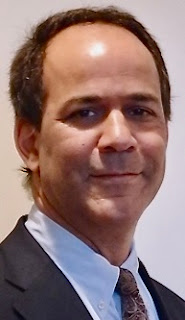
Brian Washington
All the plaintiffs, according to Rubin's article, "opted out of a national class-action settlement because it failed to sufficiently cover the anticipated costs to comply with regulations and prevent further damage, Marin County Counsel Brian Washington said in a statement."

The piece further quotes Washington as saying "PCBs have left a long toxic legacy. The companies responsible need to contribute to the solution so that the taxpayers do not have to carry the entire burden."

The chemical compounds, Rubin's story says, have also been implicated "in non-cancer health problems such as cardiovascular, endocrine,  gastrointestinal, hepatic (liver), immune, neonatal, neurological, ocular, and reproductive harm."

PCB contamination "resulting from the defendants' actions is already widespread across the [San Francisco] Bay Area," Patch reports, adding that "the entire bay is classified as 'impaired' by PCBs under the federal Clean Water Act. This impairment endangers natural resources and human health, county officials said."

That contamination has been so severe in the bay, the story continues, "that the California Office of Environmental Health Hazard Assessment has advised some people not to eat certain types of fish caught in the bay."

Rubin's piece details the suggestion: "Children and women aged 18 to 49 are advised not to eat striped bass, sharks, and white sturgeon caught in the bay. Everyone is also advised not to eat the skin and fatty tissue of any fish caught in the bay."

More information on product-caused contamination can be found in "Rollercoaster: How a man can survive his partner's breast cancer," a VitalityPress book that I, Woody Weingarten, aimed at male caregivers.

Monday, September 12, 2022

Film, TV star Jane Fonda undergoing six-month chemotherapy for non-Hodgkin's lymphoma at 84

Jane Fonda, star of films and television, says her non-Hodgkin's lymphoma is "a very treatable cancer."

Jane Fonda
The 84-year-old, two-time Academy Award winner is, in fact, undergoing a six-month regimen of chemotherapy.

In a recent story by Matt Stevens, Dani Blum, and Alisha Haridasani Gupta in The New York Times, Fonda's Instagram account is quoted: "I feel very lucky" — because of the kind of cancer it is, because she has health insurance, and because she has "access to the best doctors and treatments."

The social activist also took pains to voice that "I realize…I am privileged in this. Almost every family in America has had to deal with cancer at one time or another and far too many don't have access to the quality health care I am receiving and this is not right."

Dr. Matthew Matasar
According to Dr. Matthew Matasar, Memorial Sloan Kettering Cancer Center oncologist who specializes in the cancer of the lymph system, non-Hodgkin's lymphoma is the fifth most common type of cancer in America.

The defining characteristic of the illness is that it develops in the immune cells, but, Matasar notes, "there are actually over 100 different types of non-Hodgkin's lymphoma."

The National Cancer Institute has estimated that there will be more than 80,000 new cases of non-Hodgkin's lymphoma this year.

Those 60 and older are most susceptible.

As with most diseases, the earlier non-Hodgkin's lymphoma is detected, the better chance a person has of surviving.

Although underlying health issues may complicate a patient's response to chemo treatments, the Times article quotes Dr. William Dahut, chief scientific officer of the American Cancer Society, as saying that "some people have very, very good prognosis — it's not a death sentence." 

In her Instagram post, Fonda says she's "handling the treatments quite well, and, believe me, I will not let any of this interfere with my climate activism."

More information on celebrities battling diseases can be found in "Rollercoaster: How a man can survive his partner's breast cancer," a VitalityPress book that I, Woody Weingarten, aimed at male caregivers.