Friday, May 27, 2022

New supply-chain shortage is heightening anxiety for many patients in U.S. worried about cancer

A Covid lockdown in China could cause long delays in cancer imaging in the United States.

According to a story by Reed Abelson in yesterday's editions of The New York Times, a nationwide shortage of iodinated imaging agents needed for CT scans — a procedure "that relies on a special dye often injected into patients to better visualize their blood vessels, intestines and organs like the kidney and liver" — may be prompting "hospitals to ration these tests except in emergencies."

The problem was the closing of one specific Shanghai plant stemming from a lockdown aimed at quelling a coronavirus outbreak, the latest example of the U.S.'s "vulnerability to disruptions in the global supply chain."

Abelson's article goes on to say that "as many as half the nation's hospitals are affected by the shortage." 

Some 50 million exams with contrast agents are performed annually in the United States.

The Times piece says that while noting that "someone with a stroke or heart attack" also may not be able to get an angiogram because of the dye shortage, Dr. Robert Califf, U.S. Food and Drug Administration commissioner, told a Senate committee the situation is "just unbelievable."

The article additionally quotes Dr. Jamie McCarthy, chief physician executive at Memorial Hermann Health System, a large Houston hospital group, as saying, "The hits just keep on coming in this pandemic in the supply chain."

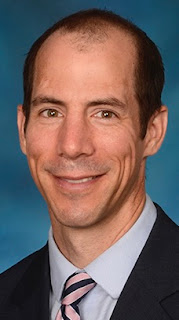
Dr. William Dahut
And Dr. William Dahut, chief scientific officer for the American Cancer Society, also was quoted to the effect that the lack of contrast dye in an exam can make it more difficult to diagnose cancer.

Some patients, the Times piece contends, "may be able to have an MRI in place of a CT scan or have the exam performed without contrast. Still, for many patients, "the shortage leaves them in limbo."

Dr. Shikha Jain, a Chicago oncologist, says the shortage and resultant delays are "definitely causing more stress for patients." 

Dr. Matthew Davenport, vice chair of the commission on quality and safety for the American College of Radiology, likened the situation to the current scarcity of baby formula.

More information about treatment problems can be found in "Rollercoaster: How a man can survive his partner's breast cancer," a VitalityPress book that I, Woody Weingarten, aimed at male caregivers.

Tuesday, May 24, 2022

New study out of Stanford University suggests Covid brain fog and chemo brain might overlap

Researchers say Covid brain fog may mirror chemo brain — and Alzheimer's.

The major premise of a new study, according to a recent story by Ariana Eunjung Cha in The Washington Post, is that the brain inflammation in so-called long Covid is similar to that in cancer patients.

Dr. Michelle Monje
The study by Stanford University neuroscientist Dr. Michelle Monje, the article states, "is part of a crucial and growing body of research that suggests similarities in the mechanisms of post-covid cognitive changes and other long-studied brain conditions, including 'chemo brain,' Alzheimer's and other post-viral syndromes following infections with influenza, Epstein-Barr, HIV or Ebola."

Avindra Nath, intramural clinical director of the neurological disorders and stroke unit of the National Institutes of Health, declares that "there is humongous overlap" between long-Covid and those other conditions.

Monje, the Post article says, "was fascinated" to find similar brain changes among patients with chemo brain and Covid brain fog. "It was really quite striking," she's quoted as saying.

In cancer patients undergoing treatment, the article notes, a malfunction in brain cells that serve as the organ's surveillance and defense system, cells known as microglia, is "believed to be a cause of the fuzzy thinking that many describe. Scientists have also theorized that in Alzheimer's disease, these cells may be impeded, making it difficult for them to counteract the cellular war and tear of aging."

The study by Monje, a MacArthur "genius" grant recipient, involved her collaborating with Akiko Iwasaki, a Yale University immunobiologist who's become one of the leading voices on the coronavirus, and David Putrino, director of rehabilitation innovation for the Mount Sinai Health System in New York. 

The Post story also reports that "another team of researchers from Harvard and Johns Hopkins University School of Medicine have highlighted how both in Covid-19 and chronic fatigue syndrome, too many oxygen molecules pile up in a cell — possibly resulting in inflammation that leads to cognitive issues."

In addition, Cha's article points out that "an examination of brain autopsy tissue by a Columbia University professor from 10 patients who died of Covid-19 turned up a molecular change bearing the distinct signature of Alzheimer's." 

More information about chemo brain can be found in "Rollercoaster: How a man can survive his partner's breast cancer," a VitalityPress book that I, Woody Weingarten, aimed at male caregivers.

Saturday, May 14, 2022

Covid could be responsible for a future health-care crisis — not catching cancers early enough

The Covid pandemic has dramatically disrupted cancer screenings, putting thousands of lives in danger.

That's the conclusion of a recent story by Dylan Scott on the vox.com website.

Dr. Steve Serrao
The article quotes Dr. Steve Serrao, chief of gastroenterology and hepatology at Riverside University Health System in Loma Linda, California, as predicting that "the delayed diagnoses of various cancers and other chronic, life-threatening illnesses…will be the next crisis that overwhelms the U.S. health system."

In regard to the possible surge of advanced chronic diseases, Serrao says, "I don't think our systems are ready."

According to Scott's story, the pandemic "dealt a crushing blow to the preventive services that can catch potential health problems before they become life-threatening."

The piece cites figures from 2020, the most recent year for which complete statistics are available, that show colonoscopies dropped by nearly half from the year before, prostate biopsies fell more than 25 percent, and new diagnoses over all "declined by 13 percent to 23 percent, depending on the cancer."

Dr. Brian Englum
The story also quotes Dr. Brian Englum, a University of Maryland surgeon who co-authored a new study in "Cancer," an American Cancer Society journal, as saying that "I think we are in uncharted territory. There are no examples I know of where we have seen numbers change this dramatically."

Just how bad is the situation? Scott contends that "even a four-week delay in treatment is associated with a 6 to 13 percent higher risk of death."

He also maintains that research has shown that "people who have skipped appointments or didn't get screenings or care may be less likely to seek it in the future, and the problems could compound."

Englum says that while "we've already lost a lot of people," nobody knows "how many of these cases are out there."

More information about waves of disease can be found in "Rollercoaster: How a man can survive his partner's breast cancer," a VitalityPress book that I, Woody Weingarten, aimed at male caregivers.
Tuesday, April 19, 2022

AP story suggests liquid biopsies may be 'a new frontier in cancer screening for healthy people'

Liquid biopsies, or blood tests that look for cancer by checking for DNA fragments shed by tumor cells, are being billed "as a new frontier in cancer screening for healthy people."

A story in this week's San Francisco Chronicle by Associated Press medical writer Carla K. Johnson notes that these tests already are being "used in patients with cancer to tailor their treatment and check if tumors come back."

But one California-based company, Grail, is promoting the $949 test, the article says, "as a way to detect tumors in the pancreas, ovaries and other sites that have no recommended screening method."

Most insurance companies do not cover the cost, and the tests are being marketed "without endorsements from medical groups or a recommendation from U.S. health authorities," Johnson's piece says.

The Associated Press also observes that Federal Drug Administration "authorization, clearance or approval of such tests is required by law, but the agency historically has not enforced most regulatory requirements for ones – like Grail’s – that are designed, manufactured and used within a single laboratory."

The story quotes FDA spokesman Jim McKinney as reporting that the agency is working with Congress on legislation "to update the regulatory framework, which would include active oversight for such tests."

Although Grill intends to get FDA approval, it currently is marketing its test "as it submits data to the agency."

Meanwhile, Johnson's piece says, "U.S. government researchers are planning a large experiment — with 200,000 participants and possibly lasting seven years — to see if the blood tests can live up to the promise of catching more cancers earlier and saving lives."

Dr. Lori Minasian
"They sound wonderful, but we don't have enough information," the story quotes Dr. Lori Minasian of the National Cancer Institute's Division of Cancer Prevention, who is involved in planning the research. "We don't have definitive data that shows that they will reduce the risk of dying from cancer."

Whereas screening tests — mammography, PAP, colonoscopy, for example — look for one cancer at a time, claims Dr. Joshua Ofman, an executive at Grail, the new blood tests look for many cancers at once, a definite advantage.

More information on testing for disease can be found in "Rollercoaster: How a man can survive his partner's breast cancer," a VitalityPress book that I, Woody Weingarten, aimed at male caregivers.

Wednesday, March 30, 2022

Depression and suicide rates jump for patients diagnosed with cancer, two new studies indicate

Two new studies have found cancer patients are at a higher risk for depression and suicide.

According to a story this week by Jessica Wapner in The New York Times, the "findings make a compelling case for oncologists to have more discussions with  their patients about mental health struggles."

A caption with the story notes that one of the studies found "suicide rates among people with cancer were notably higher in the United States than in Europe, Asia or Australia." 

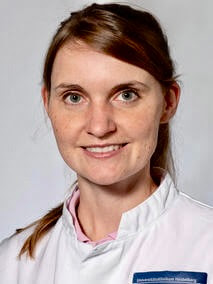
Dr. Corinna Seliger-Behme
The article quotes Dr. Corinnas Seliger-Behme, a neurologist at Heidelberg University in Germany, as saying, "Probably, we can prevent suicide if we talk about it, and if we really start that early."

Seliger-Behme and a colleague reviewed in their report "28 studies that included more than 22 million cancer patients across the world. Their analysis showed that the suicide rate as 85 percent higher for people than the general population."

Cancers with the worst prognoses, like stomach and pancreatic cancers, had the highest rates while the diseases with the best prognoses, including prostate, non-metastatic melanoma and testicular cancers, had the lowest.

The study's authors, according to the story, speculated that "the high cost of health care" in the U.S. might had led some patients "to forgo treatment to avoid bankrupting their families." The authors also wondered if easy access to firearms may have contributed to the higher suicide rates.

In the other new study, Alvina Lai, PhD, an associate professor at University College London, and a colleague examined health records of about 460,000 people in Britain with 26 different cancers. Five percent were diagnosed with depression, with the same number diagnosed with anxiety, after their diagnoses.

Alvina Lai, PhD

"Patients with brain tumors, prostate cancer, Hodgkin's lymphoma, testicular cancer and melanoma were most likely to hurt themselves," Wapner's piece reports.

Moreover, about 25% of the patients suffered from substance abuse — and psychiatric issues "tended to increase over time, even years after a diagnosis."

The biggest risk factor for developing a mental health condition, according to the story, was to those undergoing the triple-threat approach of surgery, radiation and chemotherapy. "The length, intensity and cumulative side effects… could explain why it triggers depression, anxiety and even personality disorders in many people," the article contends.

Chemotherapy on its own, it continues, is "also tied to high rates of psychiatric disorders, whereas 'kinase inhibitors' — targeted drugs that often have fewer side effects — had the lowest rates."

Dr. Lai wonders "whether patients are given enough opportunities to weigh the psychological risks of potential treatments," the story states. She's quoted as maintaining that "it would be useful for cancer patients who are newly diagnosed to see what the data tell us and make an informed decision."

Testicular cancer "carried a higher risk of depression than any other cancer type, affecting 98 of every 100 patients," according to her study, an unexpected result.  

Dr. Nathalie Moise, professor of medicine at Columbia University's Vegelos College of Physicians and Surgeons, suggests that while "current treatment guidelines suggest screening for depression as part of routine cancer care," these findings "may support the need to also screen for suicide and other risk factors."

More on the mental state of patients can be found in "Rollercoaster: How a man can survive his partner's breast cancer," a VitalityPress book that I, Woody Weingarten, aimed at male caregivers.
Saturday, March 19, 2022

Physician who had skin cancer himself gives several suggestions for preventing the disease

Despite the fact that most skin cancer is preventable, and usually curable if caught early, the cancer remains the most prevalent — with more cases diagnosed each year than all other cancers combined.

Dr. Gerald L. Saliman
That, at least, is the opinion of Dr. Gerald L. Saliman, an internist who retired from Kaiser San Francisco, where he was chief of patient education. 

In a recent column for a special Senior Life section of J. the Jewish News of Northern California, "Jerry" Saliman quotes dermatologist Dr. Jennifer C. Haley, associate professor at UCLA, to that effect — and emphasizes that risks are dependent on how much sun to which you've been exposed.

Saliman himself had a melanoma, and his wife "has had basal cell carcinoma and shamus cell carcinoma," his article reveals.

"Clouds block only 20% of UV radiation," he writes, "so it's important to wear sunscreen even if it's cloudy."

In addition, he suggests that everyone check their skin "regularly for odd spots or sores that do not seem to heal, particularly in areas that are exposed to the sun."

He notes that he "promptly went to see my doctor when I noticed a tiny, funny-looking skin lesion, and I am glad I did so."

Years after his surgery, he's still cancer-free.

His cancer, the article indicates, was on his left temple, "most likely…because I had frequent sunburns as a child, and our car's side windows did not protect me from UV radiation." 

Saliman's recommendations to prevent cancer of the skin, "the largest organ in the human body," include staying out of the sun from 10 a.m. to 4 p.m., "wear sun-protective clothing, including a wide-brimmed hat, long sleeves and long pants."

More about disease preventives can be found in "Rollercoaster: How a man can survive his partner's breast cancer," a VitalityPress book that I, Woody Weingarten, aimed at male caregivers.

Saturday, March 5, 2022

Many physicians now favoring multiple options other than chemotherapy to treat cancers

A growing number of cancer patients, especially those with breast and lung malignancies, are being spared chemo in favor of other options.

At least that's the conclusion of The New York Times.

According to a recent story by the paper's most prolific cancer specialist, Gina Kolata, because "there is a growing willingness among oncologists to scale back unhelpful treatments" and because genetic tests "can now reveal whether chemotherapy would be beneficial," there are many better options for patients than chemo.

Among them, the article notes, are "an ever-expanding array of drugs, including estrogen blockers and drugs that destroy cancers by attacking specific proteins on the surface of tumors."

These alternative treatments, the piece notes, are increasingly being used for breast and lung cancers, and many others as well, sparing "thousands each year from the dread chemotherapy treatment, with its accompanying hair loss, nausea, fatigue, and potential to cause permanent damage to the heart and to nerves in the hands and feet."

And even when chemo is indicated, Kolata's story says, "doctors often give fewer drugs for less time."

Dr. Lisa Carey
"It's a totally different world," the article quotes Dr. Lisa Carey, breast cancer specialist at the University of North Carolina.

That view is supported by Dr. Robert Vonderheide, lung cancer specialist who heads the University of Pennsylvania's Abramson Cancer Center, who says that docs used to discuss whether to give patients two different types of chemo or three but now "are walking in to see even patients with advanced lung cancer and telling them, 'No chemo.'"

Kolata's piece calls the change "a quiet revolution" that has stemmed from "a slow chipping away" at the number of people for whom chemo — which for decades was considered "the rule, the dogma" — is recommended.

More information on new therapies can be found in "Rollercoaster: How a man can survive his partner's breast cancer," a VitalityPress book that I, Woody Weingarten, aimed at male caregivers.

Saturday, February 26, 2022

Mix of cancer, Covid put people of color at great risk of complications, hospitalizations, death

Docs say people in low-income communities are subject to advanced cancers because of pandemic-caused delays in diagnosis and treatment.

According to a recent story in The Washington Post by Laurie McGinley,  the combination of Covid and cancer is a menacing mix for those people of color.

The Centers for Disease Control and Prevention worries, the article states, expect the dangerous combo to worsen "with the pandemic grinding on," with stats showing African Americans and Hispanics being "about twice as likely as White people to die of Covid" and Black cancer patients being "particularly high risk for complications and hospitalizations."

Black people, the Post story says, "had lower survival rates for many cancers compared with White people even before pandemic."

Dr. Kashyap Patel

McGinley's piece quotes oncologist Kashyap Patel, chief executive of Carolina Blood and Cancer Care Associates, as saying that "Covid put cancer and health-care disparities on steroids. I have never seen this many people presenting at Stage 3 and 4," the worst possible stages.

 Jennifer S. Haas, a primary care doc at Massachusetts General Hospital in Boston, was also quoted: "People have been trying to ignore symptoms for a year because they didn't want to come in."

The result? An unusually high number of advanced stomach cancers and esophageal malignancies "over the past several months."

Why are people of color so susceptible? Because of, the story notes, "higher rates of underlying conditions such as diabetes or hypertension; a lack of health insurance or access to a primary-care physician; and jobs that can cause health problems."

Says Haas, it's a particularly bad situation "if you work in an environment without air purification or filtration."  

According to McGinley's story, doctors say "many of those most acutely affected are women, whose family responsibilities and financial stress make it difficult to focus on their own health."

Debra Patt, executive vice president of Texas Oncology and a breast cancer specialist in Austin, elaborates in the article: "They have sacrificed themselves to deal with the needs of the family: "Are my children getting schooling, how do I take care of the older adults in my life, how do I manage everything?"

Long after the pandemic subsides, she worries, some patients will be struggling with advanced cancer. "The effects of this will go on for years," she's quoted as saying.

Perhaps the lesson from the pandemic is that "maybe we shouldn't expect everyone to come to doctors' offices," the story again quotes Haas, who reportedly says that more at-home testing would increase screening.

More information about the problems medical delays can cause may be found in "Rollercoaster: How a man can survive his partner's breast cancer," a VitalityPress book that I, Woody Weingarten, aimed at male caregivers.