Thursday, December 23, 2021

New artificial intelligence technique may be able to predict breast cancer cases, research shows

Will AI be able to transform the mammogram and "allow patients to avoid aggressive treatments and even save the lives of countless people who get breast cancer"?
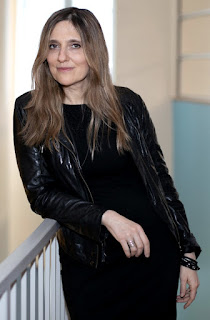
Professor Regina Barzilay
According to a recent story by Steven Zeitchik in The Washington Post, Regina Barzilay, an MIT professor and artificial-intelligence expert who endured chemotherapy, two lumpectomies and radiation for that cancer, as well as "all the brutal side effects that come along with those treatments," may have found "a marriage of tech and health care that could alter millions of lives without a single drop of medicine."

The Post article reports that Barzilay and Adam Yala, a student protege, "have built an AI that seems able to predict with unprecedented accuracy whether a healthy person will get breast cancer, in an innovation that could seriously disrupt how we think about the disease."

How it works was laid out in an piece in the Journal of Clinical Oncology: "By analyzing a mammogram's set of byzantine pixels and then cross-referencing them with thousands of older mammograms, the AI — known as Mirai — can product nearly half of all incidences of breast cancer up to five years before they happen."

"If the data is validated, I think this is very exciting," Zeitchik's story quotes Janine T. Katzen, radiologist at Weill Cornell Medicine who specializes in breast imaging. It also quotes Dorraya El-Ashry, chief scientific officer for the Breast Cancer Research Foundation, as saying, "This is the next, very positive step forward. There is a lot of work to do. But this is very encouraging."

Meanwhile, breast cancer statistics are discouraging. "While many cancers, such as lung cancer, have been declining in the United States," the Post story says, "breast cancer rates have been going up — an annual average of half a percentage point between 2008 and 2017, according to the American Cancer Society."

More information on out-of-the-ordinary treatments can be found in "Rollercoaster: How a man can survive his partner's breast cancer," a VitalityPress book that I, Woody Weingarten, aimed at caregivers.

Friday, December 10, 2021

Independent publishers say cover of children's fantasy book by granddad, granddaughter is best

This whimsical cover of Grampy and His Fairyzona Playmates, created by Joe Marciniak, has just been voted best 2021 children’s book cover design by the Bay Area Independent Publishers Association (BAIPA).

The fantasy book aimed at 6- to 10-year-olds was co-authored by me, Woody Weingarten, and my granddaughter, Hannah Schifrin, who are chums despite a 70-year age difference. We had fun writing it — and are certain that youngsters will have just as much fun reading our story about a sorcerer, two fairies, spells, unicorns and a magic carpet.

Highlights include an eight-year-old winning her division of the Unicorn Racing Championships, baby chicks singing jazz instead of cheeping, a wizard who makes robot movie characters less scary, and two girls who can stop thunder-and-lightning storms, floods, earthquakes, and tornadoes all over the planet.

For more information, just click on this link to my website: woodyweingarten.com.

Monday, December 6, 2021

Monsanto appeals a $25.2 million damage verdict against Roundup herbicide to Supreme Court

Monsanto has challenged a $25.2 million award to a cancer patient.

Edwin Hardeman
According to a recent story by Bob Egelko in the San Francisco Chronicle, the agribusiness giant told the Supreme Court that the damage verdict in favor of the patient, Edwin Hardeman, who sprayed Roundup on his North Bay properties "should never have gone to the jury." 

The basis of the claim by Bayer, Monsanto's parent company, is that the U.S. Environmental Protection Agency (EPA) had concluded that the herbicide, the world's most widely used, was safe.

However, an arm of the World Health Organization (WHO), the International Agency for Research on Cancer, had concluded in 2015, that the main ingredient in Roundup, glyphosate, "was a probable cause of human cancer, a finding endorsed by California health officials," the Chronicle piece says.

The court is expected to consider the appeal at its weekly conference Dec. 10.

Monsanto filed the appeal despite it agreeing to replace glyphosate "with another active ingredient for U.S. home and garden sales, starting in 2023, while continuing to market the current version for agricultural use," Egelko's story reports.

The Ninth U.S. Circuit Court of Appeals, in a May ruling that upheld Hardeman's damage award, "said the EPA's approval did not carry the force of law, and it did not preclude a judge or jury from deciding whether Monsanto had violated a California law requiring warnings against risks that are 'known or knowable.'" 

Hardeman was diagnosed with lymphoma, a sometimes fatal disease, in 2015 after having used Roundup for 26 years on properties in Galla and Santa Rosa.

A federal court jury in July 2019 found the weed-killer was a "substantial cause" of his cancer. It awarded him, according to Egelko's story, "damages for economic losses, pain and suffering and emotional distress, along with punitive damages against the company for selling a product it knew, or should have known, to be dangerous." 

The article also notes that "state courts, meanwhile, have upheld damages of $21.5 million to Dewayne 'Lee' Johnson, diagnosed with terminal cancer after spraying the herbicide as a groundskeeper for the Benicia Unified School District, and $82.2 million to Alva and Alberta Pilliod of Livermore, who sprayed Roundup on their crops for 30 years."

More information about consumer products that may cause disease can be found in "Rollercoaster: How a man can survive his partner's breast cancer," a VitalityPress book that I, Woody Weingarten, aimed at male caregivers.

Tuesday, November 23, 2021

Grandpa, grandkid publish 'Grampy and His Fairyzona Playmates,' fantasy book for kids 6-10

It’s been five years since I, Woody Weingarten, and my granddaughter, Hannah Schifrin, close despite a 70-year difference, finished co-writing "Grampy and His Fairyzona Playmates.” But we had to wait for the marvelous full-color illustrations to be done — and 2,149 tweaks. 

The fantasy, aimed hat 6 to 10-year-olds, is now available from Amazon, Apple, Barnes & Nobel and a bunch of other places. You can check out what it's all about on my new website —   http://woodyweingarten.com.

The book tells of a sorcerer who frequently must get his granddaughter Lily and her best friend Penny out of trouble when the two eight-year-old fairies mess up their magic spells. 


Readers willing to let their imaginations run wild can learn about winning a division of the Unicorn Racing Championships, baby chicks that sing jazz instead of cheeping, a wizard who can make robot movie characters less scary, and two girls who want to stop “all the thunder-and-lightning storms, floods, earthquakes and tornadoes all over the planet.”


And — you can bet on it — more, much more.


It's a fun read.

I, of course, am also the author of "Rollercoaster: How a man can survive his partner's breast cancer," a book I aimed at male caregivers.

Friday, November 19, 2021

Unnoticed breast cancer gene found to be almost as perilous as better known ones such as BRCA

Mutations of PALB2 can raise a woman's risk of breast cancer nearly as much as better known mutations like BRCA. 

According to a recent story by Susan Berger in The New York Times, doctors "are increasingly recomending that anyone who was tested before 2014 go through genetic testing again" — to look for the PALB2 gene, which also raises a patient"s chances of contracting ovarian and pancreatic cancer.
Dr. Peter Hulick

The Times article quotes Dr. Peter Hulick, medical director of the Mark R. Neaman Center for Personalized Medicine at NorthShore University HealthSystem in Evanston, Ill., as saying that "raising awareness with physicians and patients is critical, otherwise patients are getting an incomplete genetic assessment." 

Earlier this year, the American College of Medical Genetics and Gonomics advised that "women with PALB2 mutations be surveilled similarly to patients with BRCA mutations, and that, depending on family history, mastectomies could be an option to reduce the risk in some patients," Berger's piece reports. 

The Times article further notes that guidelines from the National Comprehensive Cancert Network, as well as the genetics organization,"suggest women with the PALB2 mutation should have breast MRIs and mammograms, alternating every six months." The guidance was based on peer-reviewed evidence by a global team of experts in cancer genetics.

Hulick also said, according to the story, that "the risk of developing breast cancer was 40 to 60 percent greater among women with the PALB2 mutation, similar to the risk from BRCA." 

More informatiom about the BRCA1 and BRCA2 mutations can be found in "Rollercoaster: How a man can survive his partner's breast cancer," VitalityPress book that I, Woody Weingarten, aimed at male caregivers.

Tuesday, November 9, 2021

Actor Jeff Bridges, hospitalized five weeks, beats both Covid and lymphoma at virtually same time

Oscar-winning actor Jeff Bridges says his getting Covid made his lymph-system cancer seem like "a piece of cake."

According to recent online HuffPost story by Mary Papenfuss, Bridges — who survived has both the virus and the lymphoma, which is now in remission — thought he was "gettin' close to the pearly gates."

Jeff Bridges, wife and Oscar
The 71-year-old thespian said on his handwritten blog that he contracted the coronavirus during his cancer treatments, which ultimately — and dramatically — shrunk a 9x12-inch tumor "to the size of a marble."

The pandemic, Papenfuss' article states, caused him "moments of tremendous pain" causing him to cry out  "throughout  the night."

Extra oxygen reportedly was necessary for the actor to just walk around. The HuffPost story quotes Bridges as saying the sound of reminded him "of Darth Vader."

Covid-19, the HuffPost piece quotes the mid-September Bridges website post, "kicked my ass pretty good, but I'm double vaccinated and feeling much better." 

The vaccine, he suggested, was linked to his speedy improvement, with all his treatments now being "in the rearview mirror."

Bridges, who won the best actor Oscar in 2010 for "Crazy Heart" and had been nominated for half a dozen other Academy Awards, had been hospitalized for five weeks, he wrote, because his immune system was "shot from chemo."

His wife, Susan Geston, not incidentally, also was hospitalized — although only for five days — because she contracted Covid.

Bridges was elated, he indicated, to be released in time to walk Hayley, his daughter, down the aisle for her wedding and to dance with her "without oxygen."

More information about disease treatments can be found in "Rollercoaster: How a man can survive his partner's breast cancer," a VitalityPress book that I, Woody Weingarten, aimed at male caregivers.

Monday, October 18, 2021

Cancer vaccines are new type of immunotherapy that might help in fight against breast cancer

Virtually everyone's talking about vaccines, pro and con, regarding Covid-19 but other vaccines merit major attention as well.

According to an article by Cynthia Weiss of the Mayo Clinic News Network in today's daily Marin Independent Journal, cancer vaccines are "another type of immunotherapy that is being developed and tested for breast cancer."

Weiss' story goes on to say that such vaccines can "help train the immune system to see and 'memorize' antigens, or proteins, found on the surface of cancer cells, so that the immune system can fight these antigens if encountered in the future."

The vaccines, the piece adds, "are being studied in different breast cancer settings: treatment of current cancer; prevention of cancer recurrence; or to decrease the risk of cancer spreading to another part of the body, or metastasis."

Dr. Pooja Advani
Weiss' piece is a question-and-answer format with facts supplied by Dr. Pooja Advani, a Mayo Clinic oncologist and hematologist in Jacksonville, Florida.

Immunotherapy, not incidentally, is a comparatively new treatment for breast cancer that's also been used in treating lung and kidney cancers as well as melanomas. 

It "harnesses the body's immune system to help fight cancer," the Mayo Clinic information indicates.

Currently, Advani's information states, "immunotherapy is approved primarily for patients with metastatic or locally advanced triple-negative breast cancer, which is an aggressive subtype of breast cancer, representing 10%-15% of breast cancer, with limited treatment options other than chemotherapy."

Immunotherapy is not immune to side effects, however. Typical ones, according to the story, "can include fatigue, chills, body aches, injection site pain, infusion-related reaction, headache, flu-like symptoms and gastrointestinal symptoms."

And that's not all. Weiss' Q&A piece asserts that immunotherapy "also can affect live function tests; cause respiratory symptoms, such as shortness of breath, cough and fever; cause symptoms of overactive or underachieve thyroid glad, or adrenal gland; and rash."

But most of those symptoms, it should be noted, "are mild to moderate and reversible, if detected early and treated in a timely manner."  

More information about recent treatments can be found in "Rollercoaster: How a man can survive his partner's breast cancer," a VitalityPress book that I, Woody Weingarten, aimed at male caregivers.

Sunday, October 10, 2021

Dying actress Shannen Doherty posts pics of her with Stage 4 breast cancer to raise awareness

Actress Shannen Doherty, suffering from terminal Stage 4 breast cancer, recently posted photos on Instagram that show the ravages of the disease.

According to a recent story by Maria Cramer in The New York Times, the 50-year-old says she took the action to raise consciousness. She hopes the candid photos "will jar people into getting mammograms and regular breast exams and help people cut through 'the fear and face whatever might be in front of you,'" the article notes.

Doherty, now
One photo shows her totally bald, with a bloody cotton ball in her nose. "Is it pretty?" she wrote. "NO but it's truthful and my hope in sharing is that we all become more educated, more familiar with what cancer looks like."

Doherty, who was diagnosed in 2015, has had a mastectomy, radiation and chemo.  In 2020, she announced she was plagued by nose bleeds and, more importantly, "fighting to stay alive."'

Doherty, before
The actress gained fame in the 1990s playing Brenda Walsh for four years on "Beverly Hills, 90210," but was widely criticized for being difficult on set and her highly publicized love-life. In a 2008 interview with The New York Times, she claimed the bad press was based on false stories or exaggerations. She said, "I have nothing to apologize for…However other people may have reacted…is their issue."

Much more information on the disease can be found in "Rollercoaster: How a man can survive his partner's breast cancer," a VitalityPress book that I, Woody Weingarten, aimed at male caregivers.