Wednesday, August 23, 2023

Crucial climate push by Biden in Louisiana's 'cancer alley' is under fire from environmentalists

Activists are afraid Environmental Protection Agency (EPA) regulations regarding carbon storage in Louisiana's "cancer alley" could perpetuate fossil fuel industry.

That's one of the main thrusts of a story by Timothy Puko in recent editions of The Washington Post.

Carbon capture, according to the Post, is a process that has experts fighting one another. The U.N. Intergovernmental Panel on Climate Change has said "developing new technology to capture or remove carbon is essential for limiting rising world temperatures in line with the 2015 Paris climate accord."

Many environmental-justice advocates, the article also notes, "object to carbon capture projects, especially in a region where petrochemical plants often sit next to black churches and schools, and high cancer rates have led to the nickname 'Cancer Alley.'"

The Biden administration sees carbon capture "as a key tool to reduce emissions from businesses that have few other options," the Post piece reports.

Beverly Wright, PhD
Puno's story quotes Beverly Wright, PhD, a member of the White House Environmental Justice Advisory Council and executive director of the Deep South Center for Environmental Justice in east New Orleans, as saying, "What they're trying to do to Louisiana now is I think the worst of anything we've been exposed to because of all the uncertainly. In the real world, this is an experiment, and this experiment is going to be conducted on the same communities that have suffered from the oil and gas industry."

On the other hand, just last month a different U.S. climate supervisory panel postulated that some of "these technologies are unproven and 'pose unknown environmental and social risks.'"

Additional information on EPA regs can be found in Rollercoaster: How a man can survive his partner's breast cancer, a VitalityPress book that I, Woody Weingarten, aimed at male caregivers.


Wednesday, August 16, 2023

New study shows cancer among younger women in U.S. is on the rise, Washington Post reports

Some of the biggest increases in disease among younger Americans, a new study shows, is in those diagnosed with gastrointestinal and breast cancers. 

According to a story by Lindsey Beyer in today's editions of The Washington Post, endocrine cancers are also on the rise in that grouping — especially, like the other cancers, among women.

The study, published today in JAMA Network Open, showed that cancers "among people younger than 50 have increased slightly overall, with the largest increases [19 percent] among those age 30 to 39." 

Dr. Paul Oberstein
"It's important to do more research to understand why this is happening," Beyer's story quotes Dr. Paul Oberstein, director of the Gastrointestinal Medical Oncology Program at NYU Langone's Perlmutter Cancer Center who was not involved in the study, as saying. "If we don't understand what's causing this [increased] risk and we can't do something to change it, we're afraid that as time goes on, it's going to become a bigger and bigger challenge."

Experts, the article indicates, say possible reasons behind the trend include "rising obesity rates and lifestyle factors such as drinking alcohol, smoking, sleeping poorly and being sedentary." 

Environmental factors, "including exposure to pollutants and carcinogenic chemicals, also probably play a role," the story continues.

The study, for which researchers analyzed data from more than 560,000 patients in the United States with early-onset cancer, also showed that cancers among older adults have declined.

Dr. Daniel Huang
According to Dr. Daniel Huang, assistant professor at the National University of Singapore and a transplant hepatologist at the National University Hospital, who is the senior author of the study, breast cancer accounted for the highest number of cancers cases in younger people — an increase of about 8 percent in the 10-year period examined (between 2010 and 2019).

More information about disease research can be found in Rollercoaster: How a man can survive his partner's breast cancer, a VitalityPress book that I, Woody Weingarten, aimed at male caregivers.

Thursday, August 10, 2023

Artificial intelligence improves breast cancer detection rate by 20 percent, Politico reports

The detection rate of breast cancer can go up 20 percent when AI is used, according to a story this week on the Politico website.

Ashleigh Furlong's article says the results from a study in Sweden "show the potential of using artificial intelligence in mammography."

The study, the first "randomized controlled trial" to look at using AI in breast cancer screening, showed that interim results have indicated "that using AI-supported analysis of mammograms alongside either of two radiologists was as good as using two radiologists without AI and led to 20 percent more cancers being detected," the story contends.

A significant reduction in workload for radiologists reportedly occurred, Furlong's piece continues, "with the doctors having to spend 44 percent less time reading mammograms."

The still-ongoing trial looked at more than 80,000 women.
Kristina Lang

Despite the positive findings, the story says, lead author Kristina Lang maintains that the results "are not enough on their own to confirm that AI is ready
to be implemented in mammography screening" outside clinical trials yet because additional screenings are necessary. 

The story also quotes Stephen Duffy, professor of cancer screening at Queen Mary University of London, as saying that there could be concern that using AI might over-detect harmless lesions.

More information about global research is available in Rollercoaster: How a man can survive his partner's breast cancer, a VitalityPress book that I, Woody Weingarten, aimed at caregivers.

Tuesday, July 11, 2023

New study finds skin cancer is more deadly in black men, Washington Post story declares

Melanoma is more deadly in black men, who may get skin cancer in unexpected places such as nails and feet, a new study says.

According to a story today by Andrea Atkins in The Washington Post, the study of 105,000 cases show black men are "26 percent more likely to die of the disease" — despite the fact that melanoma is "far more common in white men."

It has long been known, not incidentally, that men have a higher risk of being diagnosed and succumbing to the disease than women do.

Dr. Ali Hendi
The Post story quotes Dr. Ali Hendi, a specialist in skin cancer surgery in Chevy Chase, Md., who didn't participate in the study, as saying, "I think [the findings are] significant. This study doesn't give us the answer as to why, but it sheds light on the numbers." 

Atkins' article notes that the study, published in the Journal of the American Academy of Dermatology, found that:

• "Among black men with melanoma, 48.6 percent at diagnosed at late stages of the disease, when it is harder to treat, compared with 21.1 percent among white men."

• "The data showed that 50.7 of black men with melanoma have it on their lower extremities. Fewer than 10 percent of white men with the disease have it on their lower extremities."

• "Melanoma in black men is often found in areas not typically exposed to the sun, such as the soles of the feet, toes, toenails, fingers, fingernail beds, and palms."

The Post piece also quotes Dr. Jeremy Brauer, clinical associate professor of dermatology at NYU Langone Health, who was not connected with the study, as saying that physicians are often trained to identify cancers on white skin and may not know how the disease shows up differently in different races. "This disproportionate and unfortunate rate of death means we have to try to be much more preventative," he said. 

More information about studies of diseases can be found in Rollercoaster: How a man can survive his partner's breast cancer, a VitalityPress book that I, Woody Weingarten, aimed at male caregivers.

Wednesday, July 5, 2023

Dr. Susan Love, author of lay readers' Bible about breast cancer, dies of leukemia at age 75

The author of the best-selling volume, Dr. Susan Love's Breast Book, that became in effect a Bible for breast cancer patients three decades ago, died Sunday at her home in Los Angeles of leukemia at age 75.

Dr. Susan Love
Love was a surgeon, researcher, and activist. She was the founder of an advocacy group, the National Breast Cancer Coalition, in 1991, and was the chief visionary officer of the Dr. Susan Love Foundation, a nonprofit that conducts and finances research into the disease.

The oncologist's book aimed at lay readers, now in its sixth edition, has sold nearly 500,000 copies. A seventh edition is scheduled to be published in a few months.

According to a story by Margarlit Fox in Monday editions of The New York Times, she had "ignited controversy with her less-than-enthusiastic appraisal of hormone replacement therapy, routinely recommended [in the 1990s] to treat menopausal symptoms. Her position was vindicated some years later, when the therapy was found to increase the risk of breast cancer, heart disease, and strokes." 

She was gay and, the Times piece indicates, "chose to come out of the closet at a time when being openly gay carried grave professional and personal risks. She felt an obligation to do so, she said, so she could serve as a role model for others."

More information about the disease can be found in Rollercoaster: How a man can survive his partner's breast cancer, a VitalityPress book that I, Woody Weingarten, aimed at male caregivers.

Monday, July 3, 2023

Next big advance may be new cancer vaccines that could treat cancers in a variety of organs

Research may be turning a corner, with many scientists predicting new cancer vaccines that would work within five years on breast, lung, ovarian, skin, and pancreatic cancers.

According to a recent Associated Press story by Carla K. Johnson, "these aren't traditional vaccines that prevent disease, but shots to shrink tumors and stop cancer from coming back." 

Dr. James L. Gulley
The article quotes Dr. James L. Gulley, who helps lead the Center for Cancer Research at the National Cancer Institute that developed immune therapies, including cancer treatment vaccines. He says, "We're getting something to work. Now we need to get it to work better."

Cancer vaccines, like other immunotherapies, boost the immune system to find and kill cancer cells. For a vaccine to work, the piece quotes Dr. Nora Disis of UW Medicine's Cancer Vaccine Institute in Seattle as saying, it needs to teach the immune system's T cells to recognize cancer as dangerous. "If you saw an activated T cell, it almost has feet. You can see it crawling through a blood vessel to get out into the tissues," she said.

Dr. Steve Lipkin, a medical geneticist at New York's Weill Cornell Medicine, also is quoted: "Vaccines are probably the next big thing. We're dedicating our lives to that."

More information about vaccines can be found in Rollercoaster: How a man can survive his partner's breast cancer, a VitalityPress book that I, Woody Weingarten, aimed at male caregivers.

Monday, June 26, 2023

Because of shortage of $15 drug, doctors being forced to choose which cancer patients will live

"The shortage of a $15 cancer drug is upending treatment," says a story by Christina Jewitt in today's editions of The New York Times.

The result, the story indicates, is that physicians are being forced "to put a priority on the patients who have the best chance of survival." 

Oncologists fear "that the alternatives to two crucial chemotherapy drugs [cisplatin and carboplatin] are far less effective in treating certain cancers, and are sometimes more toxic," the article continues. 

Patients with ovarian, testicular, breast, lung, and head and neck cancers are particularly at risk.

The two main drugs, the story says, "are deployed in frontline medicines in cocktails used to shrink or eliminate tumors [but] more than a dozen cancer drugs are also officially in short supply, as well as hundreds of other medications, including antibiotics and sterile injectable fluids." 

It is likely that the shortages will continue for some time, probably "through the fall or later" — despite the easing on restrictions on imported drugs from China. 

Part of the reason for the shortages was the closing of a plant that was a main producer of the more popular drugs.

Dr. Angeles Alvarez Secord
The Times piece quotes Dr. Angeles Alvarez Secord, a professor at the Duke University School of Medicine and president of the Society of  Gynecologic Oncology, as saying, "We're in a situation where patients are being left behind."

Although cisplatin and cargoplatin are inexpensive ($15 and $23 per vial), few companies make them because their manufacture "requires a reliable supply of platinum…as well as a sterile plant and special controls to protect workers from the drugs' toxic effects."

Patients with ovarian cancer face "the worst outlook," according to Dr. Ravi Rao, an oncologist at the cCare Center in Fresno, California, where the absence of the drugs means a patient with an extensive case "has odds of survival that fall to the single digits from about 30 percent."

The shortage "will lead to people dying," he added. "There is no way around it. You cannot remove these lifesaving drugs and not have bad outcomes." 

More information on crucial drugs can be found in Rollercoaster: How a man can survive his partner's breast cancer, a VitalityPress book that I, Woody Weingarten, aimed at male caregivers.

Saturday, June 17, 2023

Author/N.Y. Times essayist points to possibility of lengthy extended life for cancer patients

A revolution in cancer treatment — involving multiple drugs — may be within the grasp of modern medicine. 

That's what's posited in a guest essay in The New York Times this week by Kate Pickert, author of Radical: The Science, Culture, and History of Breast Cancer in America.  

The author starts off by citing as an example a woman who's been kept alive, despite having metastatic cancer, for nine years by taking "a series of eight drug regimens…including three as part of clinical trials." The patient in question, she reports, "switches from one medication to another when it becomes clear that a treatment doesn't work or has stopped working because her cancer has figured out how to resist its efforts."

This approach, the writer says, "is increasingly becoming a standard of care for patients facing diagnoses that were once death sentences." For those patients, she adds, "cancer is more like a chronic disease than a one-time catastrophic event."

What's happening now is in no way proclaiming that a cure for cancer is imminent, but acknowledging instead that "the landscape for many cancer patients has changed tremendously in just the past five years," her Times essay declares.
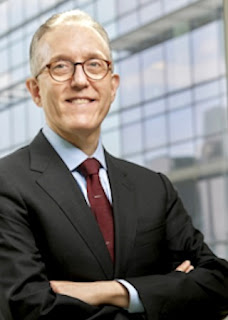
Dr. Jedd Wolchok
The article quotes Dr. Jedd Wolchok, oncologist and director of the Sandra and Edward Meyer Cancer Center at Weill Cornell Medicine: "The pace of progress is most certainly accelerating. There are so many things converging."

At the end of her piece, Pickert talks about her own situation (she's had chemotherapy, drug treatment, and radiation for breast cancer) and notes that if her cancer returns, "which is unlikely at this point, I will benefit from a wide array of drugs — many of which were approved in the past five years."

Within 24 hours of the Times column, a story by Katherine Ellison appeared in The Washington Post that totally supports the idea of cancer becoming a chronic, treatable disease. 

That concept alone can lower anxiety, and that relief is crucial for cancer patients who are all too aware that more than 600,000 Americans are expected to die of the disease this year.

Despite that statistic, the Post story proclaims, "even some of the most fearful cancers today are increasingly survivable — provided they're addressed with care and vigilance that may span months to years to a lifetime."

That notion's addressed by positive numbers, the article proffers, explaining that of the 18 million U.S. residents with a history of the disease, "for many of them, cancer has become less an imminent threat than a chronic illness, serious but not necessarily deadly."

More good news? The death rate from all cancers, according to an American Cancer Society report released in January, is down almost a third since 1991.

Ellison's story quotes Lidia Chapira, breast-cancer expert and medical professor at Stanford University: "We're not quite there yet, but we're moving closer to the situation we have with HIV patients, in that today even people with incurable cancers may be living for decades. I'm still treating patients who were diagnosed decades ago, while my colleagues are seeing people in their 50s and 60s who had cancer as children."

Information on newer drugs and treatments can be found in Rollercoaster: How a man can survive his partner's breast cancer, a VitalityPress book that I, Woody Weingarten, aimed at caregivers.