Sunday, December 18, 2022

Experimental skin cancer vaccine shows promise when used with Keytruda, new study says

A small clinical test shows an experimental skin cancer vaccine, mRNA, may be promising, a new study indicates.

The study, according to a story by Lenny Bernstein this week in The Washington Post, shows that the vaccine from Moderna performed well when used alongside an immunotherapy drug developed by Merck.

Bernstein's article contends that "for the first time, messenger RNA technology — the advance that undergirds the most commonly used coronavirus vaccines — has been shown effective against a deadly form of skin cancer, when used in conjunction with" the Merck drug, pembrolizumab, which is marketed as Keytruda.

A cautionary note: The study, which involved 57 patients with Stage 3 or 4 melanoma that had spread to a lymph node and who faced a high risk of recurrence, was sponsored by the two drug companies.

The trial showed patients seeing a 44% reduction in the risk of recurrence or death compared to those who used only Keytruda. 
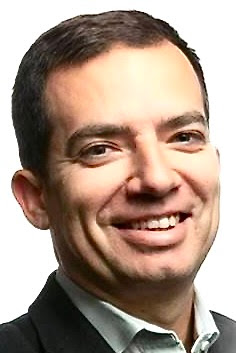
Stéphane Bancel
Stéphane Bancel, Moderna's chief executive, is quoted as saying that the findings "are highly encouraging…mRNA has been transformative for COVID-19, and now, for the first time ever, we have demonstrated the potential for mRNA to have an impact on outcomes in a randomized clinical trial in melanoma." 

Frances S. Collins, ex-director of the National Institutes of Health, said recently that the development of vaccines for cancer using mRNA may be one of the great medical advances to come out of the pandemic, the Post story states. 

"Cancer vaccines have had a lot of promise," it quotes him as saying, "but they have been really not quite taking hold because the cycle time was just too long…Now with mRNAs, you can do that so much more quickly."

It should be noted that no mRNA cancer vaccine has yet been approved by the Food and Drug Administration.

According to the Centers for Disease Control and Prevention, the story concludes, in 2018, the last year for which figures are available, "83,996 people were diagnosed with melanoma in the United States and 8,199 died."

Information on other clinical trials can be found in Rollercoaster: How a man can survive his partner's breast cancer, a VitalityPress book that I, Woody Weingarten, aimed at male caregivers.

Tuesday, December 13, 2022

New book provides ‘wit, wisdom, self-exposure’ of Woody Weingarten, author of its 70 columns

The Roving I can be a holiday gift for you, your family, and your friends — and that purchase can also act as a present of sorts for me, its author, since it coincides with my 85th birthday.

Woody Weingarten enjoys his new hardcover.
The new anthology — available in hardcover, paperback, and ebook versions — delivers what its subtitle promises, to supply "the wit, wisdom, and self-exposure of Woody Weingarten." Inside are 70 of my favorite columns, including those about my wife earning a slot in my Little Black Book, a woman carrying her sister's "miracle baby" inside her for nine months, and Robin Williams transforming himself into a talking vagina.

Another good present — for your kids or grandkids — would be Grampy and His Fairyzona Playmates, a whimsical fantasy co-written by my 8-year-old granddaughter and aimed at 6- to 10-year-olds.

A this gift book can benefit anyone who knows someone with a life-threatening disease, Rollercoaster: How a man can survive his partner's breast cancer, which details how my wife and I learned to cope.

More information about all three can be found at my new website, woodyweingarten.com.

Wednesday, November 30, 2022

Clinical trial of new drug for metastatic breast cancer patient shows 'unheard of' survival rates

A new clinical breast cancer drug trial has resulted in "unheard of" survival rates.

According to a recent story by Gina Kolata in The New York Times, for some patients with metastatic tumors that were not significantly affected by other forms of chemotherapy, the treatment halted their cancer's growth.

The findings of a new study, published in the New England Journal of Medicine, might "change how medicine [is] practiced," the article indicates.

Dr. Eric Winer, who was not involved in the study but who is director of the Yale Cancer Center and head of the American Society of Clinical Oncology, is quoted as saying that "this is a new standard of care. It affects a huge number of patients."

The Times piece notes that the new treatment, using an experimental drug (trastuzumab deruxtecan, sold as Enhehru) "that targeted cancer cells with laser like precision" was "stunningly successful, slowing tumor growth and extending life to an extent rarely seen with advanced cancers."

The trial, which focused on a mutant protein known as HER2, involved 557 patients. Tumors in those who took the experimental drug stopped growing for about 10 months, twice the length of those who took only standard chemotherapy. Those patients survived for almost two years, compared to less than a year and a half for those who received standard chemo.

Dr. Halle Moore
"It is unheard of for chemotherapy trials in metastatic breast cancer to improve survival in patients by six months," the story quotes Dr. Halle Moore, director of breast cancer oncology at the Cleveland Clinic, as saying.

Dr. Susan Domchek, a breast cancer specialist at the University of Pennsylvania's Abramson Cancer Center, also is quoted to the effect that she plans to see — even before the Food and Drug Administration approves the drug, which has a wholesale price of about $14,000 every three weeks — if the data from the study will be sufficient to convince insurers to approve it.

More information about successful clinical trials can be found in "Rollercoaster: How a man can survive his partner's breast cancer," a VitalityPress book that I, Woody Weingarten, aimed at male caregivers.

Friday, November 25, 2022

Expert contends that collective voices could cut socio-economic disparities hiking cancer deaths

The ability of cancer patients to overcome inequities in insurance coverage and acquire access to the appropriate clinical care has grown quite a bit lately.

In a recent op ed by Elizabeth Helms in the Marin Independent Journal, the cancer care expert promotes advocate and collective voices to achieve those and other results for patients and their families who "live daily with chronic conditions"

Elizabeth Helms
Helms, president and CEO of the California Chronic Care Coalition, an alliance of nonprofit, social consumer and provider organizations, writes that "access to innovative, clinically appropriate cancer treatments will not only improve survival outcomes for cancer patients, but actualize a future where many cancer types can be viewed as a chronic condition to be managed in consultation with a care team."

Noting that "our collective voices are always stronger than just one advocate, " she quotes an African proverb that says, "If you want to go fast, go alone. If you want to go far, go together."

For Helms, "together" — at least in California — means supporting the mission of the Cancer Patients Bill of Rights, a resolution unanimously passed by the state's legislature in 2021. 

California, it should be noted, is the first state to adopt such a bill of rights, one that lays out six rights that every cancer patient should be entitled, including access to promising innovations and experts specializing in various cancer types.

In her op ed, Helms maintains that while biomedical research has produced life-saving innovations, cancer patients still face socioeconomic disparities that if eliminated could prevent "34% of cancer deaths among all U.S. adults ages 25 to 74."

The bottom line, she contends, is that "when patients receive early access to the treatments and expertise tailored to treat their cancer subtype, lives are saved and the quality of life remains higher during and after treatment."

In California, she write, patients insured through the Medical program "often must navigate confusing layers of subcontracted care, who managed-care plans…outsource responsibility for patients. In many cases, the heavy use of subcontracted care adds a knot of red tape on top of an already stressful time for Medical patients trying to access specialized cancer care."

She adds that cancer patients in that program "who have breast, colon, lung and rectal cancer are more likely to be diagnosed at an advanced stage of disease and have less favorable five-year survival rates."

"Our current one-size-fits-most system prevents many California cancer patients from accessing optimal care," she insists, "and the lack of access has translated into needless suffering and lives lost."

The cancer community, Helms says, "has a moral imperative to break down these barriers to access." 

Access that eliminates disparities can make a difference for the more than 187,000 Californians who are diagnosed with cancer every year and the thousands who "will be misdiagnosed or placed on inappropriate or ineffective treatment."

More information about care can be found in "Rollercoaster: How a man can survive his partner's breast cancer," a VitalityPress book that I, Woody Weingarten, aimed at male caregivers. 

Monday, November 7, 2022

Despite Katie Couric's advice, doctors repudiate some ultrasound breast cancer screenings

Many doctors are questioning Katie Couric's new call for ultrasound screenings beyond annual mammograms to detect breast cancer.

A recent online Kaiser Health News story by Michelle Andrews notes that the 65-year-old former co-host of NBC's "Today" show is now pushing those sonograms because they "can sometimes identify malignancies that are hard to spot on a mammogram in women whose breasts are dense — that is, having a high proportion of fibrous tissue and glands vs. fatty tissue."

Dr. Carol Mangione
The KHN article, however, quotes Dr. Carol Mangione, professor of medicine and public health at UCLA who chairs the U.S. Preventive Services Task Force, a group of medical experts who make recommendations for preventive services after weighing their benefits and harm, as being in doubt. She says clearly, "We don't have evidence that auxiliary screening reduces breast cancer mortality or improves quality of life."

Dr. Sharon Mass, an OB-GYN in Morristown, New Jersey, and the former chair of the American College of Obstetricians and Gynecologists' New Jersey section, echoes that sentiment. "On the one hand," Andrews' piece quotes her as saying, "we want to do everything we can to improve detection. But on the other hand, there are lots of costs and emotional distress" associated with false-positive results.

Couric first shared the news of her own breast cancer diagnosis in September.

In addition to regular mammograms, many women are getting 3D mammograms, sonograms or MRIs as supplemental testings. That imaging in those who aren't at high risk for breast cancer, the KHN story says, "may identify potential trouble spots, which can lead to follow-up testing such as breast biopsies that are invasive and raise cancer fears for many patients. But research has found that very often these results turn out to be false alarms."

And that doesn't count the possible extra cost. "An ultrasound screening might cost $250 out-of-pocket while a breast MRI could run $1,084," according to the Brem Foundation to Defeat Breast Cancer," Andrews' story says. 

Meanwhile, Rep. Rosa DeLauro (D-Conn.) recently tweeted that she's working in conjunction with Couric on a bill to cover MRIs and ultrasounds for women with dense breasts "without any out-of-pocet costs," the article reports.

What are the real results of added screenings? Studies show, the KHN piece notes, that "if 1,000 women with dense breasts get an ultrasound after a negative mammogram, the ultrasound will identify two to three cancers. But the extra imaging will also identify up to 117 potential problems that lead to recall visits and test but are ultimately determined to be false positives."

Mass' group doesn't recommend supplemental screening for women with dense breasts who don't have any additional risk factors for cancer, the article reports. "Many other professional groups take a similar position."

Dense breasts, the story says, "are relatively common. In the United States, an estimated 43% of women 40 and older have breasts that are considered dense or extremely dense…Women with dense breasts are up to twice as likely to develop breast cancer as women with average-density breasts, research shows."

Other steps instead of extra screening could be helpful, according to Dr. Karla Kerlikowske, a professor of medicine and epidemiology/biostatistics at the University of California, San Francisco. "If you really want to help yourself, lose weight," she's quoted as saying. "Moderate your alcohol intake and avoid long-term hormone replacement. Those are things you can control."

Additional information on mammograms, sonograms and other screenings can be found in Rollercoaster: How a man can survive his partner's breast cancer, a VitalityPress book that I, Woody Weingarten, aimed at male caregivers.

Thursday, October 27, 2022

Ignored places in your home can be 'hotbeds of germs, mold, yeast, pathogens,' newspaper says

Some often ignored germ-filled spots in your home desperately need cleaning.

That's the conclusion of a report by Susannah Herrada in editions of The Washington Post this week. In her story, she notes that those often-overlooked places "can be hotbeds of germs, mold, yeast and pathogens."

Chrysan Cronin
Herrada's article quotes Chrysan Cronin, PhD and an infection disease epidemiologist and director of public health at Muhlenberg College in Allentown, Pennsylvania, as warning that although we coexist with microbes, "there are some that are more harmful to humans than others. We need to be a little more vigilant in making sure we don't come in contact with those."

The Post piece cites the following, beyond the expected toilets, phone and doorknobs, as danger points where perilous bacterial colonies often lurk (not necessarily in order):
• Sponges and dish towels.
• Knobs and buttons on kitchen appliances.
• Pet bowls.
• Toothbrush holders. 

The story cites research from NSF International, a "go-to global organization for establishing public health standards and certifications," to the effect that "the sink sponge is a veritable Noah's ark in the diversity of microorganisms it contains."

The average sponge, it continues, supports mold and yeast, and is a "perfect habitat" for bacteria that may include E. coli, salmonella and campylobacter, all pathogens that can cause fever and stomach upset."

You can eliminate the problem, Herrada says, by running a sponge through the dishwasher. Even so, "you should toss it after a week."

Cronin, meanwhile, suggests changing dish towels daily (at worst).

The Post story also contends that "contrary to popular myth, a dog's mouth is not cleaner than a human's. Wash pet bowls regularly with hot, soapy water — and reserve a separate sponge for pet items. While you're at it, toss hard pet toys in the sink suds and run soft toys through the washing machine." 

Knobs and buttons on kitchen appliances, the story reports, are also "germ magnets, because we touch them so frequently."

Cronin recommends "a 1:1 ratio of distilled white vinegar to water or a 5:100 ratio of bleach to water to disinfect high-contamination zones like these."

To avoid trouble from "high-touch items that travel into the world with us" (such as a cellphone, purse, wallet, and keys), Herrada urges keeping them "in a designated spot by the door or in a closet, and avoid placing these items on kitchen tables or other eating surfaces." 

The toothbrush holder, the story says, "might be a microbiologist's worst nightmare — "because it tends to be close to the toilet." 

Since the holder's "often in the blast radius of the fecal bacteria that aerosolizes whenever you flush," the piece continues, you should "close the lid before flushing and keep the bowl clean." You might further consider storing your toothbrush in a closed drawer or medicine cabinet "where it can dry  out between uses" and not be exposed.

The toilet-flushing issue, through which the microorganisms once airborne can settle on anything nearby according to a 2021 University of Arizona study published in the Journal of Applied Microbiology, can also turn faucet handles and other personal-care items left on the counter into toxic problems.

Harrada's story also mentions as potential risks the disposal's black rubber drain range, the coffee maker's reservoir, and soft-sided lunchboxes.

Other ways to avoid disease can be found in "Rollercoaster: How a man can survive his partner's breast cancer," a VitalityPress book that I, Woody Weingarten, aimed at male caregivers.

Sunday, October 23, 2022

California stoves and pipes are leaking benzene, a cancer-causing gas, according to new study

Researchers say more study is needed to understand how and why many California homes are subject to leaks of cancer-causing benzene.

That conclusion came from a study that found benzene was leaking in many homes equipped with gas stoves, according to an Associated Press story this week by Drew Costley.

The study, published in Environmental Science and Technology, also estimated that more than four tons of benzene — the equivalent to the benzene emissions from nearly 60,000 vehicles — are also leaking each year "into the atmosphere from outdoor pipes that deliver gas to buildings" around the state.

Measurements, which came from gas samples from 159 homes in different regions of the state, detailed "what types of gases were being emitted into homes when stoves were off." 

Also found were other hazardous air pollutants, like toluene and xylene, which can have "adverse health effects in humans with chronic exposure or acute exposure in larger amounts."

Benzene was of most concern because it's "a known carcinogen that can lead to leukemia and other cancers and blood disorders, according to the National Cancer Institute," the story reports.

California has the second highest level of residential natural gas use in the United States.

Drew Michanowicz
Costley's article quotes Drew Michanowicz, a study co-author and senior scientist at PSE Health Energy, an energy and research policy institute, to the effect that he hopes "policymakers will consider this data when they are making policy, to ensure current and future policies are health-protective."

The Greater Los Angeles, North San Fernando Valley, and San Clarita areas, according to the study, had the highest benzene in gas levels. 

More information on cancer-causing agents can be found in "Rollercoaster: How a man can survive his partner's breast cancer," a VitalityPress book that I, Woody Weingarten, aimed at male caregivers.

Tuesday, October 18, 2022

National study finds frequent use of hair straighteners may pose risk for uterine cancer

Can frequent use of hair straighteners pose a small risk for uterine cancer?

According to a story by Roni Caryn Rabin in today's editions of The New York Times, the answer is yes. 

Rabin's article says the risk is higher than for women who have never used the products.

The study, which was published yesterday in The Journal of the National Cancer Institute, followed nearly 34,000 U.S. women for more than a decade.

Hair straightener use has previously been tied in studies to a higher risk of ovarian and breast cancer.

"While the increased risk [for uterine cancer] was found among women from all racial and ethnic backgrounds," the story continues, "Black women might be disproportionately affected: Sixty percent of participants who reported using hair straighteners self-identified as Black women, according to the study."

A March report from an expert panel indicated that over all Black women die of uterine cancer at twice the rate that White women do.

Frequent use is defined as more than four times in the previous year, and includes "any personal use, whether women applied products themselves or had the straighteners applied by others."

Alexandra White, PhD
Alexandra White, PhD head of the environmental and cancer epidemiology group of the National Institute of Environmental Health Sciences (HIEHS) and the study's lead author, is quoted as saying that "there is a lot of pressure on women, especially Black women, to have straight hair. It's not an easy decision to not do this."

Researchers have cautioned that the study's findings need to be confirmed by other studies.

The uterine cancer study, Rabin's piece says, shows that some chemicals found in straighteners — such as parabens, bisphenol A, metals, and formaldehyde — could week "play a role in the increased" risk.

Uterine cancer, the story maintains, "is increasing rapidly. The number of cases diagnosed each year has rises to 65,950 this year from 39,000 just 15 years ago." 

When detected early, overall survival rates are high.

More information about risk factors, including those for minority groups, can be found in "Rollercoaster: How a man can survive his partner's breast cancer," a VitalityPress book that I, Woody Weingarten, aimed at male caregivers.