Saturday, February 26, 2022

Mix of cancer, Covid put people of color at great risk of complications, hospitalizations, death

Docs say people in low-income communities are subject to advanced cancers because of pandemic-caused delays in diagnosis and treatment.

According to a recent story in The Washington Post by Laurie McGinley,  the combination of Covid and cancer is a menacing mix for those people of color.

The Centers for Disease Control and Prevention worries, the article states, expect the dangerous combo to worsen "with the pandemic grinding on," with stats showing African Americans and Hispanics being "about twice as likely as White people to die of Covid" and Black cancer patients being "particularly high risk for complications and hospitalizations."

Black people, the Post story says, "had lower survival rates for many cancers compared with White people even before pandemic."

Dr. Kashyap Patel

McGinley's piece quotes oncologist Kashyap Patel, chief executive of Carolina Blood and Cancer Care Associates, as saying that "Covid put cancer and health-care disparities on steroids. I have never seen this many people presenting at Stage 3 and 4," the worst possible stages.

 Jennifer S. Haas, a primary care doc at Massachusetts General Hospital in Boston, was also quoted: "People have been trying to ignore symptoms for a year because they didn't want to come in."

The result? An unusually high number of advanced stomach cancers and esophageal malignancies "over the past several months."

Why are people of color so susceptible? Because of, the story notes, "higher rates of underlying conditions such as diabetes or hypertension; a lack of health insurance or access to a primary-care physician; and jobs that can cause health problems."

Says Haas, it's a particularly bad situation "if you work in an environment without air purification or filtration."  

According to McGinley's story, doctors say "many of those most acutely affected are women, whose family responsibilities and financial stress make it difficult to focus on their own health."

Debra Patt, executive vice president of Texas Oncology and a breast cancer specialist in Austin, elaborates in the article: "They have sacrificed themselves to deal with the needs of the family: "Are my children getting schooling, how do I take care of the older adults in my life, how do I manage everything?"

Long after the pandemic subsides, she worries, some patients will be struggling with advanced cancer. "The effects of this will go on for years," she's quoted as saying.

Perhaps the lesson from the pandemic is that "maybe we shouldn't expect everyone to come to doctors' offices," the story again quotes Haas, who reportedly says that more at-home testing would increase screening.

More information about the problems medical delays can cause may be found in "Rollercoaster: How a man can survive his partner's breast cancer," a VitalityPress book that I, Woody Weingarten, aimed at male caregivers. 

Thursday, February 17, 2022

EPA soon plans to crack down on cancer-causing 'forever chemicals' found in household items

The Environmental Protection Agency's administrator is planning "to limit a class of chemicals that have been linked to cancer and is found in everything from drinking water to furniture."

Michael S. Regan
In a recent story by Lisa Freedman in The New York Times about those "cancer-causing 'forever chemicals,'" Michael S. Regan is quoted as saying that because regulating these PFAs, or perfluoroalkyl and polyfluoroalkyl compounds, is a priority, new EPA testing requirements may go into effect "in a matter of weeks."

Regan says the Biden administration will "require chemical manufacturers to test and publicly report" the amount of PFAs "contained in household items like tape, nonstick pans and stain resistant furniture," the Times article states.

The action purportedly is "the first step toward reducing their presence in drinking water."

PFAs refer to more than 4,000 man-made chemicals that "don't break down in the environment" and are linked to "certain cancers, weakened immunity, thyroid disease, and other health effects."

Freedman's piece indicates that Regan wants the industry, not taxpayers, to bear the cost of meeting the requirements. "It could be expensive, but it's necessary," the EPA chief is quoted. "It's time for manufacturers to be transparent and provide the American people with this level of detail."

The PFAs ubiquitousness in consumer products stems from their increased resistance "to heat, stains, water and grease."

The American Chemistry Council, a trade organization, claims that alternative materials might not be available to replace about 600 PFAs used to manufacture products like solar panels and cellphones, the story reports. It also quotes a statement from council spokesman Erich Shea that he council "supports the strong, science-based regulation of chemicals, including PFAs substances" but maintains that "all PFAs are not the same, and they should not be regulated the same way." 

The Times simultaneously notes that environmentalists "don't believe there is a safe level of PFAs in drinking water."

More information on dangers from chemicals in the environment can be found in "Rollercoaster: How a man can survive his partner's breast cancer," a VitalityPress book that I, Woody Weingarten, aimed at male caregivers. 

Thursday, February 3, 2022

Biden pushes program to cut cancer death rate by 50 percent; experts say it just won't work

Experts doubt President Biden's plan to cut the cancer death rate in half will be that effective.

In a story by Sheryl Gay Stolberg and Gina Kolata in The New York Times today, those experts say his cancer "moonshot" program, which is to take 25 years, simply can't “so profoundly reduce the age-adjusted death rate, which accounts for expectations that older people are more likely to grow ill and die.”

The White House, the article continues, “billed the event as a fresh push by the president to ‘reignite’ the moonshot program” he initiated and presided over as vice president. The new push, it was claimed, would “end cancer as we know it.” 

But Biden did not offer specifics on how his goal would be achieved.

Part of the initiative will be “a campaign to urge Americans to undergo screenings that were missed during the coronavirus pandemic,” Stolberg and Kolata’s piece indicates.
 
In addition, Biden plans to create a new “cancer cabinet” to coordinate multiple government agencies and spearhead the fight against the disease.
 
Danielle Carnival, who worked on the moonshot program during Barack Obama’s administration, will help oversee the supercharged effort.
 
The Times article insists that “more screenings are not the answer — the only cancers for which screening has indisputably lowered the death rate are colon and cervical.”
 
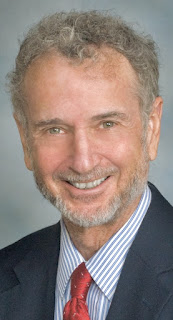
Donald A. Berry, Ph.D.
Death rates for other cancers, like breast, have fallen, “but a large part of the drop, if not all of it, is because of improved treatment,” the story quotes Donald A. Berry, a Ph.D. biostatistician at the University of Texas M.D. Anderson Cancer Center who has spent decades studying these issues.

He also contends that “everybody loves early detection, but it comes with harms” — principally, the article goes on, the harm of finding and treating tumors that do not need to be treated because they are innocuous. “The harms we know, but the benefits of screening are very uncertain,” Berry again is quoted.

If the age-adjusted cancer death rate were to plunge by 50 percent, it would have to be because cancers were being cured, Stolberg and Kolata maintain. "Some treatments, like a drug that treats chronic myelogenous leukemia, have slashed death rates for that disease, but such marked effects in cancer are few and far between."

In contrast, according to their piece, Ellen V. Sigal, founder of Friends of Cancer Research, which works to support cancer research and deliver new therapies to patients, who was briefed on the plan, says, “These are audacious goals, and I have no doubt there will be mechanisms to achieve them.”
 
The article also quotes anonymous senior administration officials who pledged that although no new funding commitments would be announced, there would be “robust funding going forward.” 
 
Biden, it should be remembered, has a personal interest in cancer research; in 2015, his son Beau died of glioblastoma, an aggressive brain cancer. The next year, Obama called on the then-vice president to lead the moonshot program with, according to Stolberg and Kolata, “a goal of making ‘a decade’s worth of advances in cancer prevention, diagnosis and treatment’ in five years.”

At the time, Congress authorized $1.8 billion over seven years; roughly $400 million of that money has yet to be allocated. The National Cancer Institute, which oversees the initiative, says it has already spent $1 billion on more than 240 research projects.

The current White House says more than 9.5 million cancer screenings were missed in the United States because of Covid-19.
 
More details on the original cancer "moonshot" can be found in “Rollercoaster: How a man can survive his partner’s breast cancer,” a VitalityPress book that I, Woody Weingarten, aimed at male caregivers.

Tuesday, January 18, 2022

Website publishes Woody Weingarten's fake interview with himself and his granddaughter

I was recently surprised — pleasantly — when the Local News Matters website published a make-believe interview about Grampy and His Fairyzona Playmates that I conducted with myself and my granddaughter, the fantasy’s co-authors. 

Here’s a link to my shameless promotion, especially for those who enjoy a touch of whimsy or silliness: bit.ly/3pzw0xQ

Illustration by Joe Marciniak
In case you've missed my earlier blog items, our kids' book, written by two people 70 years apart in age and aimed at children 6 to 10, features a sorcerer, two fairies, spells, unicorns, and a magic carpet.

Among its highlights are an eight-year-old fairy winning her division of the Unicorn Racing Championships, baby chicks singing jazz instead of cheeping, a wizard making robot movie characters less scary, and two girls wanting to stop thunder-and-lightning storms, floods, earthquakes and tornadoes all over the planet.

More information is available at my new website — woodyweingarten.com

Incidentally, if any of you have already bought and read the book, I’d really appreciate your reviewing it on Amazon and Goodreads. 

Not incidentally, even though we’re already a couple of weeks into 2022, I wish you all the happiest new year you’ve ever experienced, one crammed with whimsy (faux and real).

Saturday, January 15, 2022

Experts say pandemic lockdowns caused increase in advanced cancers by curtailing screenings

Covid-19 apparently is responsible for many cancers dangerously advancing, physicians have warned, because the pandemic caused a large drop in screenings.

The main reason, according to a recent story in The New York Times by Reed Abelson, is that mammograms and other tests to detect potential cancers were canceled or severely delayed by lockdowns, an action that may have led to undiagnosed malignancies.

"Waves of surging Covid cases," the article says, "shuttered clinics and testing labs, or reduced hours at other places, resulting in steep declines in the number of screenings, including for breast and colorectal cancers, experts have said."

The Times piece quotes Dr. Lucio N. Gordan, president of the Florida Cancer Specialists & Research Institute, one of the country's biggest independent oncology groups, as saying that there is "no question…that we are seeing patients with more advanced" cancers.

Dr. Patrick Borgen
The "fear of Covid was more tangible than the fear of missing a screen that detected cancer," reports Dr. Patrick I. Borgen, chief of surgery at Maimonides Medical Center in Brooklyn, where he also heads its breast center, the story adds.

Borgen believes healthy people "stayed away to avoid contagion," the piece notes.

And when clinics and other places reopened, it goes on, "some patients…could not easily get an appointment because of pent-up demand. Others skipped regular testing or ignored worrisome symptoms because they were afraid of getting infected or, after losing their jobs, they couldn't afford the cost of a test…even patients at high risk because of their genetic makeup or because they previously had cancer have missed critical screenings."

Dr. Barbara L. McAneny
The Times article also quotes Dr. Barbara L. McAneny, past president of the American Medical Association and chief exec of New Mexico Oncology Hematology Consultants, many of whose patients stayed away, even if they did have insurance, because they couldn't afford the deductibles or co-pays. 

"We know cancers are out there," she reportedly says. "We're seeing that, particularly with our poorer folks who are living on the edge anyway, living paycheck to paycheck."

More information about screenings can be found in "Rollercoaster: How a man can survive his partner's breast cancer," a VitalityPress book that I, Woody Weingarten, aimed at male caregivers.

Tuesday, January 11, 2022

Writer says kids' fantasy will 'become a childhood classic' and calls it 'multigenerational magic'


A story in last week's Pacific Sun and North Bay Bohemian calls Grampy and His Fairyzona Playmates “perhaps the sweetest kids’ book of the year-end possibly the decade.” The article by Jane Vick includes a reproduction of the cover, with a caption headlined “Multigenerational Magic,” and predicts that the fantasy “is sure to become a childhood classic.”

The plug by the Marin and Sonoma County weeklies, one traffic jam north of the Golden Gate Bridge, ensures that my co-writing granddaughter, our illustrator and I have a happy new year.

You can check it all out at https://pacificsun.com/literary-roundup-phenomenal-reads-for-2022/ or get more information from my website — woodyweingarten.com

My granddaughter and I, close despite a 70-year difference, had oodles of fun collaborating on the whimsical book, which features a sorcerer, two fairies, spells, unicorns and a magic carpet. Highlights include an eight-year-old fairy winning her division of the Unicorn Racing Championships, baby chicks singing jazz instead of cheeping, a wizard making robot movie characters less scary, and two girls wanting to stop thunder-and-lightning storms, floods, earthquakes and tornadoes all over the planet.

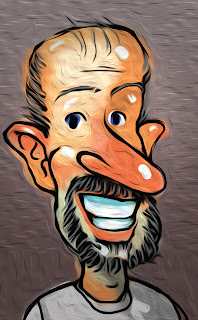
Joe Marciniak self-portrait
Not incidentally, the front of Grampy…, created by Joe Marciniak, was recently voted best 2021 children’s book cover design by the Bay Area Independent Publishers Association (BAIPA).

For any of you who’ve already purchased the book and liked it, we’d love you to spread the word — via reviews on Amazon and GoodReads, via personal posts on Facebook or other social media (or sharing), via anything you figure can help the get the fantasy into the hands of more children 6 to 10.

I, Woody Weingarten, have also written a book that can be helpful for patients who are facing a life-threatening disease and their caregivers (male or female) — Rollercoaster: How a man can survive his partner's breast cancer.

Thursday, December 23, 2021

New artificial intelligence technique may be able to predict breast cancer cases, research shows

Will AI be able to transform the mammogram and "allow patients to avoid aggressive treatments and even save the lives of countless people who get breast cancer"?

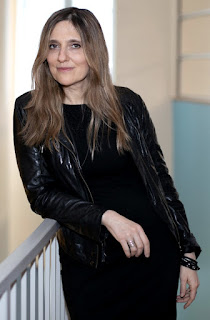
Professor Regina Barzilay
According to a recent story by Steven Zeitchik in The Washington Post, Regina Barzilay, an MIT professor and artificial-intelligence expert who endured chemotherapy, two lumpectomies and radiation for that cancer, as well as "all the brutal side effects that come along with those treatments," may have found "a marriage of tech and health care that could alter millions of lives without a single drop of medicine."

The Post article reports that Barzilay and Adam Yala, a student protege, "have built an AI that seems able to predict with unprecedented accuracy whether a healthy person will get breast cancer, in an innovation that could seriously disrupt how we think about the disease."

How it works was laid out in an piece in the Journal of Clinical Oncology: "By analyzing a mammogram's set of byzantine pixels and then cross-referencing them with thousands of older mammograms, the AI — known as Mirai — can product nearly half of all incidences of breast cancer up to five years before they happen."

"If the data is validated, I think this is very exciting," Zeitchik's story quotes Janine T. Katzen, radiologist at Weill Cornell Medicine who specializes in breast imaging. It also quotes Dorraya El-Ashry, chief scientific officer for the Breast Cancer Research Foundation, as saying, "This is the next, very positive step forward. There is a lot of work to do. But this is very encouraging."

Meanwhile, breast cancer statistics are discouraging. "While many cancers, such as lung cancer, have been declining in the United States," the Post story says, "breast cancer rates have been going up — an annual average of half a percentage point between 2008 and 2017, according to the American Cancer Society."

More information on out-of-the-ordinary treatments can be found in "Rollercoaster: How a man can survive his partner's breast cancer," a VitalityPress book that I, Woody Weingarten, aimed at caregivers.

Friday, December 10, 2021

Independent publishers say cover of children's fantasy book by granddad, granddaughter is best

This whimsical cover of Grampy and His Fairyzona Playmates, created by Joe Marciniak, has just been voted best 2021 children’s book cover design by the Bay Area Independent Publishers Association (BAIPA).

The fantasy book aimed at 6- to 10-year-olds was co-authored by me, Woody Weingarten, and my granddaughter, Hannah Schifrin, who are chums despite a 70-year age difference. We had fun writing it — and are certain that youngsters will have just as much fun reading our story about a sorcerer, two fairies, spells, unicorns and a magic carpet.

Highlights include an eight-year-old winning her division of the Unicorn Racing Championships, baby chicks singing jazz instead of cheeping, a wizard who makes robot movie characters less scary, and two girls who can stop thunder-and-lightning storms, floods, earthquakes, and tornadoes all over the planet.

For more information, just click on this link to my website: woodyweingarten.com.